
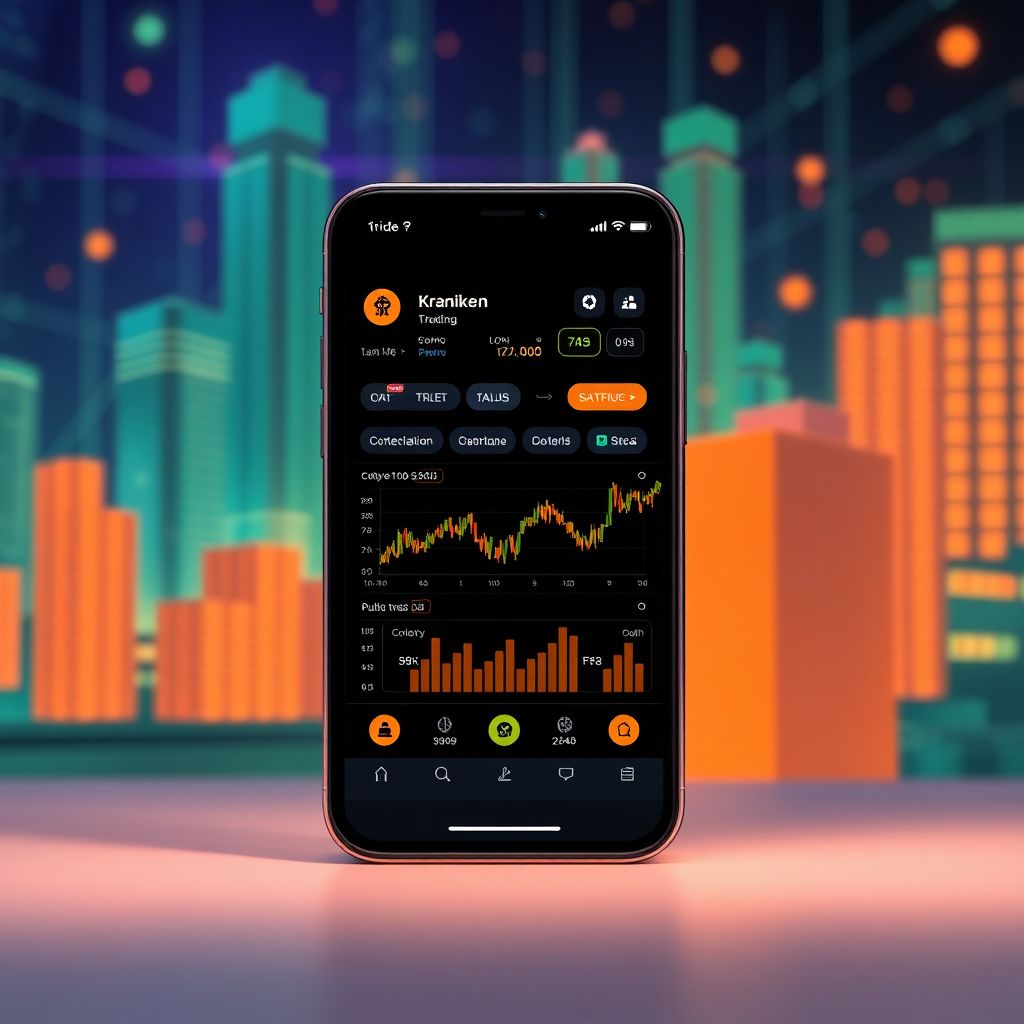
Kraken Rolls Out Native Solana DEX Trading in Its Flagship App
Kraken has taken a major step toward merging centralized and decentralized finance by baking on-chain Solana DEX trading directly into its main consumer application. Eligible users in the United States and more than 100 other countries can now access and trade over 2,500 Solana-based tokens without ever leaving the Kraken interface.
Instead of forcing traders to jump between a centralized exchange, third‑party wallets, and separate DeFi front‑ends, Kraken now routes Solana DEX activity seamlessly through its app. Under the hood, trades are executed on-chain via Solana’s decentralized liquidity, but from the user’s perspective, the experience feels like any other spot trade on a centralized platform.
Bridging CeFi Convenience With DeFi Liquidity
This integration is designed to combine two worlds that have often been kept apart by technical complexity. On one side is the simplicity and familiarity of a regulated, centralized exchange with a polished interface, account management, and customer support. On the other is Solana’s high-speed, low-cost DeFi ecosystem, where thousands of tokens trade on open, permissionless liquidity pools.
By connecting directly to Solana DEX liquidity from inside its app, Kraken allows customers to tap into decentralized markets while preserving the UX they already know. Users do not need to set up a separate non‑custodial wallet, manage seed phrases, or learn how to connect to DeFi protocols. The platform handles the on-chain interactions behind the scenes, while traders simply select tokens, review prices, and confirm orders.
Access to More Than 2,500 Solana Tokens
One of the most notable aspects of the rollout is the scale of token access. More than 2,500 Solana-based assets are now tradable straight from the Kraken app interface. Many of these tokens are not listed on traditional centralized order books, either because they are very new, highly experimental, or too niche to warrant immediate centralized listings.
For active traders and early adopters, this dramatically broadens the range of opportunities available on a single platform. Instead of waiting for a centralized listing, users can participate in markets as soon as tokens gain traction in Solana’s DeFi ecosystem. At the same time, they benefit from Kraken’s unified account experience, balance overview, and trade history, rather than managing a fragmented set of tools.
Early-Stage Assets, Earlier Access
A core benefit of on-chain DEX integration is exposure to early-stage projects. Historically, many promising tokens have first appeared on decentralized exchanges, sometimes trading for months before ever being considered by centralized venues. That gap often meant only the most technically savvy users could access those markets.
Kraken’s move narrows that gap dramatically. By connecting to Solana’s decentralized liquidity, the platform gives its users earlier access to smaller-cap and emerging tokens that might still be flying under the radar of mainstream exchanges. For investors willing to research and understand these risks, it represents a broader opportunity set and potentially earlier entry points into new narratives and sectors.
Who Can Use the New Feature
The on-chain Solana DEX trading integration is available to eligible customers in the United States and in over 100 additional jurisdictions worldwide. Once enabled, users can browse the expanded token universe, view prices, and trade Solana-based assets in the same environment where they already buy and sell more established cryptocurrencies.
The company confirmed this capability in an official communication dated June 20, 2026, marking a clear milestone in its broader strategy to reduce the friction between regulated platforms and permissionless blockchain markets.
How the Integration Works in Practice
From a user’s perspective, placing a trade feels similar to interacting with a conventional spot market. The key difference is where liquidity and settlement occur. Rather than matching orders against a centralized order book, Kraken routes them to Solana-based DEX liquidity pools, where trades settle on-chain.
This setup effectively embeds a DeFi execution layer inside a CeFi wrapper. Traders see balances, quotes, and confirmations within Kraken’s app, while Solana handles the underlying transaction processing. The hybrid model is meant to maintain transparency and efficiency without forcing users into the technical weeds of signing on-chain transactions themselves.
Advantages for Different Types of Traders
The integration caters to several distinct user profiles:
– Retail traders gain one-tap access to a huge array of Solana tokens without learning a new toolset or managing extra wallets.
– Active altcoin and meme coin traders can explore early and niche tokens as soon as they gain liquidity on Solana DEXs, potentially catching trends at an earlier stage.
– Long-term investors can diversify across a broader set of Solana projects while still relying on a familiar, centralized account environment.
– Experimenters and builders can more easily create and distribute new tokens, knowing that a major centralized platform can surface them through its interface as they achieve liquidity on-chain.
Risk, Due Diligence, and Discovery
While easier access is a clear positive for many, on-chain Solana DEX markets are still highly speculative. A significant proportion of the 2,500+ listed tokens are likely to be illiquid, experimental, or short-lived. Kraken’s integration lowers the technical barrier to entry, but it does not remove market risk.
As a result, the responsibility to research each asset remains firmly with the user. Evaluating token fundamentals, understanding project roadmaps, and assessing liquidity conditions are as important as ever, especially in an environment where listings can appear and disappear quickly. Traders may wish to treat these markets as higher risk than established large-cap coins and adjust position sizing accordingly.
What This Means for the Solana Ecosystem
For Solana, the move represents an additional on-ramp from traditional exchange users into its DeFi landscape. Every trader who accesses a Solana-based token through Kraken’s app is, under the surface, interacting with Solana’s on-chain infrastructure and liquidity pools.
That increased flow can deepen liquidity, improve price discovery, and accelerate the feedback loop for new projects launching on Solana. It also reinforces Solana’s position as a high-throughput chain well-suited to powering DEX activity at scale, where low fees and fast confirmations are crucial.
A Glimpse at the Future of Hybrid Crypto Platforms
Kraken’s integration underscores a growing trend: centralized exchanges are no longer just standalone marketplaces, but gateways to a broader, on-chain financial stack. Rather than competing directly with DeFi, some major platforms are beginning to position themselves as curated access layers, simplifying the user journey while tapping into decentralized infrastructure.
If this model proves successful, users may increasingly expect their primary exchange to act as a dashboard for multiple blockchains and protocols, abstracting away the complexity of wallet management and chain selection. In that future, the distinction between CeFi and DeFi becomes less about where trades are initiated and more about where liquidity and settlement ultimately reside.
Expanding the Crypto Market’s Reach
By folding Solana DEX trading into its main app, Kraken is effectively widening the funnel into the crypto economy. Newcomers can start with familiar, large-cap assets, then gradually explore emerging tokens and DeFi-style markets without abandoning the environment in which they started.
For users in the US and across more than 100 countries, this integration turns a once-fragmented process-opening wallets, navigating unfamiliar interfaces, handling network fees-into a single, streamlined experience. It brings together the scale and security of a major exchange with the variety and dynamism of on-chain Solana markets, reshaping what everyday access to decentralized assets can look like.