
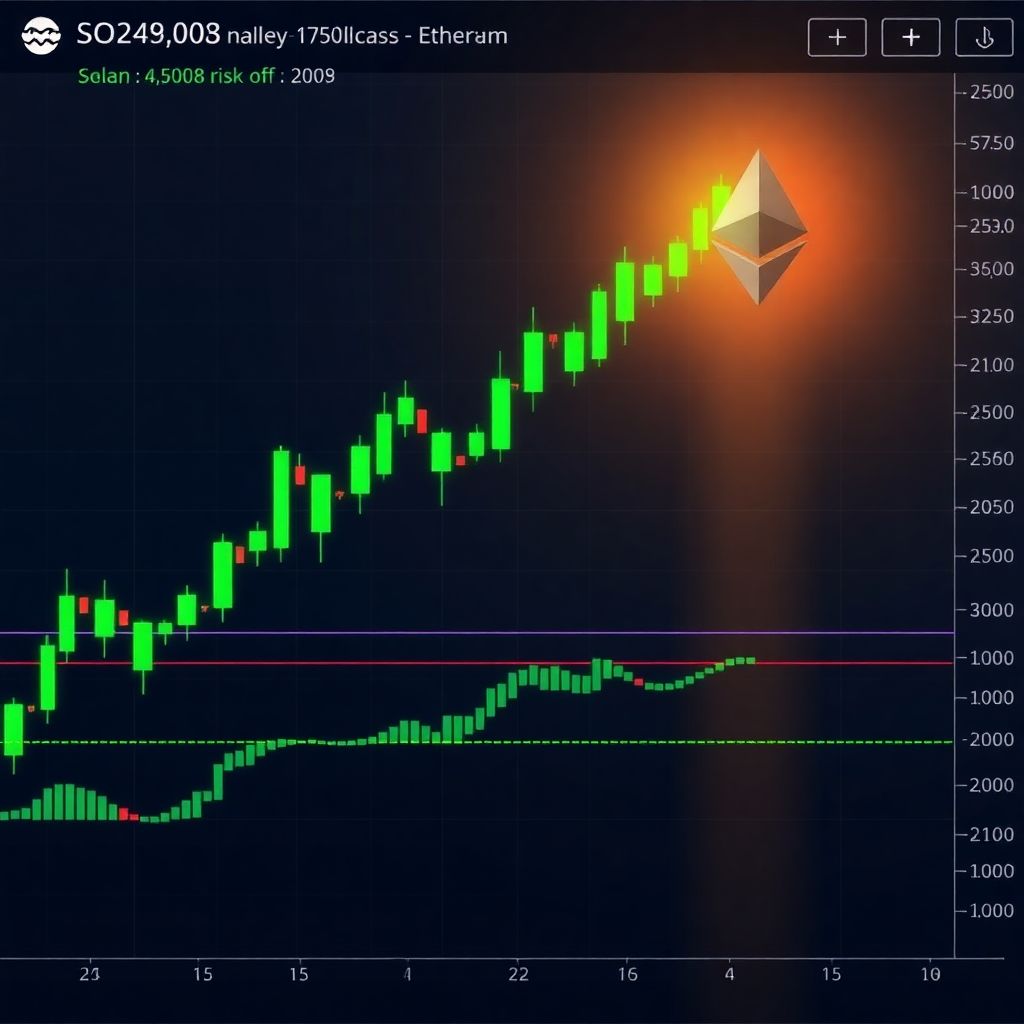
Solana brushes off ‘shilling’ claims: Is SOL/ETH gearing up for an H2 breakout?
Solana’s latest move has reignited the SOL vs ETH debate just as markets enter a more defensive, risk-off phase. On 20 June, SOL finished the session with a gain of nearly 5% – its strongest daily performance in close to two weeks – while most large-cap altcoins managed only about 1.5%. That outperformance pushed SOL cleanly above the key resistance area near 170 dollars, highlighting a clear burst of relative strength.
At first glance, the catalyst looked almost trivial. A well-known crypto trader, Ansem, posted a single word – “Solana” – on X. The post went viral, and traders quickly began piling into SOL. Momentum built fast enough that many observers framed the move as a classic “shilling” episode, where social media hype, rather than fundamentals, drives a sudden rally.
The conversation escalated to the point where Solana’s official account weighed in. Without directly naming influencers or campaigns, it countered the coordination narrative by writing:
“If you weren’t here, it will feel coordinated. If you were here, you knew all along.”
The message was clear: the team rejected the idea of a paid promotional push and implied that what looked like orchestrated hype from the outside was actually long-standing community conviction surfacing at a pivotal moment.
Price action in the SOL/ETH pair backed up that stance. The SOL/ETH ratio jumped around 4.6% in a single day, its strongest move in nearly three weeks and a decisive outperformance versus Ethereum. Rather than a random spike driven solely by a viral post, the ratio’s breakout suggested that traders were reassessing the relative strength and future prospects of the two ecosystems.
On-chain and trading data add weight to that interpretation. A large holder, or “whale,” recently accumulated 235,000 SOL in one transaction, spending roughly 16.55 million dollars. Deploying that amount of capital into a single asset, especially in a risk-averse environment, usually signals a long-term thesis rather than a short-lived momentum chase. Even if no one can confidently call a market bottom, such positioning implies that at least some sophisticated participants view current levels as attractive.
Beneath the price chart, a major fundamental narrative is quietly taking shape. Anza CEO Ben Hawkins highlighted that two key Solana Improvement Documents, SIMD-550 and SIMD-553, remain on track for implementation this year. Together, these tokenomics proposals would significantly reshape SOL’s supply dynamics.
If approved and executed as outlined, they are expected to:
– Double Solana’s disinflation rate to roughly 30%
– Reduce total emissions by an estimated 1.36 billion dollars over the next six years
– Potentially lift daily token burns from around 650 SOL to as much as 9,000 SOL
In practical terms, this would make SOL structurally scarcer over time, especially if network usage remains robust or continues to grow. Markets tend to react early to such structural shifts, as traders price in future supply constraints before they fully materialize.
The SOL/ETH ratio appears to be doing exactly that. As participants began to factor in a more aggressive disinflation schedule for SOL, the pair pushed back above its 200-day moving average for the first time since May 2024. Reclaiming this long-term trend indicator is often read as a sign that momentum is turning in favor of the asset that has just crossed above it – in this case, Solana relative to Ethereum.
In this context, the recent move looks less like a one-off hype pump and more like a repricing driven by a mix of sentiment, structural changes, and capital rotation. Ansem’s viral post may have lit the match, but whale accumulation, healthy on-chain activity, and a credible roadmap for tightening token supply have provided the fuel to keep the move alive.
Can SOL/ETH sustain a breakout in the second half of the year?
The key question now is whether the SOL/ETH pair can convert this burst of strength into a sustained breakout during the second half of the year. For that to happen, several conditions would likely need to align.
First, Solana must maintain or expand its on-chain activity. The network has positioned itself as a high-throughput, low-fee hub for memecoins, DeFi, NFTs, and consumer-facing applications. If daily active users, transaction counts, and protocol revenues continue to trend higher, the argument for a stronger, more scarce SOL becomes much more compelling versus ETH, particularly if Ethereum’s own scaling roadmap remains gradual.
Second, the broader macro environment will matter. In a prolonged risk-off regime, even strong narratives can be overwhelmed by liquidity withdrawal and a general flight to safety. In that scenario, SOL/ETH might still rise if Solana simply falls less than Ethereum, but explosive upside becomes harder. Conversely, if risk appetite returns in H2 and capital flows back into altcoins, assets with a clear growth story and improving tokenomics often benefit disproportionately.
Third, execution risk around SIMD-550 and SIMD-553 is critical. Markets are already partially pricing in these changes. Any delays, design changes, or community resistance could dampen the bullish supply-side thesis. On the other hand, smooth passage and implementation, especially if accompanied by transparent communication and measurable burn increases, could reinforce confidence and attract additional capital.
How does Solana’s narrative stack up against Ethereum’s?
Ethereum still commands the largest DeFi ecosystem, entrenched institutional interest, and the reputation of being the default smart contract platform. Its transition to proof-of-stake and existing burn mechanics via transaction fees have already given ETH “ultrasound money” credentials in the eyes of some investors.
Solana’s pitch is different. It emphasizes speed, user experience, and a design geared toward mass adoption use cases such as payments, gaming, and consumer apps. If Solana can deliver on a more aggressive disinflation schedule while maintaining its cost and performance edge, the market may increasingly view SOL as a higher-beta, higher-growth alternative to ETH rather than a direct replacement.
In a multi-chain future, capital often rotates between ecosystems based on where innovation, yields, and user growth are strongest at any moment. The recent SOL/ETH spike can be seen as one such rotation, with traders temporarily assigning a higher growth premium to Solana.
Technical factors to watch on the SOL/ETH chart
From a purely technical perspective, several levels on the SOL/ETH pair will be worth watching over the coming months:
– The reclaimed 200-day moving average now acts as an initial support line. Holding above it would reinforce the idea that a new uptrend is forming.
– Recent local highs in the ratio will serve as resistance. A clean break and weekly close above those levels could confirm a medium-term breakout.
– Volume accompanying any further rally will be important. Rising prices on shrinking volume might hint at exhaustion, whereas strong volume expansion would suggest fresh capital is entering the trade.
Traders will also monitor whether SOL/ETH can form a series of higher highs and higher lows on the daily and weekly timeframes. A sustained structure like that would send a clearer signal that Solana’s relative strength is not just a one-off event.
The role of whales and long-term positioning
The 235,000 SOL whale purchase is notable not just for its size, but for what it suggests about time horizons. Large players often think in months or years rather than days. Their entries do not guarantee that price will move up immediately – big buyers can be early, and markets can stay volatile – but they indicate a belief that current valuations will look attractive in hindsight.
If additional large accumulations appear on-chain, especially if they cluster around pullbacks rather than tops, it would bolster the view that long-term capital is rotating into Solana. For SOL/ETH, that kind of structural positioning tends to matter more than short-lived speculative flurries.
Risks that could derail the bullish SOL/ETH case
Despite the optimistic setup, several risks could undercut the thesis of a sustained SOL/ETH breakout:
– Network reliability: Solana has historically faced outages and performance issues. Significant new technical setbacks could hurt confidence and push developers and users back toward Ethereum or other chains.
– Regulatory pressure: Aggressive regulation targeting specific tokens, staking models, or DeFi activity could affect either chain unequally, shifting the relative value balance.
– Competition: Competing high-performance chains could chip away at Solana’s narrative edge if they match or exceed its throughput and cost advantages.
– Execution and governance: If tokenomics proposals become contentious or are implemented poorly, the anticipated benefits to SOL’s supply dynamics might not materialize as expected.
For SOL/ETH to sustain an uptrend, Solana needs not only positive catalysts but also a relatively clean slate on these risk fronts.
What H2 could look like for SOL and ETH
As the second half of the year unfolds, several scenarios are plausible:
1. Bullish rotation into Solana:
Risk appetite returns, SIMD proposals roll out smoothly, on-chain metrics improve, and SOL/ETH grinds higher as traders increasingly favor Solana’s growth and scarcity story.
2. Range-bound consolidation:
Both networks grow, but macro headwinds keep crypto subdued. SOL/ETH trades in a broad range, with periodic swings driven by short-term narratives but no decisive long-term winner.
3. Reversion back to Ethereum:
Ethereum benefits from new L2 adoption, regulatory clarity, or institutional flows, while Solana faces technical or governance hiccups. In this case, the recent SOL/ETH spike might resolve into a failed breakout.
Which path materializes will depend on a mix of execution, macro conditions, and investor psychology. For now, the data suggests that the market is at least willing to entertain a scenario where Solana meaningfully narrows the gap with Ethereum.
Beyond the ‘shilling’ label
Labeling every sharp move as “shilling” risks missing the more important story: narratives, fundamentals, and liquidity often collide in unpredictable ways. Ansem’s one-word post may have acted as a catalyst, but catalysts tend to be most powerful when they appear at inflection points already primed by underlying conditions.
In Solana’s case, those conditions include improving relative performance, large-scale accumulation, and a credible plan to tighten token supply while the network continues to attract users and developers. Whether or not SOL/ETH delivers a decisive H2 breakout, dismissing the entire move as mere promotion underestimates the structural shifts taking place beneath the surface.
As always, the outlook for both SOL and ETH remains uncertain, and digital assets are inherently volatile. Any positioning around the SOL/ETH pair should factor in the potential for rapid reversals, evolving tokenomics, and the broader macro backdrop.