
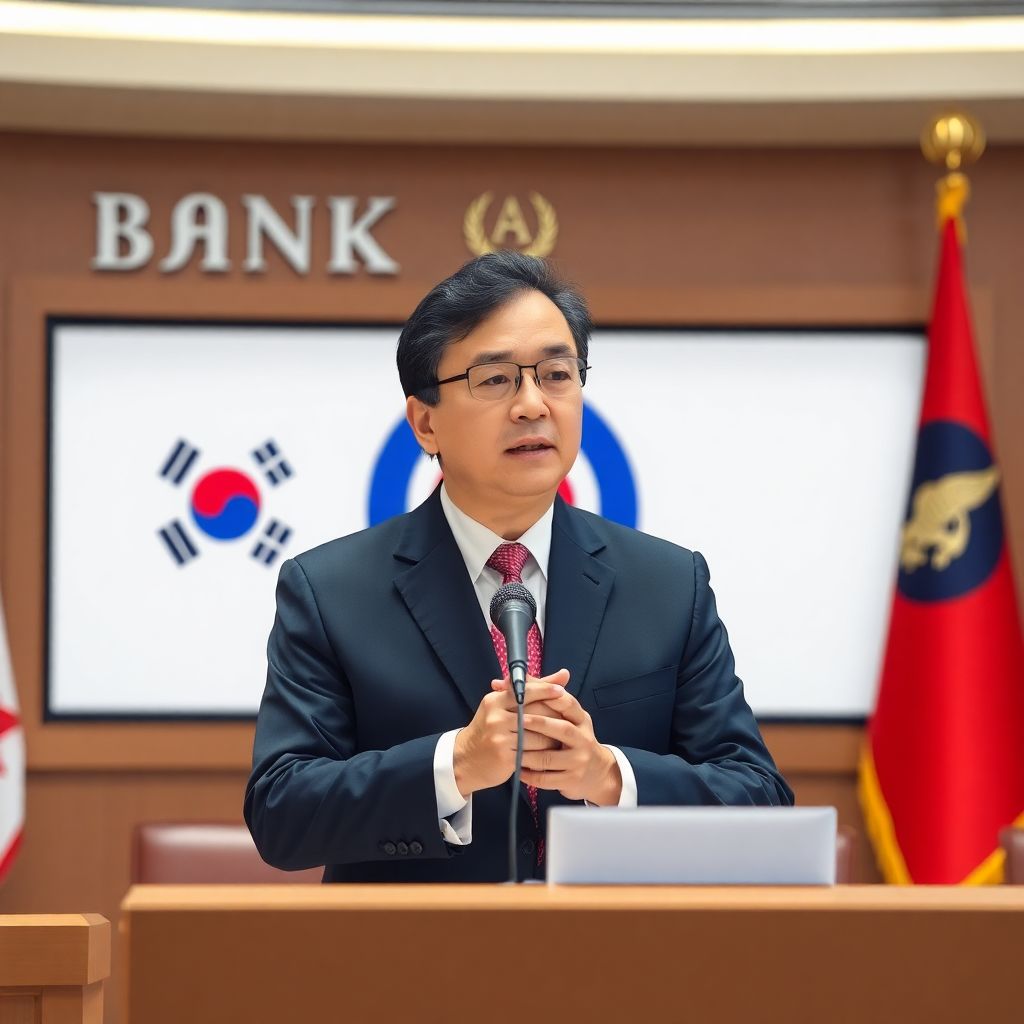
No Stablecoin Reference: New Bank of Korea Governor Puts CBDC Strategy Front and Center
The new Governor of the Bank of Korea (BOK), Shin Hyun-song, has used his first major policy address to firmly position central bank digital currencies (CBDCs) and bank-issued deposit tokens at the core of the country’s monetary future – while noticeably leaving stablecoins out of the discussion.
In his inauguration speech on Tuesday, Shin laid out a four-year roadmap for the central bank, underscoring its responsibility to maintain trust in money and ensure the stability of the payment and settlement system as the financial sector becomes increasingly digital. The speech made clear that the BOK sees CBDCs and tokenized bank deposits as key tools in this transition.
CBDCs and Deposit Tokens as Pillars of a Digital Won
Shin, who previously led the Monetary and Economic Department at the Bank for International Settlements (BIS), framed the BOK’s mission in explicitly forward-looking terms. According to him, the central bank must not only preserve monetary and financial stability, but also proactively shape the architecture of digital finance.
He described the internationalization of the Korean won as “an important task to establish a currency infrastructure befitting our economy’s status,” indicating that digital instruments would be central to that goal. CBDCs and bank-issued deposit tokens, in his view, can strengthen the won’s role in cross-border payments and modernize domestic financial infrastructure at the same time.
Shin highlighted Phase 2 of the BOK’s “Project Han River” as a key vehicle for this agenda. Under this phase, the central bank plans to expand the usability of both CBDC and deposit tokens, moving beyond limited pilots into more practical, real-world applications. He also pointed to international initiatives such as the Agora Project as avenues to enhance the standing of the won in an increasingly digital global payments environment.
Balancing Innovation With Stability
Despite his clear enthusiasm for digital innovation, Shin stressed that reforms to Korea’s currency and payment regime must not come at the expense of stability. He argued that the BOK will need to develop new safeguards and a macroprudential framework adapted to the emerging environment of tokenized deposits, digital currencies, and programmable payments.
This implies a shift from simply overseeing traditional banks and payment systems to supervising a more complex ecosystem of digital money formats, interfaces, and infrastructures. Shin suggested that the central bank will actively discuss and design these safeguards, pointing to a more interventionist but innovation-aware regulatory posture.
The Stablecoin Silence
One of the most striking aspects of the speech was what Shin did not say. Despite CBDCs, deposit tokens, and internationalization being front and center, stablecoins – an asset class that has dominated South Korea’s digital asset policy debates – received no mention at all.
The omission is notable because Shin has previously acknowledged that stablecoins, particularly those denominated in won, could form part of the future currency landscape. As recently as April 14, he stated that he expects CBDCs, deposit tokens, and stablecoins to “coexist in a manner that is supplementary and competitive to each other.” In earlier comments, he framed won-based stablecoins as a potential component within a broader ecosystem of digital won instruments.
By excluding stablecoins from his inaugural policy address, Shin may be signaling that under his leadership, the BOK’s primary strategic focus will be on public-sector and bank-based digital money – CBDCs and regulated deposit tokens – rather than on privately issued stablecoins. This does not necessarily mean stablecoins will be sidelined entirely, but it suggests they will not be the centerpiece of the central bank’s digital agenda.
Background: South Korea’s Stalled Stablecoin Framework
The silence on stablecoins also stands in contrast to the legislative reality. Over the last year, stablecoins have been at the heart of South Korea’s efforts to build a comprehensive digital asset framework.
The Second Phase of the Virtual Asset User Protection Act – often referred to as the Digital Asset Act – has been delayed amid disagreements between the Financial Services Commission (FSC) and the BOK. A key sticking point has been how to regulate the issuance and governance of won-pegged tokens.
Both institutions agree that financial entities must be involved in the issuance of stablecoins, given the systemic implications and consumer protection concerns. However, they diverge on the exact role and degree of control banks should have.
Banks Versus Tech Firms: Who Should Dominate Stablecoin Issuance?
The BOK has argued that any approved stablecoin issuer operating in Korea should be majority-owned by a consortium of banks, proposing a minimum combined stake of 51%. From the central bank’s perspective, such a structure would anchor stablecoins within the regulated banking system, reinforcing oversight and reducing systemic risk. It would also align stablecoins more closely with the traditional monetary framework and ensure better integration with existing payment and settlement infrastructures.
The FSC, however, has expressed concern that giving banks majority control could stifle competition and innovation. In its view, a bank-dominated model might discourage participation from technology companies and fintechs that have been central to digital payment innovation. A market overly tilted toward banks could slow experimentation, reduce consumer choice, and make it harder for new entrants to develop novel payment and financial services built on stablecoins.
This institutional tug-of-war has contributed to the legislative gridlock, with policymakers struggling to find a model that safeguards stability without freezing out the very innovators that have helped drive Korea’s digital finance boom.
Lawmakers Push for Stablecoin Rules Amid Market Momentum
While regulators debate governance structures, lawmakers have urged faster action. Recently, at an academic conference on commercial law in Seoul, Representative Kim Sang-hoon pressed the National Assembly to prioritize and pass the Digital Asset Act. As chairman of the Special Committee on Digital Assets and a prominent member of the ruling People Power Party, he warned that ongoing delays risk leaving policymakers behind as the market continues to evolve independently.
His remarks captured a growing concern in political circles: that regulatory inertia could create a vacuum where private actors set de facto standards before a coherent legal framework is in place. In such a scenario, the state could find itself reacting to market developments rather than shaping them.
What Shin’s Priorities May Signal for Policy Direction
Shin’s decision to spotlight CBDCs and deposit tokens while side-stepping stablecoins in his first address can be read as a signal of where he believes the BOK’s comparative advantage lies.
CBDCs are fully sovereign money, issued and backed by the central bank, while deposit tokens would be claims on commercial banks but built within a tightly regulated framework. Both tools allow authorities to retain strong control over monetary policy transmission, payment system resilience, and data oversight.
Stablecoins, by contrast, are typically private liabilities, even if pegged to the national currency. Integrating them into the official monetary ecosystem raises questions about legal status, backing quality, redemption rights, and their potential to create new channels for bank runs or liquidity stress. Emphasizing CBDCs and deposit tokens first allows the BOK to push digital innovation on its own terms before deciding exactly how far to accommodate privately issued won-pegged tokens.
Potential Coexistence Models: CBDCs, Deposit Tokens, and Stablecoins
Even though stablecoins were omitted from the speech, Shin’s earlier comments about coexistence remain relevant. A likely endgame for Korea’s digital money ecosystem could involve three layers:
1. CBDC as the core public money
A retail or wholesale CBDC could function as the safest digital form of the won, used either directly by households and businesses or indirectly via financial intermediaries. It would anchor trust and serve as a reference asset for other digital instruments.
2. Bank-issued deposit tokens
These would be tokenized versions of traditional bank deposits, circulating on permissioned networks and used for programmable payments, on-chain settlement of securities, or integration with smart contracts. They would leverage banks’ existing role while modernizing the infrastructure.
3. Regulated won-based stablecoins
Privately issued but tightly supervised tokens could operate in more open or cross-border environments, be integrated with global crypto markets, and support use cases where interoperability with public blockchains and DeFi platforms is essential.
Such a layered model would align with Shin’s earlier remarks about competition and complementarity. CBDCs and deposit tokens could provide a robust, state-backed foundation, while regulated stablecoins might serve more experimental or market-driven roles, provided strict rules on reserves, transparency, and redemption are in place.
Internationalization of the Won in a Digital Era
A central theme of Shin’s agenda is the desire to elevate the won’s profile beyond Korea’s borders. Digitalization offers a new path toward that goal. Cross-border CBDC projects, interoperability frameworks, and multi-CBDC platforms could make it easier for foreign partners to settle trade, investment, or remittances directly in won.
Deposit tokens and, eventually, compliant stablecoins could also be used in international contexts, such as trade finance or global supply-chain payments. By linking domestic infrastructure projects like Project Han River with international collaborations, the BOK aims to position the won as more accessible and attractive in digital form than it has historically been in traditional FX markets.
This ambition, however, reinforces the need for clear rules at home. A fragmented or ambiguous regime for digital won instruments could undermine confidence just as Korea tries to expand the currency’s global reach.
What to Watch Next
Several developments will be critical in the coming months:
– Details of Phase 2 of Project Han River
Concrete pilots, use cases, and technical designs for CBDCs and deposit tokens will reveal how far the BOK is willing to go in terms of programmability, privacy, and interoperability with existing financial rails.
– Design of the new macroprudential framework
How the BOK adapts its toolkit for a world of tokenized liabilities and 24/7 digital markets will shape banks’ incentives and the risk profile of the broader financial system.
– Resolution of the BOK-FSC disagreements
Any compromise on stablecoin issuance and governance will define the contours of the domestic stablecoin market: whether it is bank-led, tech-driven, or a hybrid model with shared control.
– The fate of the Digital Asset Act
If lawmakers manage to push the bill through, Korea could move from a fragmented regime to a more coherent structure that covers everything from stablecoin issuance to user protection and market conduct.
A Strategic Reordering, Not a Rejection
Shin Hyun-song’s inaugural address does not necessarily mean that stablecoins are being abandoned as a policy concern. Instead, it suggests a strategic reordering of priorities: build and secure the state-backed and bank-based pillars of digital money first, then decide how best to fit private stablecoins into that architecture.
For now, CBDCs and bank-issued deposit tokens are set to define the BOK’s digital money narrative. Stablecoins, although central to current regulatory debates and legislative efforts, may have to wait for their turn in the spotlight as Korea’s central bank focuses on instruments where it can exert the most direct control – and, in its view, deliver both innovation and stability on its own terms.