
Philippine SEC Signals It’s Ready to Embrace RWA Tokenization
The Philippines is positioning itself as one of the more forward-leaning regulators in Asia when it comes to real-world asset (RWA) tokenization. A senior official at the country’s Securities and Exchange Commission (SEC) has indicated that the regulator now feels legally and institutionally prepared to supervise tokenized assets and integrate them into the local capital markets.
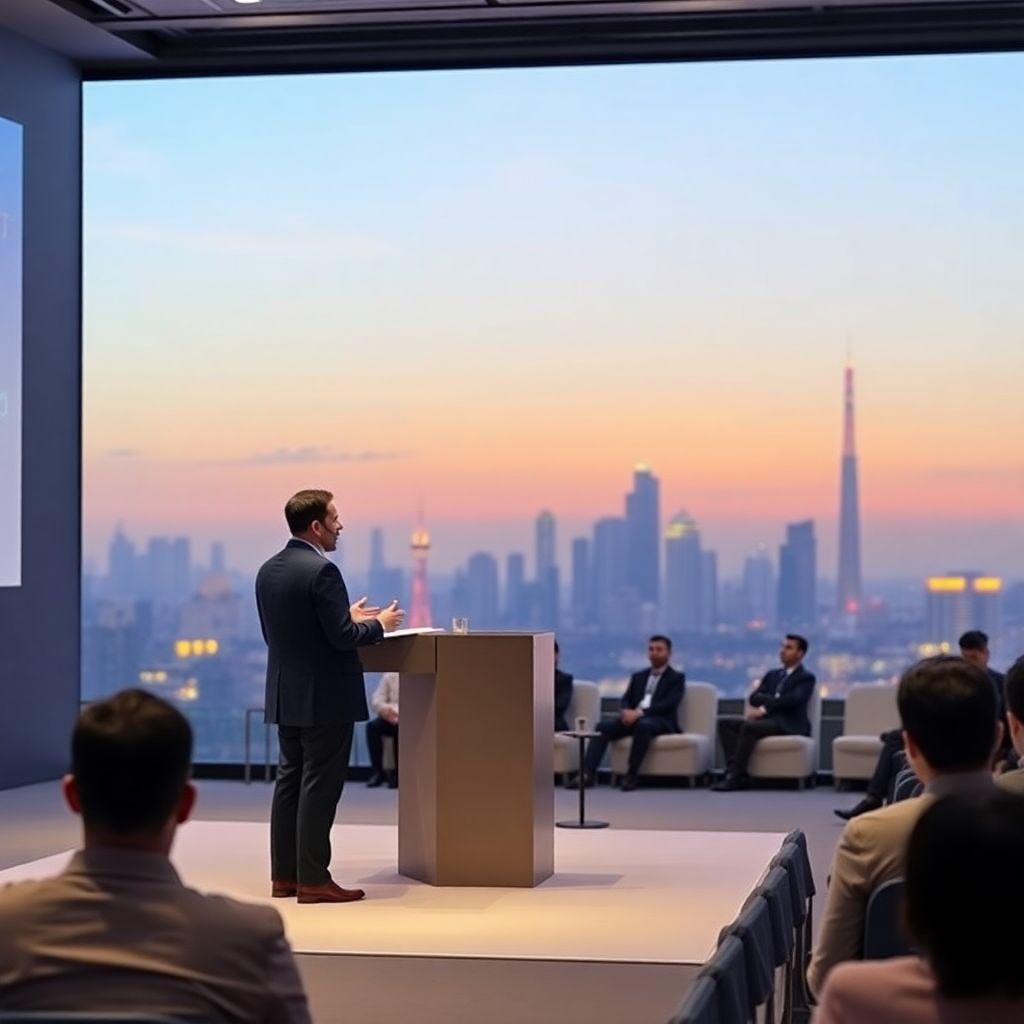
Speaking onstage at Philippine Blockchain Week 2026, SEC Commissioner Rogelio Quevedo said the regulator is “now fully convinced that we have the proper law and the proper regulatory mind and background” to accommodate asset tokenization. In his view, the technology is capable not only of modernizing existing financial infrastructure, but of fundamentally transforming how stock exchanges and capital markets operate in the country.
According to Quevedo, tokenization could “revolutionize” trading venues by making traditionally illiquid or hard-to-access assets available in fractional, digital form. This includes real estate, equities, and other financial instruments that could be turned into blockchain-based tokens and traded more efficiently. The Commissioner framed this as part of a broader modernization drive in the Philippine financial system, where regulators aim to encourage innovation without compromising oversight.
In a follow-up conversation, Quevedo emphasized that regulated tokenized investment products are not just a technology upgrade – they can also function as a powerful tool for investor protection, especially for a vulnerable but economically crucial group: overseas Filipino workers (OFWs).
He pointed out that millions of OFWs remit substantial amounts of money back home but often lack access to safe, transparent, and reasonably yielding investment products. “Our OFWs, they have the capital. They do not know where to place their money. They do not know how to make their money earn,” Quevedo said. This information gap, he noted, has made OFWs and other retail savers frequent targets for fraudulent schemes promising unrealistic returns.
By creating clearly supervised, tokenized products, the SEC hopes to channel this capital into legitimate investments instead of leaving individuals to navigate unregulated online offerings. Tokenization could allow OFWs to buy small, affordable fractions of high-quality assets – such as real estate or diversified funds – using digital platforms, potentially with lower minimums and greater transparency than many traditional products.
Quevedo also underscored that the regulator is stepping up its enforcement and surveillance capabilities to combat scams. He said the SEC is already deploying artificial intelligence tools to identify and track fraudulent schemes and is actively coordinating with major technology platforms, including search engines and social media apps, to detect and remove illegal investment promotions. This combines technological innovation on the investment side with technological sophistication in enforcement.
The Commissioner’s remarks illustrate how Philippine authorities increasingly see regulated tokenization not only as a catalyst for capital-market innovation, but also as a counterweight to unregistered and high-risk offerings. In recent years, the SEC has repeatedly moved against platforms and schemes operating without authorization, and the willingness to embrace properly supervised tokenized assets fits into that broader pattern of balancing innovation with protection.
This policy stance is closely aligned with the SEC’s existing “Strategic Sandbox,” also known as StratBox. The sandbox provides a controlled environment in which fintech firms can test new products, services, and business models in real market conditions, but under direct regulatory oversight and with carefully defined parameters.
Under the StratBox framework, the SEC is empowered, within the limits of current law, to waive or adjust certain rules for sandbox participants. This flexibility helps firms experiment without immediately bearing the full compliance burden that would normally apply to mature products. However, the regulator makes clear that being in the sandbox does not grant blanket exemptions from the law, nor can the sandbox be used as a back door to circumvent regulations altogether. Participants remain subject to core investor-protection and market-integrity requirements.
As of November 2025, four companies had been admitted into the sandbox. One of these was testing a tokenized real estate investment product, signaling early regulatory openness to RWAs on-chain. Two other firms were experimenting with solutions that provide Philippine investors with regulated access to United States equities, potentially allowing local users to gain cross-border exposure through compliant digital platforms. Another firm, BlockShoals Technologies, received in-principle approval to experiment with a range of crypto-related products and services under SEC supervision.
These early experiments serve as proof-of-concept for how tokenization and digital finance might be scaled in the Philippine market. For regulators, they provide valuable data about investor behavior, operational risks, cybersecurity concerns, and the adequacy of existing legal frameworks. For fintech companies, they represent a legitimate path to innovate without being immediately shut down for regulatory uncertainty.
Beyond pilots and sandboxes, the broader potential of RWA tokenization for the Philippines is substantial. By turning physical or traditional financial assets into digital tokens, markets can support fractional ownership, near-instant settlement, and round-the-clock trading. These features are particularly attractive in a country where many investors are mobile-first and may prefer app-based investment platforms.
For example, a large property development that would traditionally be open only to institutional investors or high-net-worth individuals could be broken into thousands or millions of tokens. Retail investors – including OFWs sending money home – might then buy small slices, participate in rental income or capital appreciation, and exit more easily by selling their tokens on regulated secondary markets. This kind of democratization of access has the potential to deepen the country’s investor base and mobilize more domestic capital.
However, the move toward RWA tokenization is not without challenges. Regulators must address questions about custody of tokenized assets, legal recognition of token ownership, the interface between “on-chain” and “off-chain” rights, and cross-border compliance when tokens reference assets or markets outside the Philippines. Cybersecurity and operational resilience are also critical: tokenized markets can only flourish if investors trust that platforms are secure and that redress mechanisms exist when things go wrong.
The SEC’s emphasis on having “the proper law” and the right “regulatory mind and background” indicates that these questions are actively being considered. The Philippines does not want tokenization to grow in a legal vacuum; it aims to fold new products into an already evolving regulatory framework for securities, investment contracts, and digital assets.
Investor education will be another crucial piece of the puzzle. While tokenized products may be easier to access, they are not inherently simpler to understand. The SEC and market participants will likely need to invest in clear disclosures, risk warnings, and accessible educational materials that explain, in practical terms, what it means to own a token tied to a real asset, how returns are generated, and what risks remain.
For OFWs and local retail investors, this combination of regulated innovation, AI-enhanced enforcement, and targeted education could be transformative. Instead of being limited to informal schemes or opaque offerings, they could gain access to a curated menu of vetted, diversified tokenized products that fit different risk and time horizons. In turn, this could support broader national goals, from increasing financial inclusion to channeling capital into infrastructure, housing, and productive enterprises.
On the industry side, the SEC’s stance sends a clear signal to both domestic and international firms: serious, compliant players in the tokenization and digital assets space may find an increasingly receptive environment in the Philippines. Fintech companies that are willing to work within regulatory boundaries, join the StratBox, and collaborate on standards have a pathway to bring new products to market.
Looking ahead, the evolution of RWA tokenization in the Philippines will likely hinge on three parallel developments: the maturation of the sandbox projects, the refinement of securities and digital asset regulations to explicitly cover tokenized instruments, and the development of secure, user-friendly platforms that can bridge traditional finance and blockchain-based systems.
If these elements come together as the SEC envisions, the Philippines could emerge as a regional example of how a developing economy can harness tokenization – not as a speculative playground, but as a regulated channel to expand investment access, protect vulnerable investors, and modernize its capital markets.