
Blockchain.com deepens tokenized stocks offering with Ondo Finance
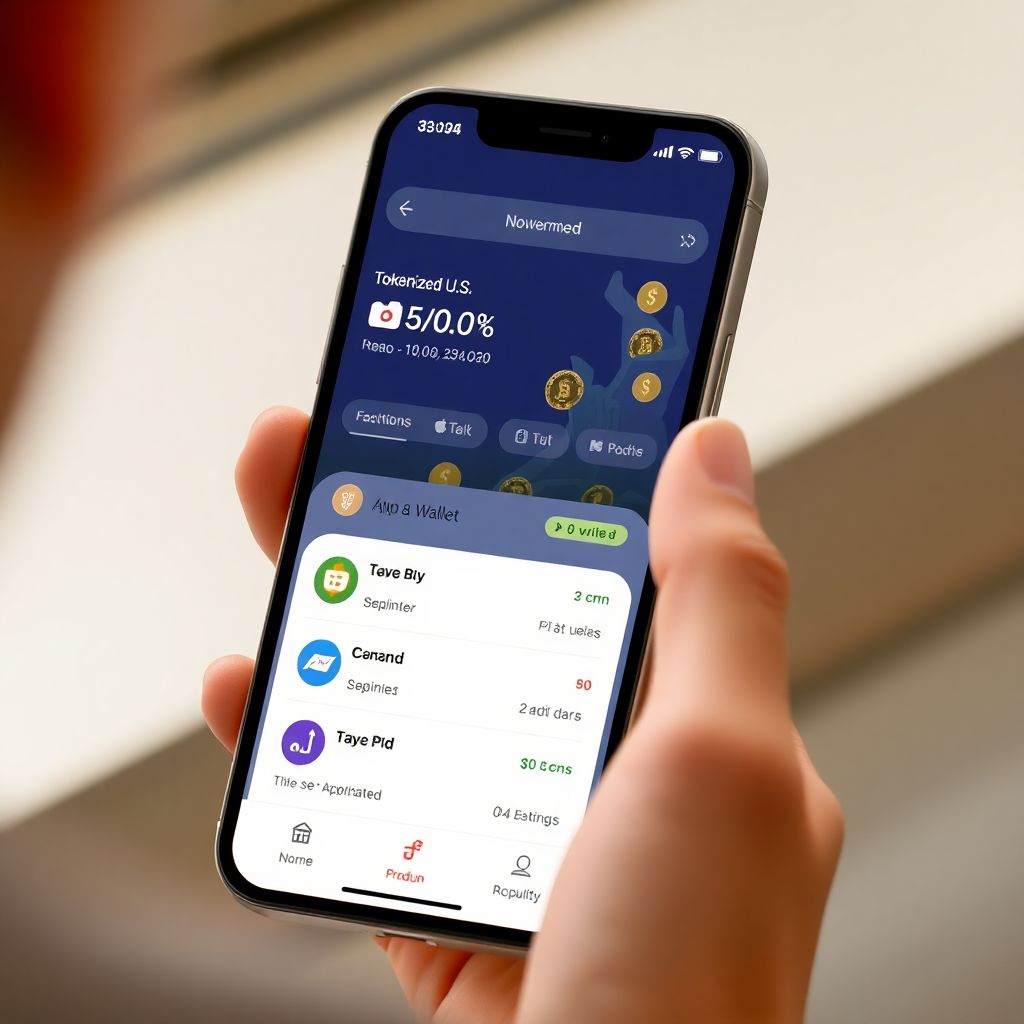
Blockchain.com is widening its real‑world asset lineup by integrating more tokenized U.S. stocks and ETFs through Ondo Finance, bringing traditional market exposure directly into users’ crypto wallets. The move folds equities into the same interface where people already hold bitcoin, stablecoins and DeFi positions, without forcing them into a classic brokerage environment.
Instead of opening a separate account with a stock trader, eligible Blockchain.com users can now access Ondo’s tokenized products from within a familiar crypto wallet. The design goal is clear: make buying exposure to U.S. stocks feel as straightforward as holding any other onchain token, while keeping the regulatory and operational plumbing in the background.
Ondo Finance has quickly become one of the most visible players in the tokenized real‑world asset (RWA) space. Its model is based on taking instruments investors already understand-such as U.S. Treasuries, yield‑bearing funds and now stock‑linked products-and issuing blockchain representations of those exposures. In this setup, Blockchain.com acts as a high‑traffic, consumer‑facing distribution channel, giving Ondo immediate reach across a global wallet user base.
This approach underlines a key reality of tokenization: the bottleneck is no longer only technological. The tools to represent securities onchain already exist. The real challenge lies in distribution and user experience. People need frictionless ways to pass compliance checks, fund their accounts, store assets safely and, crucially, understand why a tokenized product is preferable to an account at a traditional broker. Integrations directly into popular wallets are an attempt to compress that entire journey into a few taps.
A major segment of this strategy is aimed beyond U.S. borders. In many countries, gaining exposure to U.S. equities is cumbersome. Investors may face high fees, patchy local brokerage infrastructure, slow settlement, or minimum balance requirements that make regular investing inaccessible. Tokenized stocks and ETFs promise a crypto‑native alternative, where users already comfortable with stablecoins and self‑custody can add equity‑style exposure using tools they know.
That is where the Blockchain.com-Ondo collaboration becomes particularly interesting. Rather than trying to lure entrenched U.S. brokerage customers away from their long‑standing platforms, the partnership focuses on a global audience that already treats crypto wallets as a core piece of financial infrastructure. For those users, adding stock‑like instruments into the same environment as their digital assets is a natural next step.
The RWA category is rapidly turning into one of the most competitive fronts in both fintech and crypto. Centralized exchanges, neobanks, DeFi protocols and specialist issuers are all racing to define the primary gateway through which everyday users will interact with tokenized versions of traditional assets. Stocks and ETFs stand at the center of this race because they are easy to explain, heavily traded worldwide and already embedded in how people think about long‑term savings and investment.
However, the tokenization of equities brings a series of non‑trivial questions that any serious product must address. Users need clarity about who actually holds the underlying shares, what their legal rights are, how redemptions work, which market hours apply, what happens during corporate actions like splits or dividends, and how regulators classify these arrangements. The products that ultimately succeed will combine crypto‑level simplicity-instant transfers, onchain settlement, transparent balances-with institutional‑grade confidence in the legitimacy and safety of the backing assets.
Blockchain.com and Ondo are effectively betting that wallet‑native access is the missing bridge. If tokenized stocks can be browsed, purchased and stored next to stablecoins with the same ease as any standard crypto token, the psychological barrier between “trading crypto” and “investing in traditional markets” starts to dissolve. For many users, especially in emerging markets, that could be the only practical path into U.S. equity exposure.
How tokenized stocks work in practice
Under typical tokenized equity structures, a regulated entity acquires and custodies the underlying shares or ETF units. Against that pool of securities, tokens are issued on a blockchain, each representing a claim on a proportional slice of the asset. When users buy the token, they are not directly receiving paper share certificates; instead, they are getting onchain exposure backed by those centrally held stocks.
Transfers of the token happen at blockchain speed and cost, but the underlying asset usually trades only during traditional market hours. That means price feeds, trading windows and order types may still be influenced by legacy market mechanics, even as settlement looks like any other crypto transaction. The Blockchain.com-Ondo model sits in this hybrid zone: crypto‑style ownership experience anchored by real‑world securities infrastructure behind the scenes.
Why this matters for everyday crypto users
For people already active in crypto, having tokenized stocks in the same wallet as stablecoins and DeFi positions creates a more holistic portfolio view. Instead of logging into multiple platforms-one for equities, another for yield products, another for trading crypto-they can see their exposures in a single interface. Rebalancing between asset classes becomes simpler: in theory, a user could move from tokenized stocks into stablecoins or vice versa within minutes, depending on how the product is structured.
This also aligns with the growing role of stablecoins as de facto savings and transacting tools in parts of the world with unstable local currencies or capital controls. Once users hold value in a dollar‑linked token and use a wallet as their financial hub, the next logical step is to look for yield or growth assets without leaving that environment. Tokenized Treasuries and tokenized stocks sit naturally along that path.
The regulatory and compliance dimension
While the front‑end experience may feel seamless, nothing about tokenized securities is simple from a compliance perspective. KYC and AML checks remain central, and offerings are often restricted by jurisdiction, investor status, or product type. The Blockchain.com integration does not change that reality; eligibility rules still apply, and not all users will see the same menu of assets.
Over time, however, the market is likely to standardize frameworks for tokenized RWAs, just as it did for stablecoins. Consistent rules around disclosure, reserve management, audit practices and redemption processes will be critical to building trust at scale. Partnerships between established wallet providers and specialized RWA issuers are one way of signaling a more mature approach to this evolving category.
Impact on traditional brokers and fintech platforms
Tokenized stocks are not an immediate replacement for full‑service brokerage accounts. Traditional platforms still dominate when it comes to tax tooling, detailed research, advanced order types, margin facilities and integrated retirement products. But the competitive pressure is real. If a growing share of younger or globally distributed investors first encounter U.S. equities through tokenized products inside their crypto wallets, the center of gravity for retail investing could slowly shift.
Brokers and neobanks are already responding by experimenting with their own forms of tokenization, fractionalization, and 24/7 trading experiences. The outcome is unlikely to be a simple “old vs new” scenario; instead, users may cherry‑pick features from both worlds, forcing providers to converge on a more flexible, interoperable model.
What this signals about the future of RWAs
The expansion of tokenized stocks on Blockchain.com is part of a broader trend in which almost any yield‑bearing or tradable asset is being reimagined as an onchain primitive. Government bonds, money market funds, real estate, private credit and now mainstream equities are all moving in this direction. Each new integration tightens the link between crypto rails and traditional finance, turning blockchains into a neutral settlement layer for a wide spectrum of asset classes.
If this trajectory continues, the distinction between a “crypto wallet” and a “brokerage account” may eventually blur into a single, multi‑asset financial dashboard. In that world, whether a user holds native crypto, tokenized bonds, or stock‑linked tokens becomes a detail of implementation rather than a defining category.
Key risks users should keep in mind
Despite the appeal, tokenized equities are not risk‑free. Users need to consider several factors:
– Counterparty risk: the entity holding the underlying stocks must be trustworthy and well regulated.
– Legal structure: investors must understand what, exactly, they own-an economic claim, a derivative, or a direct fractional share representation.
– Liquidity: not all tokenized products will have deep secondary markets, especially in early stages.
– Regulatory change: evolving rules may affect who can access which products, or how they are taxed and reported.
For now, informed due diligence remains essential, even when the user experience feels as simple as sending a token.
The bottom line
By expanding access to Ondo’s tokenized stocks and ETFs, Blockchain.com is pushing the RWA narrative from a niche DeFi experiment toward a mainstream wallet experience. The integration aims to make traditional market exposure accessible to a global, crypto‑native audience, using the tools and interfaces they already rely on. As more players enter the race to become the default gateway for tokenized assets, the competition will likely drive better products, clearer rules and, ultimately, a more integrated financial landscape where onchain and offchain assets coexist inside a single, unified portfolio.