
“Already woven into U.S. finance”: Trump’s Fed chair pick Kevin Warsh embraces crypto
Kevin Warsh, nominated by U.S. President Donald Trump to lead the Federal Reserve, has made it clear that he views digital assets not as a fringe experiment, but as an established component of the American financial system.
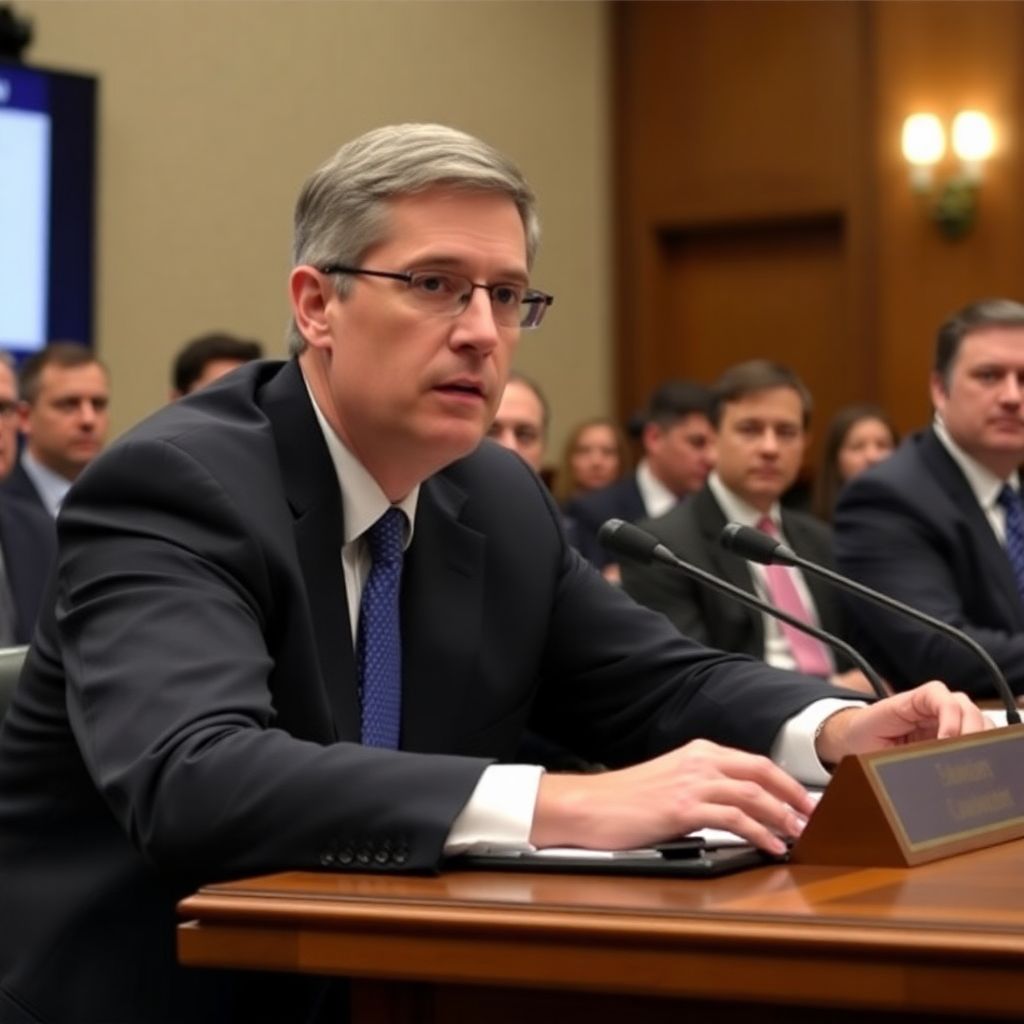
During an April 21 hearing before the Senate Banking Committee, Senator Cynthia Lummis pressed Warsh on how he sees cryptocurrencies and related assets fitting into the broader economy. She asked whether digital assets should be “incorporated into our financial industry so Americans have new investment opportunities and consumer protections.”
Warsh’s response left little room for doubt.
“Yes,” he said. “Digital assets are already part of the fabric of our financial services industry in the United States.”
His answer signaled not just tolerance, but an acknowledgment that crypto has moved from the periphery into the mainstream of U.S. finance.
Crypto adoption moves into the mainstream
Warsh’s remarks come against the backdrop of rapid growth in crypto participation and infrastructure. The recent launch and approval of multiple crypto exchange-traded funds (ETFs) has made gaining exposure to digital assets significantly easier for retail and institutional investors alike.
Research from River highlights the speed of this adoption: roughly 50 million Americans are estimated to own Bitcoin, compared with about 37 million people in the country who play golf or belong to golf clubs. That comparison has become a shorthand way to illustrate how deeply Bitcoin and other digital assets have penetrated everyday investing habits.
From brokerage platforms offering spot Bitcoin ETFs to financial advisors quietly adding crypto exposure to diversified portfolios, the asset class is increasingly treated as another part of the investment toolkit rather than an exotic outlier.
Industry reaction: cautious optimism
Warsh’s comments have been welcomed by many within the digital asset industry, who have long argued that the U.S. needs clear, informed leadership at the top of its central banking system if it wants to remain competitive in financial innovation.
Paul Grewal, chief legal officer at Coinbase, publicly praised Warsh’s stance, noting that “Mr. Warsh gets it.” He argued that Warsh’s potential appointment as Fed chair would be a major moment for both the country and the crypto ecosystem, implying that a more nuanced approach from the central bank could help bring regulatory clarity and long-term stability to the sector.
What makes Warsh’s support particularly notable is that it does not appear to be merely rhetorical. Recent financial disclosures reveal that he holds sizable positions across a range of crypto-related projects, suggesting a personal conviction in the technology’s long-term potential.
A contested nomination in a politically charged environment
Despite support from parts of the financial and crypto industries, Warsh’s nomination has been deeply contentious on Capitol Hill.
Trump tapped Warsh in January 2026 to succeed Jerome Powell as chair of the Federal Reserve. Powell’s current term runs through May 15, though he could continue serving beyond that date until the Senate votes to confirm or reject Warsh.
Trump has repeatedly criticized Powell for, in his view, moving too slowly to cut interest rates. The president’s choice of Warsh is widely seen as an attempt to install a Fed leader more aligned with his preference for looser monetary policy and more aggressive rate reductions.
During the hearing, Warsh rejected the notion that Trump had directly demanded rate cuts from him as a condition of his nomination. Even so, many Democrats expressed concern that he would face intense White House pressure and might be too willing to accommodate it.
Elizabeth Warren: warning of a “sock puppet” Fed
Senator Elizabeth Warren, the top Democrat on the Senate Banking Committee, emerged as one of Warsh’s most vocal critics. She warned that Warsh would serve as a “sock puppet” for the president rather than an independent central banker.
“Having a sock puppet in charge of the Fed would also give the president access to the Fed’s powerful authorities to enrich himself, his family, and his Wall Street buddies,” Warren argued, framing the nomination as a threat to the Fed’s independence and integrity.
She went further, suggesting very specific avenues for potential abuse. In her view, a compromised Fed chair could, for example, arrange “special accounts” for a president’s family-owned crypto company or orchestrate targeted bailouts for financial allies if their bets went sour.
Warren concluded that Warsh was “uniquely ill-suited” for the job, pointing back to his tenure as a Fed governor during the 2008 financial crisis. In her telling, the central bank’s response under leadership that included Warsh prioritized rescuing major financial institutions while ordinary citizens bore the brunt of the recession.
Crypto at the center of a broader debate
The clash over Warsh’s nomination highlights an important shift: crypto policy is no longer a niche topic. It sits at the intersection of central bank independence, financial stability, consumer protection, and presidential power.
Supporters of Warsh argue that his recognition of digital assets as a permanent fixture in U.S. finance is simply a realistic reading of the landscape. From their perspective, a Fed chair who understands how crypto markets function-and how deeply they are now interwoven with traditional finance-is better positioned to monitor risks and enable innovation.
Critics, however, worry that significant personal investments in crypto and close alignment with a crypto-friendly president could skew decision-making. They fear that monetary policy or regulatory guidance could be shaped in ways that unduly favor certain digital asset businesses or speculative activity.
What Warsh’s stance could mean for future Fed policy
If confirmed, Warsh’s views on crypto could influence several key areas of Fed policy and communication:
1. Regulatory clarity and coordination
Although the Federal Reserve is not a securities regulator, its approach to supervision, banking rules, and payment systems strongly affects how banks and financial institutions engage with digital assets. A chair who openly acknowledges crypto’s permanence may push for more coordinated, transparent frameworks across agencies rather than a piecemeal, enforcement-driven approach.
2. Bank access to crypto services
The Fed plays a gatekeeping role in granting banks and financial institutions access to the payments and settlement system. Under a chair who sees digital assets as part of the existing financial fabric, banks could, in theory, face fewer informal barriers to offering custody, trading, or settlement services for crypto.
3. Research on central bank digital currencies (CBDCs)
Warsh’s crypto-friendly outlook could shape how actively the Fed studies or pilots CBDCs, as well as how it interprets the competitive and systemic implications of stablecoins and tokenized deposits issued by the private sector.
4. Systemic risk monitoring
Acknowledging that crypto is embedded in U.S. finance also means acknowledging that shocks in digital asset markets can spill over into traditional markets. Under Warsh, the Fed might integrate on-chain and off-chain crypto indicators into its stress-testing and stability assessments.
Implications for investors and the crypto industry
For the crypto industry, a Fed chair who publicly validates the sector’s role in finance is symbolically powerful. It signals to institutional investors, banks, and asset managers that digital assets are not going away-and that the top U.S. monetary authority is prepared to treat them as part of the broader financial ecosystem.
This doesn’t guarantee lenient policy. On the contrary, formal recognition often precedes more structured, and sometimes stricter, oversight. Market participants should expect that with higher adoption and a stronger presence in mainstream portfolios, crypto will face more scrutiny around leverage, liquidity, and links to the banking system.
For retail investors, Warsh’s stance could mean more regulated, familiar channels to gain exposure-such as ETFs, compliant custodial services, and integrated offerings from traditional brokers-rather than relying on offshore exchanges or unregulated platforms.
Why adoption metrics matter for the Fed
Figures like “50 million Americans own Bitcoin” are more than marketing slogans. For central bankers, they are signals that digital assets represent a meaningful slice of household balance sheets and investor behavior.
When an asset class reaches tens of millions of users, it becomes relevant to issues such as:
– Consumer protection and investor education
– The transmission of monetary policy through asset prices and credit conditions
– The stability of funding markets, particularly if leveraged crypto positions are collateralized with traditional financial assets
– The potential for rapid swings in sentiment to amplify or mute economic cycles
By calling digital assets part of the “fabric” of financial services, Warsh is implicitly recognizing that the Fed can no longer analyze the economy without at least considering crypto’s role in wealth, speculation, and risk-taking.
Balancing innovation and risk
A central question for a Warsh-led Fed would be how to balance innovation with prudence. On one hand, digital assets and blockchain infrastructure promise faster settlement, programmatic finance, and new business models for savings, lending, and payments. On the other, they introduce novel forms of concentration risk, technological vulnerabilities, and correlated speculative manias.
A Fed chair who understands both sides of this ledger might encourage experimentation under strict risk management standards-requiring robust capital, clear disclosure, and sensible leverage limits for institutions that interact heavily with crypto markets.
Conversely, if political interference becomes a dominant concern, the institution could face internal divisions between those who want to welcome innovation and those who see any shift toward crypto as a political concession.
The wider political stakes
The Warsh nomination debate is also a proxy battle over who should shape the next phase of U.S. financial evolution. Should crypto’s integration be guided primarily by technocratic experts at the central bank and regulatory agencies, or by an administration with strong preferences for rapid deregulation and growth?
Warren and other skeptics fear that under a politically aligned Fed chair, decisions about interest rates, bank supervision, and digital asset oversight could be nudged to serve short-term political or personal interests. Supporters counter that previous Fed leadership, including during the 2008 crisis, already made controversial choices that favored large institutions-and that Warsh’s experience in that period gives him valuable institutional knowledge.
What to watch next
As the Senate moves toward a decision, several developments will be closely watched by both traditional and crypto market participants:
– The extent to which Warsh clarifies how he would handle potential conflicts of interest arising from his crypto holdings.
– Any additional detail he provides about his views on stablecoins, CBDCs, and the appropriate role of the private sector in issuing digital money.
– Signals from moderate senators who could swing the confirmation vote, particularly those representing states with growing fintech and digital asset industries.
– Market reactions in crypto and bond markets, which may interpret Warsh’s chances of confirmation as indicators of both future monetary policy and regulatory tone.
Regardless of whether Warsh ultimately becomes Fed chair, the debate itself underscores a new reality: digital assets are no longer an optional topic for central bankers. The question is no longer whether crypto is part of U.S. finance-it is how, and under whose guidance, it will be managed.