
White House confirms Trump to headline TRUMP memecoin gala at Mar-a-Lago
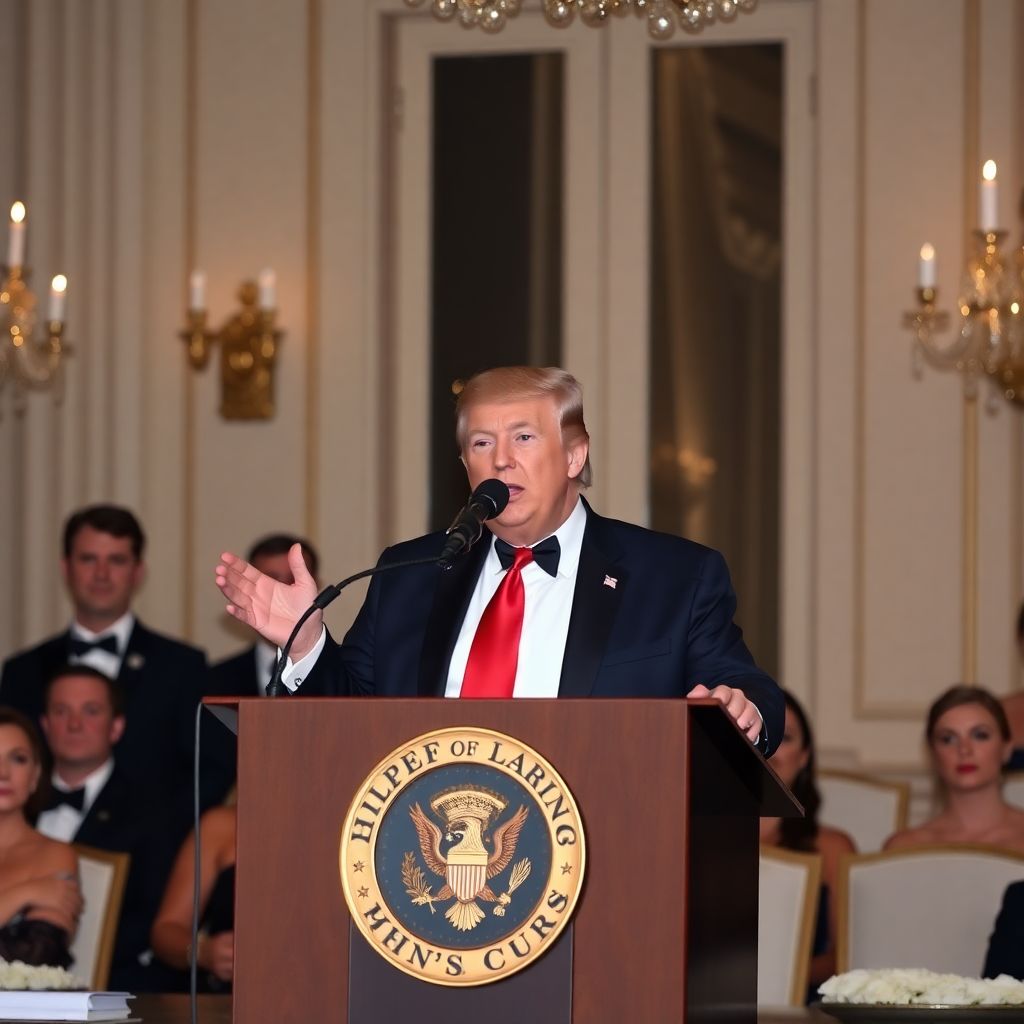
US President Donald Trump is now officially scheduled to appear at a high-profile gathering for major holders of his TRUMP memecoin, with the White House confirming he will deliver a keynote speech at the event on Saturday.
The gala, to be held at Trump’s Mar-a-Lago resort in Florida, is being marketed as an exclusive luncheon for the largest holders of the Official Trump (TRUMP) token. According to event details, invitations are limited to the top 297 wallets holding the token. Of those, the 29 largest holders will receive an additional perk: access to a private reception with the president.
The confirmation follows weeks of uncertainty. When the event was first announced in March, officials indicated that Trump’s attendance was not guaranteed and that it had not yet been firmly placed on his calendar. At the time, the date overlapped with the White House Correspondents’ Association Dinner in Washington, DC, which Trump had previously signaled he planned to attend – a first for his presidency.
Despite that earlier ambiguity, officials have now clarified that Trump will indeed travel to Florida to address the memecoin gathering. Reports on Friday indicated that the White House has locked in his appearance and that he is expected to deliver a formal keynote at the luncheon organized by the team behind the TRUMP token.
Event organizers, however, have kept a degree of flexibility in the fine print. The terms associated with the gala explicitly note that Trump’s participation cannot be absolutely guaranteed and that the event “may be canceled for any reason.” That disclaimer has done little to quiet the political uproar surrounding the initiative.
Criticism from lawmakers has intensified as more details emerged about how access to the president is being structured around token ownership. Several congressional Democrats have argued that tying in-person time with Trump to the size of an individual’s TRUMP memecoin holdings creates the appearance of a direct financial conflict of interest.
Earlier this month, Democratic Senators Elizabeth Warren, Richard Blumenthal and Adam Schiff sent a letter to Bill Zanker, the figure publicly associated with the TRUMP memecoin project. In their letter, they questioned whether the president is effectively “dangling access” to himself as an incentive for people to buy or hold more of the token.
They pointed to promotional materials and event framing that describe the gala as a rare opportunity to meet the president, arguing that organizers are “promoting a conference by dangling access to President Trump to potential attendees (and in doing so, are encouraging purchases of his meme coin that will generate transaction fees for the President and his family) on a day he may not actually be able to attend.”
This weekend’s gathering is the second in-person event built around the TRUMP token. The first took place in May 2025 at one of Trump’s golf properties and immediately drew criticism from ethics watchdogs and political opponents. Detractors at the time claimed that the president was using his office to drive private gains by boosting interest in a token that could ultimately benefit him and his relatives financially.
The latest gala has revived those concerns and added new ones. Ethics experts have raised questions about how the event intersects with longstanding norms intended to separate a sitting president’s official responsibilities from personal business ventures. While presidents are not barred from having private financial interests, they are generally expected to avoid situations that could be seen as monetizing access to the office.
The TRUMP memecoin itself sits at the intersection of politics, internet culture and speculative finance. Marketed as a meme-driven asset branded around the president’s persona, it has attracted a mix of devoted supporters, casual traders and opportunistic speculators. Like many memecoins, it is highly volatile, with prices often driven more by online hype and high-profile events than by underlying fundamentals.
By tying real-world access to the president to token ownership, the Mar-a-Lago event effectively blurs the line between a political brand and a tradable digital asset. Supporters argue that it is a novel form of engagement that harnesses new technology to reward loyalty. Critics counter that it effectively turns proximity to political power into a perk that can be bought on the open market.
The scheduling conflict with the White House Correspondents’ Association Dinner adds another layer of scrutiny. Traditionally, presidents use that Washington event to address the press corps, comment on national issues and demonstrate a commitment to an independent media. Choosing instead to headline a closed-door luncheon for memecoin holders is already being framed by opponents as a symbolic statement of priorities.
From a legal perspective, much remains murky. Existing campaign finance and ethics rules were written long before the explosion of cryptocurrencies and digital tokens. Questions linger over how to classify benefits that flow from a memecoin tied to a sitting president’s image, particularly if family members or close associates receive a share of the economic upside. Regulators and lawmakers are still debating whether such tokens should be treated as securities, commodities, or something else entirely.
Financial transparency is another unresolved issue. If Trump or his family directly hold TRUMP tokens or receive a portion of transaction fees or project revenues, watchdogs will likely push for greater disclosure. Without clear reporting, it is difficult for the public to assess the extent to which official decisions or public appearances might intersect with private financial interests linked to the token.
The event also spotlights a broader trend: political figures increasingly experimenting with crypto and digital assets to cultivate communities and raise funds. Token-based access models, where ownership of a specific coin or NFT unlocks private events or exclusive channels, are becoming more common. Trump’s memecoin gala is one of the highest-profile examples of this approach, which may encourage others to follow suit – and in turn accelerate calls for new regulation.
For memecoin holders, the gala is being pitched as a rare opportunity not just to meet the president, but to validate the token’s status and relevance. High-visibility events can temporarily boost a project’s profile and trading volume, creating sharp price swings around key dates. Traders are watching closely to see whether Trump’s confirmed appearance will trigger another speculative spike and whether the token can sustain interest beyond headline-driven volatility.
Politically, the optics may prove as significant as any immediate financial outcome. Trump’s decision to personally attend and speak at the event signals that he is willing to openly embrace a crypto-branded product that carries his name while in office. Whether voters view that as innovative engagement or as an inappropriate commercialization of the presidency could influence how future politicians approach similar ventures.
As Saturday approaches, the Mar-a-Lago event has become a test case for how far a sitting president can integrate personal branding, digital assets and official stature without crossing ethical red lines. With Trump now confirmed as keynote speaker, the gala will be watched closely not only by crypto enthusiasts and TRUMP holders, but also by regulators, ethics lawyers and political strategists looking to understand the boundaries of this new frontier.