
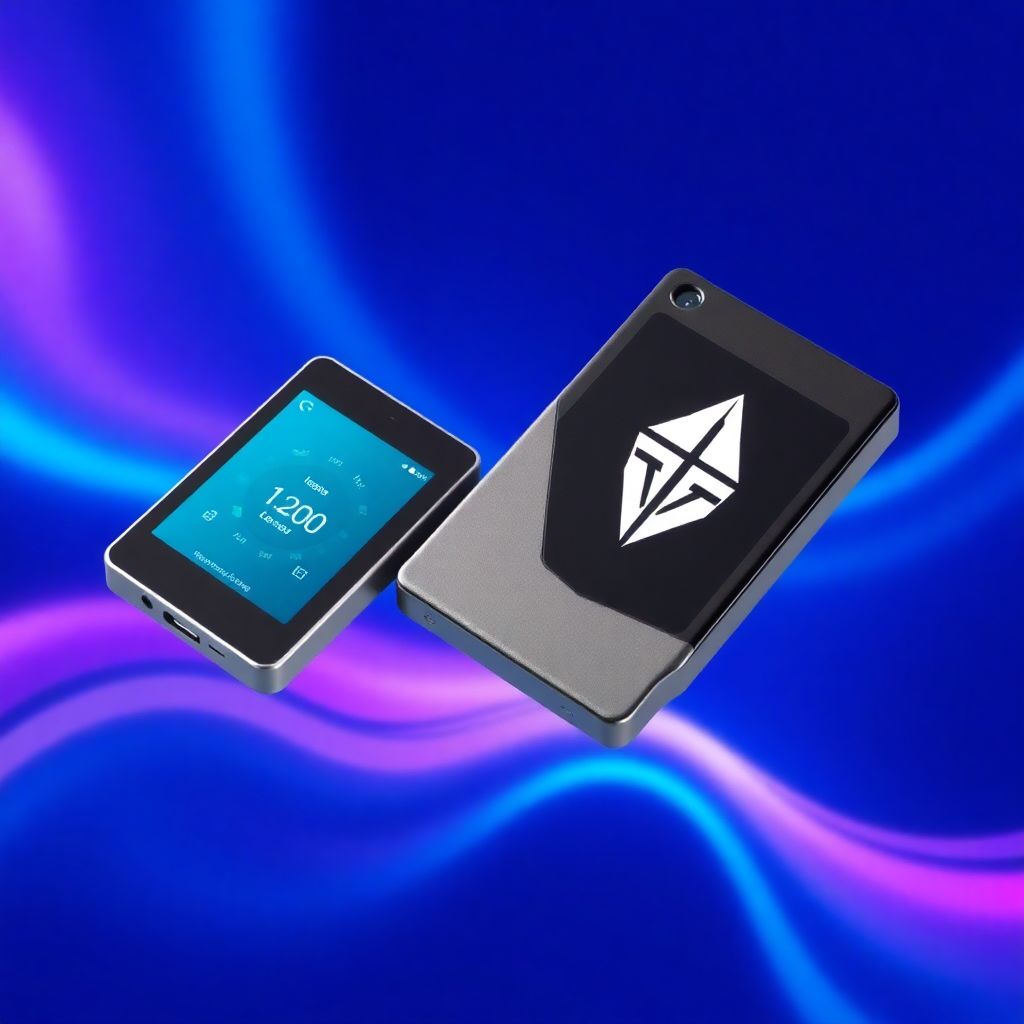
Ledger and Trezor Unveil Next-Gen Wallets for 2025: A New Era in Crypto Self-Custody
Two of the most prominent names in the cryptocurrency security industry, Ledger and Trezor, have launched their latest devices for 2025, marking a significant evolution in the landscape of crypto self-custody. With Ledger introducing its new Nano Gen5 and Trezor debuting the Safe 7, users are now offered not only enhanced protection but also forward-looking technologies such as quantum-readiness and improved user interfaces.
Ledger Repositions Itself with the Nano Gen5
Ledger is redefining its identity, moving away from the traditional “hardware wallet” terminology. Instead, the company now refers to its devices as “signers,” a shift that reflects a broader vision for digital asset security. The newly released Ledger Nano Gen5 embodies this change, combining enhanced functionality with a more intuitive user experience.
Among the standout features of the Nano Gen5 is its larger screen, which supports clearer transaction signing and improved navigation. This follows the design philosophy seen in Ledger’s premium devices, such as the touchscreen-enabled Ledger Stax and Ledger Flex. The Gen5 brings these elements into a more affordable package, priced at $179 in the U.S. and 179 euros in Europe.
The device also integrates the Ledger Recovery Key, a feature introduced in June, and maintains Bluetooth connectivity for seamless mobile pairing. The rebranding of the Ledger Live companion app to simply “Ledger Wallet” further aligns with the company’s new direction. Another notable addition is Ledger Multisig, a tool tackling the long-standing issue of blind signing in multi-signature environments.
Design-wise, Ledger continues its collaboration with legendary product designer Tony Fadell, known for his work on the iPod. For Gen5, Susan Kare, the iconic graphic designer behind Apple’s original Mac interface, was brought in to create exclusive badge artwork, adding a touch of aesthetic flair to the device’s identity.
Trezor Safe 7: Built for a Quantum Future
Trezor’s Safe 7 takes a bold step toward long-term cryptographic security. As the company’s first “quantum-ready” hardware wallet, it anticipates a future where quantum computing could challenge traditional encryption methods. Although quantum threats remain largely theoretical today, the Safe 7 is engineered to receive future updates that would enable post-quantum cryptographic protocols.
At the heart of the Safe 7 is a dual secure element architecture. It combines Tropic Square’s TROPIC01, an auditable open-source chip, with a second EAL6+ certified element that does not require a non-disclosure agreement—ensuring transparency without compromising security. Bluetooth connectivity is another major addition, making this the first Trezor wallet capable of wirelessly connecting to iPhones and other Bluetooth-enabled devices. Wireless charging adds further convenience.
Trezor has priced the Safe 7 at 249 euros, positioning it as a premium option for users seeking cutting-edge security. The design and engineering choices reflect Trezor’s long-standing commitment to open-source development and user empowerment.
Ongoing Support for Legacy Devices
Despite the emphasis on innovation, both Ledger and Trezor are maintaining support for their earlier models. Neither company is pushing users to abandon their older devices. Trezor COO Danny Sanders emphasized that all existing Trezor wallets continue to receive security updates and enhancements. Similarly, Ledger confirmed that it has never issued an update that renders previous devices obsolete. However, both companies acknowledge that over time, some legacy devices may no longer be compatible with newer features due to hardware limitations.
This approach ensures that long-time users aren’t left behind, while still encouraging adoption of new standards and technologies.
The Rise of Signers and the Evolution of Wallet Architecture
By rebranding its devices as “signers,” Ledger is signaling a shift in how we think about managing digital assets. Rather than just being a storage tool, the signer plays an active role in the cryptographic process of transaction approval. This change aligns with broader industry trends that emphasize modular, composable security systems where different components can interact securely without exposing sensitive information.
This evolution reflects a broader movement within the crypto ecosystem, where user control, interoperability, and security must coexist in an increasingly complex digital landscape.
Quantum Computing: Hype or Real Threat?
The introduction of a quantum-ready wallet raises an important question: how imminent is the threat posed by quantum computing to blockchain and cryptographic systems?
According to Trezor, while true quantum computers capable of breaking current encryption standards are still years—if not decades—away, the Safe 7 is a proactive step. It’s a signal that hardware companies are preparing for a future where quantum-resistant algorithms may become critical. This forward-thinking design ensures that users who invest in Safe 7 today will be ready for tomorrow’s challenges.
User Experience Takes Center Stage
Both Ledger and Trezor have made significant strides in improving the user interface and overall experience. From larger screens and wireless charging to intuitive navigation and mobile compatibility, these updates reflect a growing focus on usability. This is especially important as the crypto space expands beyond tech-savvy early adopters to include mainstream users who expect seamless, app-like experiences.
Security Remains Paramount
Despite the user-friendly upgrades, security remains the cornerstone of both devices. Ledger’s implementation of Multisig and Trezor’s dual-chip architecture underscore the companies’ commitment to fortifying self-custody. These enhancements are timely, as phishing attacks, blind signing vulnerabilities, and social engineering tactics continue to threaten digital asset holders.
What This Means for the Industry
The 2025 launches from Ledger and Trezor reflect a maturing hardware wallet market that is preparing for a more complex and regulated future. As users demand both usability and advanced security, companies are responding with devices that blend form and function, while also anticipating future threats like quantum decryption.
Future Outlook: What Comes Next?
Looking ahead, we can expect further integration with decentralized applications (dApps), support for new blockchains and Layer 2 protocols, and perhaps even biometric authentication. Both Ledger and Trezor are likely to continue exploring modular hardware, cloud recovery options, and innovative signing mechanisms to enhance user control and security.
As the industry continues to evolve, these next-generation wallets mark a pivotal moment in the journey toward safer, more accessible, and future-proof personal crypto storage. For users, the message is clear: the tools for securing your digital wealth are not only getting smarter—they’re built to last.