
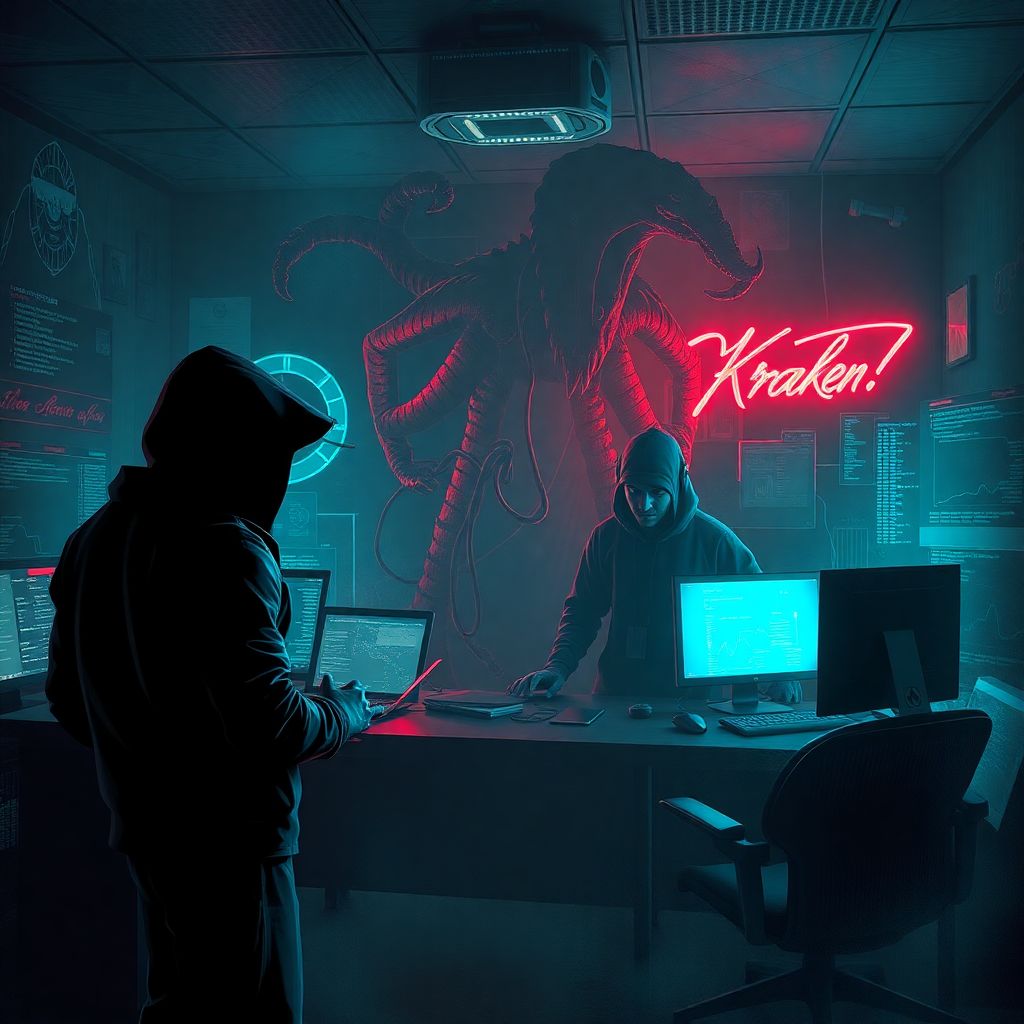
Kraken Rejects Extortion Demands After Insider Data Misuse, Vows Not to Pay
Kraken, the second‑largest crypto exchange in the United States, has publicly refused to bow to extortion demands from a criminal group following two incidents of unauthorized access to limited client support data over the past year. The company insists it will not pay, negotiate, or make concessions to those attempting to leverage stolen information for profit.
According to Chief Security Officer Nick Percoco, the exchange uncovered two separate cases in which individuals with legitimate support access misused their privileges to view internal systems containing client support information. The incidents have reignited debate over insider threats in the crypto sector and the risks associated with support and operational staff having access to sensitive data.
Percoco explained that Kraken’s security team first learned of suspicious activity after receiving a tip about a video circulating on an underground criminal forum. The video appeared to show a walk‑through of Kraken’s internal client support tools, including screens that could display limited user information.
In response, the company launched an internal investigation and quickly traced the activity to a single member of its support organization. That person’s access was immediately revoked. Kraken then carried out a full review of their actions, deployed additional security controls, and directly notified the relatively small number of clients whose data may have been viewed.
Months later, a second tip arrived: another video, once again showing similar internal views of Kraken’s support environment. This triggered a new, separate investigation. Kraken moved to identify any individuals involved, shut down their access, and reach out to affected customers. The pattern revealed a clear attempt to exploit insider access rather than a direct technical breach of Kraken’s core systems.
It was only after Kraken terminated access linked to the second incident that the extortion attempt began in earnest. Percoco said the group behind the videos threatened to release the recordings and other material from both episodes to media outlets and across social platforms unless Kraken agreed to their demands. The company has not disclosed the nature or size of the ransom request but has made its answer public and unequivocal: no payment, no negotiation.
Percoco stressed that Kraken’s production systems and trading infrastructure were never compromised and that user funds remained safe throughout. The misuse was limited to support tools, where a subset of account‑related metadata can be viewed. Across both incidents, the exchange estimates that data from around 2,000 accounts-about 0.02% of its client base-may have been accessed.
While Kraken characterizes this as a very small portion of its customers, some market participants have pointed out that raw percentages do not tell the whole story. Even if the total count is low, those accounts could potentially belong to users with higher‑than‑average balances or public profiles, which in turn increases the risk of targeted attacks, social engineering, or physical coercion.
Kraken has said it is working closely with law enforcement agencies and other companies in the digital asset and technology sectors to disrupt so‑called “insider recruitment” schemes. These schemes typically involve criminal actors attempting to bribe, pressure, or manipulate employees at exchanges, gaming companies, and telecommunications providers to provide data, credentials, or system access.
The company believes that the information gathered from the two incidents-combined with forensic analysis of access logs, communication trails, and infrastructure fingerprints-provides enough evidence to not only identify but ultimately help arrest all individuals involved in the extortion attempt. Specific details have not been released, as the investigation is ongoing, but Kraken has encouraged anyone with relevant information to contact its security team directly.
The timing of the incident is notable. Only weeks earlier, Kraken secured a milestone for the digital asset industry by obtaining a master account with the Federal Reserve through the Kansas City Fed, granting it direct access to the Fed’s core payment systems. That regulatory and banking win had been widely interpreted as evidence that established crypto platforms are becoming more tightly integrated with traditional financial infrastructure, and thus subject to higher expectations on risk management and compliance.
In the wake of the extortion claims, some users have raised questions about Kraken’s staffing model, particularly around whether support operations are handled purely in‑house or outsourced to third‑party providers in lower‑cost jurisdictions. Critics argue that offshoring or heavy reliance on contractors can introduce additional security and vetting challenges, especially when those staff members are granted access to internal tools that interface with account data.
Kraken has not publicly confirmed whether the individuals implicated in the incidents were direct employees or part of an external support vendor. The exchange has instead focused on the nature of the threat-abuse of authorized access-rather than its precise employment structure. From a security standpoint, however, the debate has put a spotlight on how exchanges should design and monitor access to sensitive tools regardless of where staff are located.
The incidents highlight a broader trend across the crypto industry: as perimeter defenses and infrastructure security improve, attackers increasingly look for weaknesses in human processes and insider access. It is often easier to pay or coerce a support agent into retrieving data than to break through hardened core systems, especially at large exchanges that invest heavily in technical defenses like hardware security modules, cold storage, and network segmentation.
For that reason, access control and employee monitoring have become central to exchange security strategies. Best practices include strict role‑based access control, where staff are given only the minimum permissions necessary to perform their jobs; just‑in‑time access approaches, where sensitive tools can only be used under specific, time‑bound conditions; and continuous auditing of support interactions and system logs to detect anomalies.
Another critical layer is cultural. Organizations that clearly communicate a zero‑tolerance stance for insider abuse-and back it with training, transparent enforcement, and cooperation with law enforcement-make it harder for criminals to recruit from within. Kraken’s decision to reject extortion demands publicly is in line with this approach, signaling that the exchange is more interested in prosecution and deterrence than in avoiding short‑term embarrassment.
For users, these events serve as a reminder that even when funds are technically safe and core systems unbreached, personal and account‑related information can still be a lucrative target. Exposed data in customer support tools typically includes names, email addresses, ticket histories, and in some cases limited account identifiers. While this may not be enough on its own to steal funds, it can be used to craft highly convincing phishing campaigns or social engineering attempts.
To reduce those risks, customers are encouraged to enable strong security protections on their accounts, such as hardware‑based two‑factor authentication, unique passwords stored in reputable password managers, and withdrawal whitelist features where supported. Monitoring for unusual login attempts or notification patterns, and treating any unexpected communication-especially one that references support histories or account details-as potentially malicious, are increasingly important habits.
For the industry at large, the Kraken case underscores the need to treat insider risk as a core security domain rather than an afterthought. Exchanges and wallet providers are beginning to invest more heavily in background checks, ongoing employee screening, and behavioral analytics that can flag suspicious usage patterns among staff. Regulatory expectations are also shifting in that direction, with supervisors paying closer attention to governance, outsourcing oversight, and operational resilience.
As crypto platforms become more intertwined with the traditional financial system, the bar for protecting both funds and data will continue to rise. Companies that operate at scale must demonstrate that they can not only defend against sophisticated external attacks, but also mitigate the far more subtle-and often more damaging-threat posed by insiders with legitimate access.
Kraken’s firm refusal to pay the extortionists positions it in line with long‑standing guidance from security professionals who warn that paying ransoms, whether for data or decryption keys, ultimately fuels the broader criminal ecosystem. Whether this stance will deter future attempts or prompt attackers to escalate their tactics remains to be seen, but it sets a clear precedent for how one of the largest US exchanges intends to respond.
For now, the investigation continues, affected clients have been notified, and Kraken’s leadership is attempting to balance transparency with operational security. The outcome of the law enforcement effort tied to this case could shape how future insider‑driven extortion schemes are handled across the crypto and technology sectors, and may influence how exchanges design support infrastructure and grant internal access in the years ahead.