
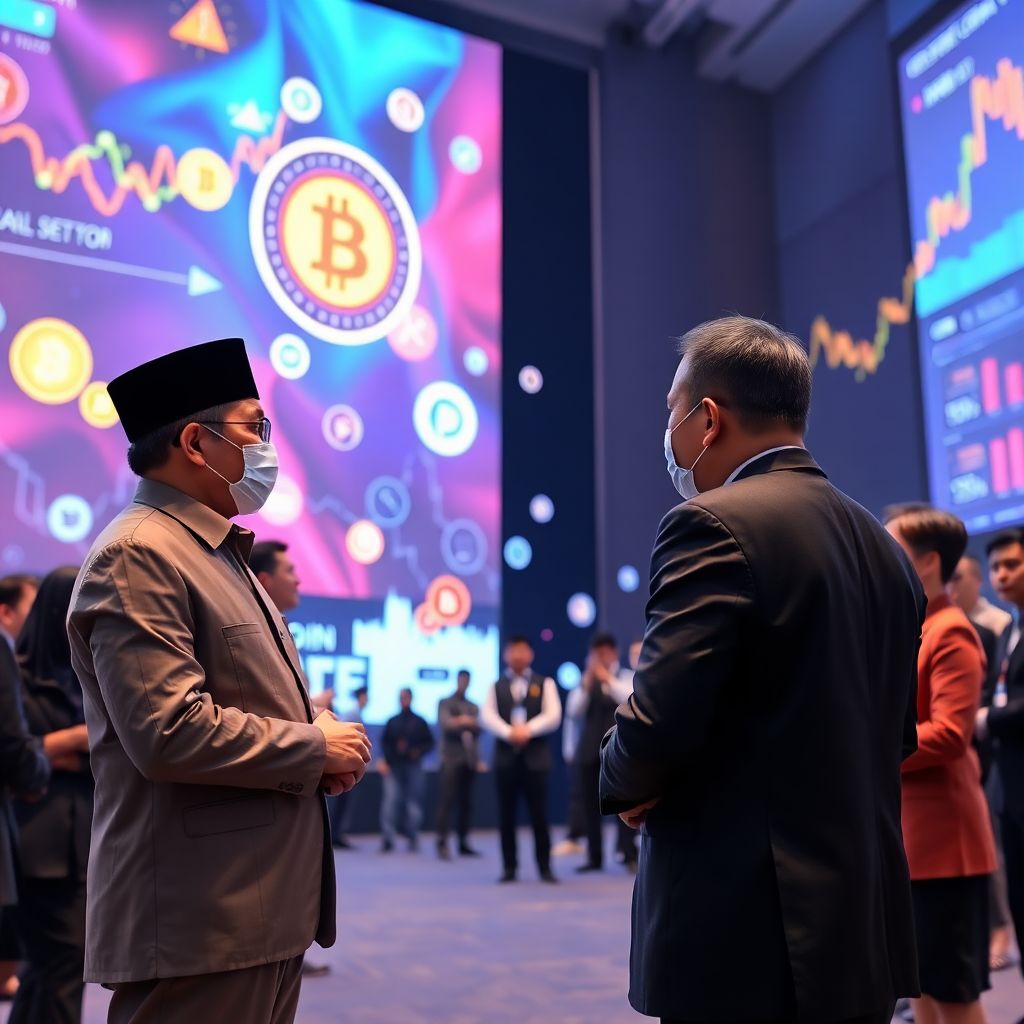
Indonesia is tightening the screws on social‑media finance gurus, rolling out formal certification rules for anyone recommending crypto or other digital assets online. The move places the country firmly in line with a growing global trend to rein in “finfluencers” and clean up the wild west of digital investment promotions.
Under new rules from Indonesia’s Financial Services Authority (OJK), set out in Financial Services Authority Regulation No. 6 of 2026, individuals who publicly recommend digital assets must hold a recognized competency certification, provided they are not already covered by a separate licensing regime. In other words, being a popular creator or having a large follower base is no longer enough – the regulator now wants provable expertise.
The restrictions go further than a simple skills test. Influencers are permitted to promote only those digital assets that are officially listed on authorized Indonesian exchanges. Any platform, broker or service provider they mention must also hold a valid license. This combination of certified promoters and licensed products is meant to reduce the risk of unsuspecting retail investors being drawn into unvetted or outright fraudulent schemes.
Marketing campaigns involving digital assets can no longer be run in a legal vacuum. The new framework requires that any such campaign be conducted through regulated financial services businesses, which will be held accountable for the content of the promotions. Those campaigns must be distributed exclusively through the official communication channels of these regulated entities. The idea is to stop a shadow market of semi‑official “partnerships” and push all financial marketing into a traceable, supervised environment.
By targeting influencers directly, Indonesia is joining a roster of jurisdictions that have moved to impose clearer boundaries on what can be said and sold in financial content. Regulators in Australia and the United Kingdom have already introduced and refined rules governing investment promotions, while the Philippines has put in place crypto‑specific advertising and endorsement constraints.
Australia was one of the first to draw a line in the sand. In March 2022, the Australian Securities and Investments Commission (ASIC) clarified that social‑media creators may need a financial services license when their output crosses the line into actionable financial advice or facilitates transactions. That guidance made it clear that “just sharing opinions” is no defense if the content effectively tells people what to buy or sell. ASIC also warned licensed financial institutions that they can be held responsible for the misconduct of influencers they engage or sponsor, underscoring that companies can no longer outsource responsibility to charismatic online personalities.
The United Kingdom has taken a similarly tough posture. In 2024, the UK Financial Conduct Authority (FCA) stated that unlicensed influencers may be committing a criminal offense if they promote regulated financial products without approval from a properly authorized firm. In practice, that requires most promotions to be vetted internally by licensed actors before going live, whether the ad appears as a polished campaign or a casual viral video.
The FCA has backed those rules with coordinated enforcement. On April 24, it spearheaded an international “week of action” focused on unlawful financial promotions by influencers. Seventeen regulators took part, using a mix of enforcement operations, public awareness drives and educational sessions aimed at content creators who want to stay within the legal boundaries. Over that period, the FCA submitted 120 takedown requests aimed at accounts responsible for 1,267 illegal financial adverts, which had collectively reached at least 2.3 million social‑media users in the UK alone.
The Philippines, meanwhile, has opted for a crypto‑targeted approach. In 2025, its authorities introduced marketing rules that apply specifically to digital asset promotions. These restrictions cover a broad spectrum of media: traditional endorsements, sponsored content, social posts, podcasts, livestreams and some forms of paid “educational” material that function as indirect advertisements. Crypto asset service providers must disclose all authorized third‑party marketers to the securities regulator, creating a registry of who is allowed to promote what and under whose responsibility.
Indonesia’s framework fits neatly into this global pattern of closing loopholes around digital promotions. The common thread is that regulators no longer see financial content as benign information if it is designed to influence investment decisions. As crypto and other high‑risk instruments have flooded social feeds, regulators have become more concerned about retail investors acting on viral recommendations rather than informed analysis.
For Indonesian influencers, the implications are significant. Those who have built careers on reviewing tokens, critiquing exchanges or highlighting “next big thing” projects will have to decide whether to obtain the required certifications or pivot away from direct recommendations. The certification process is expected to test basic understanding of financial risks, regulatory obligations and the characteristics of digital assets. Passing such a test may raise the overall level of professional knowledge in the influencer space, but it also raises the barrier to entry.
Content strategy will also have to change. Under the new rules, casually naming or praising an unlisted token could be considered a violation. Influencers may focus more on general education – explaining how blockchains work, how to evaluate projects, or how to manage risk – rather than explicitly telling followers to buy specific assets. This may encourage a shift from “tip‑driven” content towards more analytical and educational formats, at least among those who want to remain compliant.
Brands and crypto service providers face a parallel adjustment. The era of loosely supervised affiliate deals and informal promo codes may be coming to an end in Indonesia. Regulated firms will need to conduct due diligence on any influencer they work with, confirming both their certification status and their track record. They will also need internal processes to review scripts, posts and videos before they are published through official channels. For many firms, that could mean creating or expanding compliance teams dedicated to digital marketing.
From a consumer‑protection perspective, Indonesia’s move is intended to curb some of the excesses seen in recent years: undisclosed paid promotions, influencers shilling tokens they barely understand, and endorsements of platforms later accused of fraud. Requiring both the promoter and the product to be regulated creates clearer lines of responsibility when something goes wrong, making it easier for authorities to pursue enforcement and, potentially, for investors to seek redress.
However, the rules also raise questions about unintended consequences. Some creators may migrate their operations to offshore platforms or encrypted channels that are harder to police, which could push higher‑risk content away from visible, regulated spaces. Others might attempt to blur the line between “information” and “recommendation,” avoiding explicit calls to action while still heavily signaling their preferences. How strictly OJK defines a “recommendation” in practice will be crucial.
Globally, the tightening of rules around finfluencers reflects a deeper shift in how regulators view digital culture. Social media is no longer just an entertainment medium; it has become a primary distribution channel for financial products. As a result, regulators are extending long‑standing principles – like fair, clear and not‑misleading advertising – into influencer‑driven ecosystems that were previously treated as informal or purely “personal opinion.”
For influencers who want to operate sustainably under these evolving regimes, several strategies are emerging. Obtaining formal education or certification is one path. Another is to work closely with licensed firms, ensuring that their content is pre‑approved and properly labeled as a promotion where necessary. Many are also adding robust disclaimers and separating educational content from any sponsored material, in an effort to create transparency and build trust with increasingly skeptical audiences.
Investors, for their part, are likely to see more clearly labeled, more conservative content from certified influencers. While this may reduce the flow of sensational “get‑rich‑quick” narratives, it could improve the quality of information available to newcomers in the crypto space. In the long term, clearer rules might help professionalize digital asset commentary, bringing it closer to the standards applied to traditional finance.
Indonesia’s certification requirement signals that the age of unregulated crypto hype is fading. As more countries follow Australia, the UK, the Philippines and now Indonesia in tightening oversight, finfluencers who treat financial content as a serious, regulated activity – rather than a casual side hustle – are the most likely to thrive in the next phase of the market.