
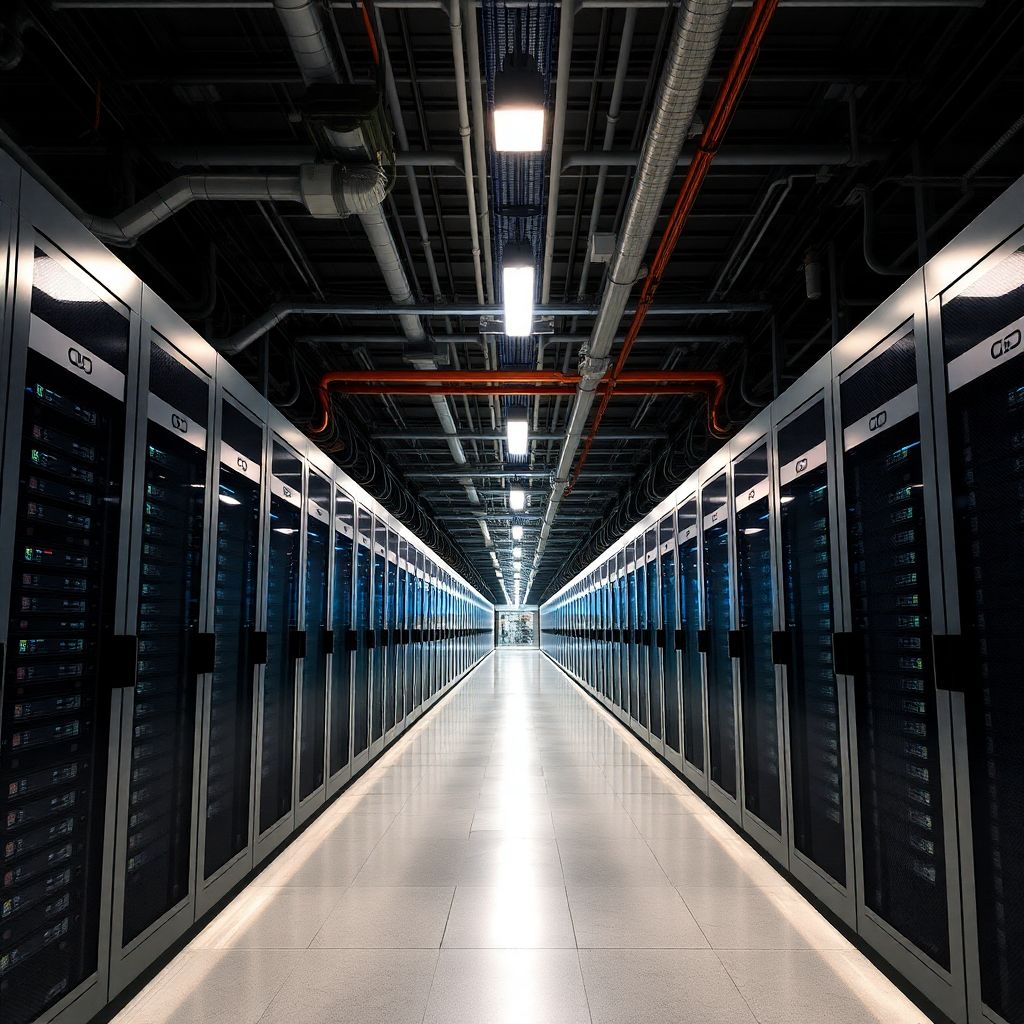
Galaxy Digital Secures $460M to Transform Texas Bitcoin Mining Facility into AI Data Hub
Galaxy Digital, the financial services and investment management firm led by Mike Novogratz, has successfully raised $460 million from a major institutional investor to propel the redevelopment of its Helios facility in Texas. Once dedicated to Bitcoin mining, the site is now being reimagined as a large-scale data center for artificial intelligence and high-performance computing (HPC). This funding marks a critical milestone in Galaxy’s broader $1.4 billion expansion plan, which includes strategic collaboration with cloud infrastructure provider CoreWeave.
The investment was secured through the sale of approximately 12.77 million Class A shares at $36 per share. The proceeds will not only fund the transformation of the Helios campus but also support Galaxy’s broader corporate initiatives. The revamped data center is slated to deliver 133 megawatts of IT capacity by early 2026, laying the groundwork for what is expected to be one of the largest AI-focused infrastructures in North America.
Galaxy’s commitment to AI infrastructure reflects a growing trend among crypto-centric companies diversifying their operations. With Bitcoin mining becoming less profitable due to increasing hashrates and declining block rewards, firms like Galaxy are repositioning toward more sustainable and revenue-generating opportunities, such as AI and cloud computing services.
In August, Galaxy secured a $1.4 billion loan facility to cover around 80% of the costs associated with the Helios expansion. This capital infusion provides the financial backbone for the 15-year agreement with CoreWeave, under which Galaxy will provide compute power for AI and HPC workloads. Revenue from this partnership is projected to exceed $1 billion annually, potentially totaling $15 billion over the contract’s duration.
At full capacity, the Helios site will be equipped with 3.5 gigawatts of power. Of this, CoreWeave has already committed to using 800 megawatts, while Galaxy plans to lease the remaining 2.7 gigawatts to other clients in need of AI and computing infrastructure. According to Galaxy, this massive undertaking will position the company as a key player in the rapidly expanding AI cloud ecosystem.
Mike Novogratz emphasized the significance of the investment deal, stating that having the backing of a globally recognized institutional investor validates Galaxy’s strategic direction. He noted that the move aligns with the firm’s vision of becoming a leader not only in digital assets but also in critical digital infrastructure.
The transaction is expected to formally close by mid-October 2025, pending regulatory approval from the Toronto Stock Exchange. If completed as planned, it would represent one of the most significant capital raises in the intersection of crypto and AI infrastructure to date.
This shift also mirrors a broader industry evolution. As profitability in cryptocurrency mining continues to wane, companies are seeking to leverage their existing infrastructure—originally designed for mining—for more stable and scalable ventures. This includes AI, which requires immense computing power and has a growing client base ranging from tech startups to multinational corporations.
CoreWeave’s own journey reflects this trend. Originally a crypto miner itself, the company pivoted to AI infrastructure and recently acquired Core Scientific in a $9 billion all-stock deal. This acquisition substantially increased CoreWeave’s capacity to serve AI and HPC demands, further consolidating its position in the market.
Galaxy’s pivot is not just about chasing trends—it represents a calculated move toward long-term viability. AI workloads typically require consistent uptime, enormous data throughput, and scalable infrastructure. By retooling its mining facilities, Galaxy is tapping into a market with significantly higher revenue potential and more predictable cash flows than volatile cryptocurrency mining.
Moreover, the move offers a practical solution to the growing energy debate surrounding Bitcoin mining. AI data centers, while still energy-intensive, are increasingly being built with efficiency and sustainability in mind. Galaxy’s Helios campus is expected to integrate advanced cooling systems and leverage renewable energy sources, aligning with environmental goals and appealing to ESG-conscious investors.
The expansion into AI also opens up new business models for Galaxy Digital. Beyond leasing infrastructure, the company could potentially offer managed services, data analytics platforms, or even its own AI-based tools, further diversifying its revenue streams.
In a broader context, Galaxy’s strategic realignment underscores the convergence of blockchain, AI, and cloud computing—a triad that is shaping the future of digital infrastructure. As technologies mature and enterprise adoption accelerates, firms that can bridge these domains are likely to lead the next wave of innovation.
By capitalizing on existing assets and forming high-value partnerships, Galaxy Digital is positioning itself at the heart of this transformation. While the crypto industry grapples with regulatory uncertainty and market fluctuations, Galaxy’s forward-thinking approach could serve as a blueprint for other companies looking to future-proof their operations.
As the Helios project progresses, all eyes will be on how effectively Galaxy can transition from crypto mining to AI infrastructure. If successful, the firm could redefine its role in the digital economy—not as a niche crypto player, but as a cornerstone of next-generation computing.