
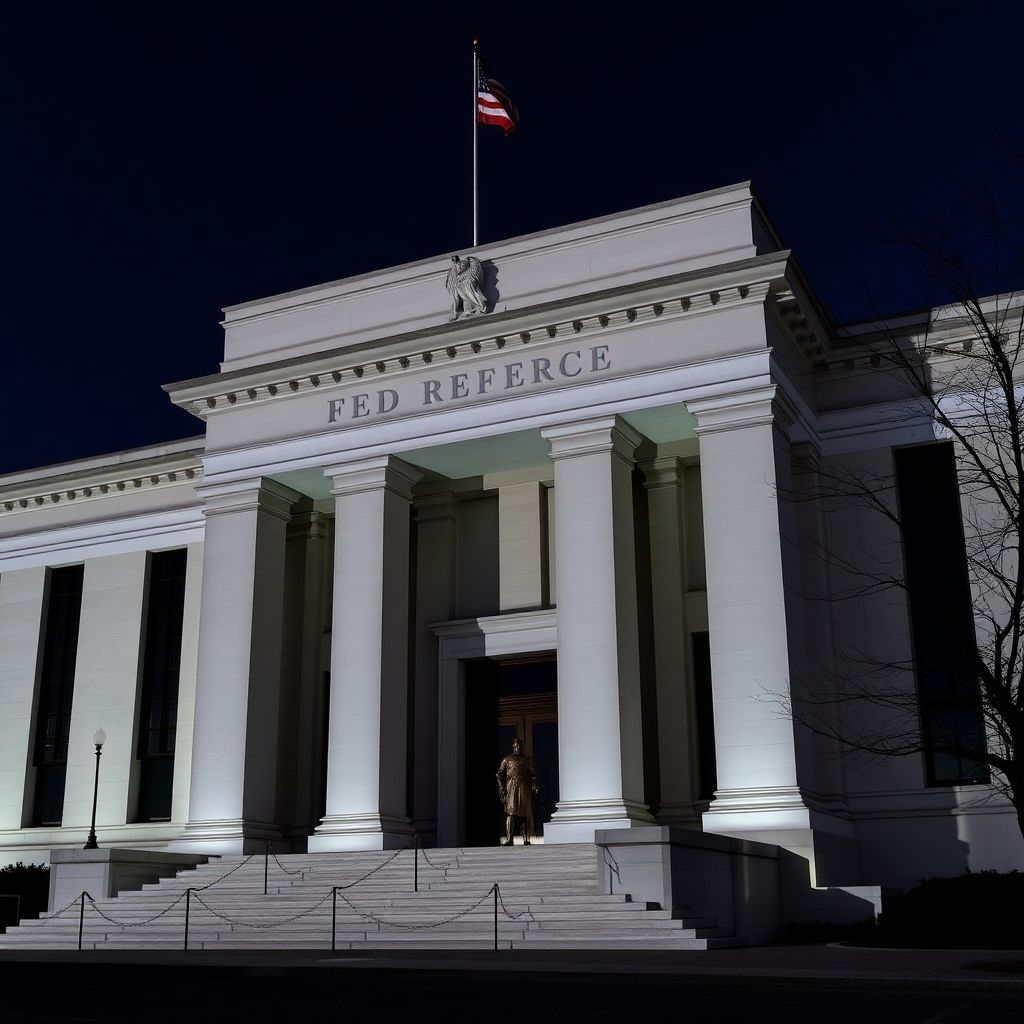
Fed’s $29.4B Liquidity Surge Signals a Possible Bitcoin Resurgence
The Federal Reserve’s recent $29.4 billion liquidity injection has caught the attention of crypto market observers, with many interpreting the move as a potential catalyst for a renewed Bitcoin rally heading into Q4. Despite Fed Chair Jerome Powell’s continued emphasis on a “hawkish” stance, this capital infusion suggests a shift behind the scenes — one that could mirror the early stages of Bitcoin’s explosive run in 2019 and 2020.
While official commentary from the Fed continues to highlight concerns about inflation, which remains above the 2% target, and a softening labor market, the sudden injection of cash into the financial system tells a different story. This move hints at underlying stress in the short-term funding markets — an environment where banks are increasingly reliant on overnight repo agreements to maintain liquidity.
The overnight repo market — where banks borrow cash in exchange for Treasury securities as collateral — is a key indicator of financial stress. Recently, demand in this sector surged to its highest level in five years, signaling a shortage of readily available dollars among financial institutions. Such conditions often precede or accompany broader moves by central banks to ease monetary policy.
This context is crucial for Bitcoin. Historically, increased liquidity, especially through mechanisms like repo operations or quantitative easing (QE), has been a bullish backdrop for cryptocurrencies. In 2019, for instance, a similar situation unfolded. Repo rates briefly skyrocketed to 10%, prompting the Fed to inject billions to stabilize the system. That intervention helped set the stage for Bitcoin’s rise from $7,000 to over $60,000 in the following two years.
Analysts are now questioning whether Powell’s tough rhetoric is more of a smokescreen than a reflection of actual policy intent. The injection of $29.4 billion contradicts the narrative of financial tightening and could be a precursor to a return of QE — a policy that has historically driven institutional and retail interest in Bitcoin.
The crypto market’s current behavior — particularly Bitcoin’s recent sideways movement — aligns with this theory. Rather than signaling weakness, this consolidation phase may indicate accumulation, a common precursor to a major breakout. With traditional financial markets on uncertain footing and liquidity quietly building, the conditions are aligning for a potential Q4 rally.
Macro uncertainty continues to cloud the broader financial landscape. The U.S. government’s ongoing shutdown, unresolved fiscal issues, and labor market volatility are all contributing to a murky economic outlook. And yet, Bitcoin’s resilience amid these pressures suggests that investors remain watchful, awaiting the next wave of capital that could drive prices higher.
A closer look at 2020 reveals just how powerful liquidity injections can be for Bitcoin. Following the Fed’s sustained QE program, Bitcoin surged from under $10,000 to an all-time high of over $60,000 in just over a year. This historic bull run was fueled not only by retail enthusiasm but also by a flood of institutional capital seeking alternatives to fiat-based assets.
Now, with liquidity beginning to creep back into the system, similar dynamics could unfold. Institutional investors remain active in the crypto space, and with traditional assets offering limited upside, Bitcoin stands out as a compelling hedge against inflation and currency debasement.
Another factor to consider is the changing sentiment around monetary policy. Markets are increasingly pricing in rate cuts for 2024, a clear shift from the Fed’s prior messaging. Should these expectations materialize, it could further weaken the U.S. dollar — a scenario in which Bitcoin typically thrives.
Moreover, geopolitical tensions and global economic fragmentation have reinforced Bitcoin’s narrative as a decentralized, borderless store of value. In uncertain times, capital tends to flow into assets perceived as safe havens, and Bitcoin has increasingly earned a spot on that list, particularly among younger investors and digitally native institutions.
From a technical perspective, Bitcoin’s current price structure appears to be forming a strong base. Analysts point to the $110,000 level as a potential launchpad, with reduced volatility suggesting accumulation by long-term holders. Historically, such patterns precede significant upward movements, particularly when supported by favorable macroeconomic trends.
In conclusion, the Fed’s quiet pivot — hinted at through its $29.4 billion liquidity move — may be the early signal of a broader shift in monetary policy. For Bitcoin, which thrives in environments of abundant liquidity and diminishing confidence in fiat currencies, this could mark the beginning of its next bull cycle. While the rally may have been postponed, all signs suggest it has not been denied. Investors are watching closely, and if history is any guide, Bitcoin could be poised for another powerful breakout.