
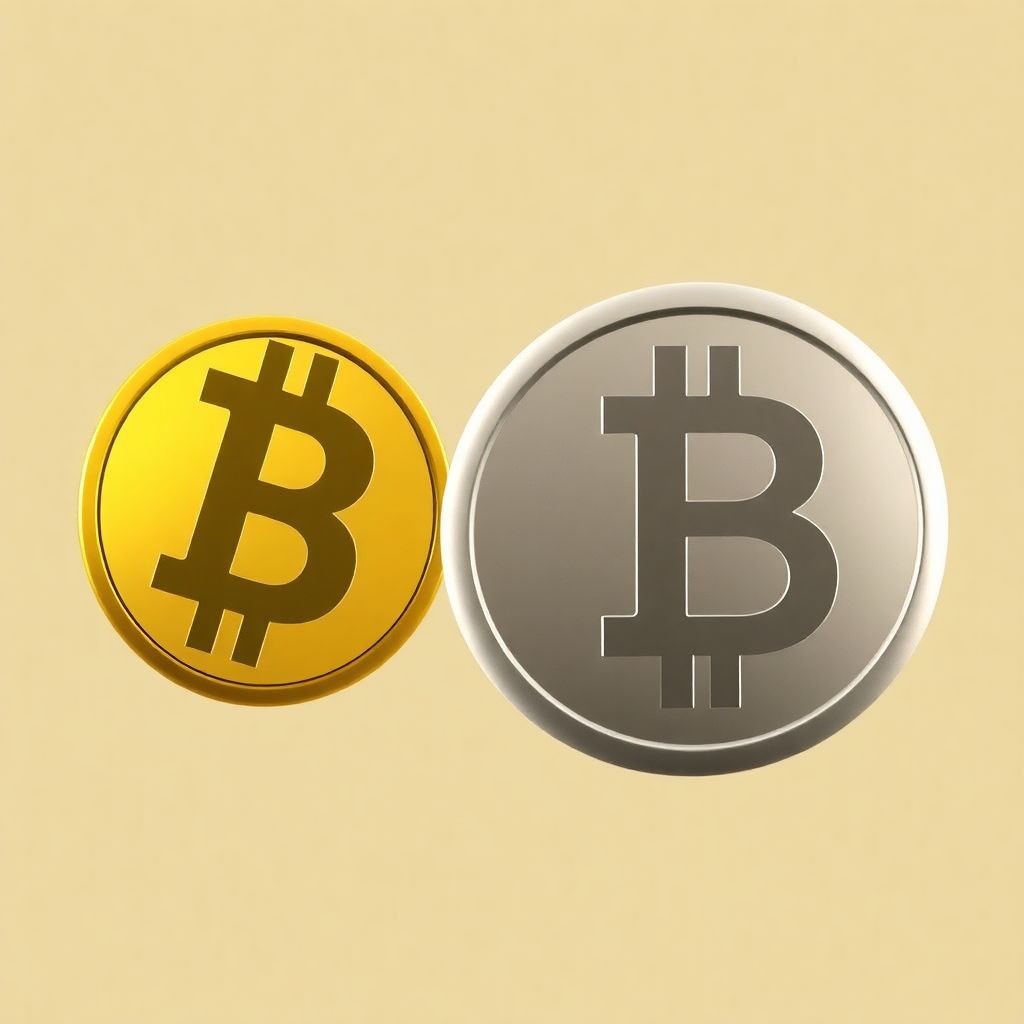
Bitcoin vs. Gold: Is a New Financial Supercycle on the Horizon in 2025?
As Bitcoin surges past the $120,000 mark and gold scales new all-time highs above $2,500, market watchers are increasingly asking: Are we witnessing the early stages of a new economic supercycle? The simultaneous rise of these two historically uncorrelated assets points to a deeper shift in investor behavior—one driven by eroding confidence in the U.S. dollar and a growing appetite for hard assets.
Historically, gold has served as the quintessential safe haven during times of financial turbulence. However, the digital age has introduced a new contender: Bitcoin. With its decentralized nature and finite supply, Bitcoin is being viewed by many as “digital gold,” especially in a macroeconomic environment plagued by inflationary pressures and monetary policy uncertainty.
In recent months, both assets have broken out of their consolidation phases. Bitcoin has climbed nearly 25% over a short period, while gold has rallied over 52% year-to-date. This parallel movement is more than just coincidence. Analysts point to a recurring pattern where capital begins to flow from gold into Bitcoin after the yellow metal hits a local or global peak—a trend observed in 2017, repeated in 2020, and now seemingly unfolding again in 2025.
This capital rotation is not merely speculative. It reflects a growing belief that Bitcoin may one day eclipse gold’s role as the world’s premier store of value. The timing of these shifts lends credibility to the idea of a supercycle—a prolonged period of bullish sentiment and capital inflows into digital assets, driven by macroeconomic instability and systemic distrust in fiat currencies.
Kevin Rusher, founder of RAAC, argues that the current gold rally is more than a traditional move to safety. According to him, the surge underscores a broader loss of faith in the dollar itself. He envisions a future where tokenization not only reshapes gold’s role in the financial system but also enables individuals to build wealth outside of fiat frameworks. “Tokenization allows for lending, borrowing, and wealth accumulation without relying on traditional currency systems,” says Rusher.
However, not all experts are convinced that gold’s current momentum is sustainable. Nic Puckrin, co-founder of The Coin Bureau, warns that the rally might be driven more by hype than fundamentals. “We’re seeing a momentum trade,” he notes, “and such trades often burn out.” Puckrin suggests that as the gold frenzy fades, investor attention could pivot more strongly toward Bitcoin and other tokenized assets that offer similar inflation-hedging benefits.
Underlying this shift is a growing correlation between gold and Bitcoin, once considered unlikely bedfellows. In times of geopolitical instability or monetary uncertainty, both assets now seem to rally in tandem, reflecting a shared perception among investors: the need to protect capital from the risks of fiat devaluation and central bank intervention.
This convergence has also attracted institutional players. Hedge funds, asset managers, and even sovereign wealth funds are beginning to allocate portions of their portfolios to digital assets. The broader acceptance of Bitcoin as a legitimate asset class, coupled with the rise of tokenized commodities and real-world assets, is further cementing its status as a viable alternative to traditional stores of value.
Moreover, blockchain innovation is blurring the lines between physical and digital assets. Gold-backed tokens, stablecoins, and decentralized finance (DeFi) platforms enable fractional ownership, instant settlement, and global accessibility—features that traditional assets struggle to match. As technology evolves, so too does the investor’s toolkit, making the case for a supercycle even more compelling.
From an economic standpoint, the weakening of the U.S. dollar is central to this narrative. With mounting national debt, persistent inflation, and rising geopolitical tensions, trust in the greenback is eroding. This shift in sentiment is pushing investors toward assets that are finite, decentralized, and resistant to political manipulation.
Looking ahead to 2025, several macro indicators suggest that we may be entering a new era in asset allocation. Bitcoin’s price structure is echoing patterns seen at the onset of previous bull markets, while gold’s recent spike fits the mold of pre-rotation peaks that have historically preceded major Bitcoin rallies. If these trends continue, the digital asset market may be poised for unprecedented growth.
In addition, central banks around the world are exploring digital currencies, further validating the shift toward blockchain-based finance. While central bank digital currencies (CBDCs) differ fundamentally from decentralized cryptocurrencies like Bitcoin, their development signals a broader move toward digitized monetary systems. This systemic evolution could act as a catalyst for both adoption and price appreciation in decentralized assets.
Retail investors, too, are waking up to these trends. The accessibility of crypto markets, the allure of high returns, and the increasing availability of user-friendly investment platforms are drawing in a new generation of investors. For many, Bitcoin represents not just a speculative asset, but a long-term hedge against systemic economic risks.
In conclusion, the question is no longer whether Bitcoin can coexist with gold, but whether it can surpass it as the ultimate safe haven. As capital continues to flow out of fiat and into hard assets, the stage is set for a financial realignment—one that could define the decade ahead. Whether 2025 marks the definitive start of a supercycle remains to be seen, but the underlying momentum suggests that the age of digital hard assets has truly begun.