
Anthropic inks $9B, 20‑year compute pact with Bitcoin miner Riot in Texas
Bitcoin miner Riot Platforms has signed a massive long‑term infrastructure deal with AI startup Anthropic, underscoring how miners are rapidly reinventing themselves as power and data‑center providers for the artificial intelligence boom.
According to a company announcement on Monday, Riot agreed to supply 191 megawatts of capacity from its Rockdale campus in Texas to what it described as a “leading frontier AI” customer under a 20‑year agreement. People familiar with the matter identified that customer as Anthropic, and valued the contract at roughly 9 billion dollars over its full term.
191 MW of power for frontier AI workloads
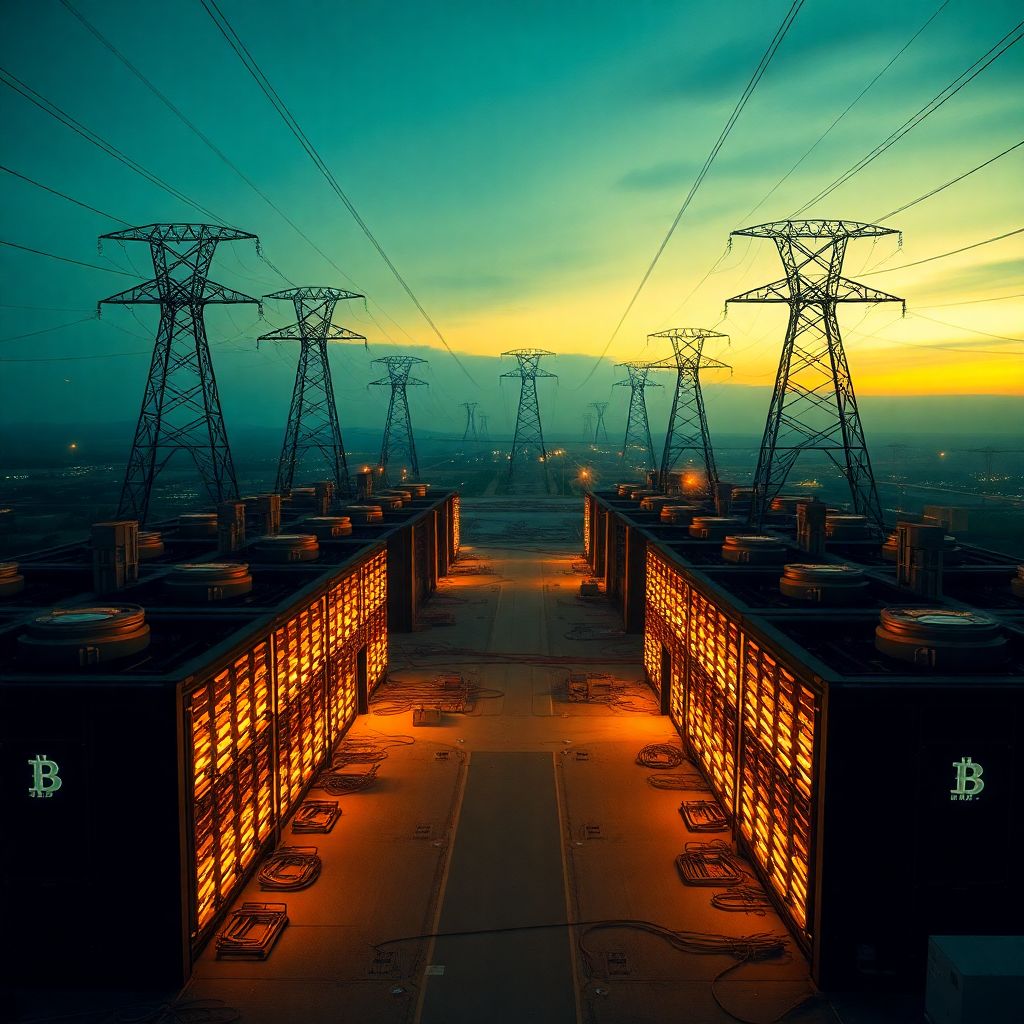
The agreement gives Anthropic access to 191 MW of capacity at Rockdale, one of the largest Bitcoin mining sites in the United States. Instead of using all of that power purely to secure the Bitcoin network, Riot will allocate it to host Anthropic’s high‑performance computing clusters needed to train and run large AI models.
The 20‑year horizon signals that both companies view AI compute not as a passing trend but as a core, long‑duration infrastructure business. For Anthropic, locking in power and rack space well into the 2040s is a way to de‑risk one of the biggest constraints for advanced AI: a shortage of electricity and suitable data‑center capacity.
Anthropic doubles down on miners: $19B TeraWulf deal preceded Riot
The Riot agreement comes on the heels of another enormous transaction by Anthropic. On July 6, the AI firm signed a separate 20‑year data‑center lease with Bitcoin miner TeraWulf, reportedly worth around 19 billion dollars. That earlier arrangement similarly centered on long‑term access to power and infrastructure for AI workloads.
Taken together, the two contracts could see Anthropic commit close to 28 billion dollars to secure data‑center and power capacity from Bitcoin miners alone. This indicates a deliberate strategy: partner with operators who already run energy‑intensive, large‑scale facilities and can expand or repurpose them for AI.
Bitcoin miners pivot into AI and high‑performance computing
Riot’s deal with Anthropic places it in a growing cohort of miners moving beyond pure Bitcoin mining into AI and high‑performance computing (HPC) services. Other major players pursuing similar pivots include Bitdeer, CleanSpark, MARA Holdings, Core Scientific, Hut 8 and IREN.
These firms are leveraging what they already know how to build: massive, power‑hungry data centers, often located near cheap or stranded energy sources. Instead of filling them solely with Bitcoin ASICs, they are carving out space for GPU clusters and HPC hardware serving AI, cloud, and enterprise compute demand.
Industry analysts have argued that this convergence is logical. Miners already negotiate directly with utilities, understand grid dynamics, and have experience scaling megawatt‑level operations. As AI demand outpaces the build‑out of traditional data‑center parks, Bitcoin miners are emerging as natural partners to close the gap.
Wall Street reacts: Riot stock whipsaws, then surges
Riot’s share price reflected the market’s mixed but ultimately positive reaction to the announcement. The stock fell about 5.4% during Monday’s regular trading session, suggesting initial investor uncertainty about the financial structure, capital needs, or execution risks of such a large long‑term deal.
However, in overnight trading the mood flipped. Riot shares rebounded sharply, climbing more than 21% as investors appeared to reassess the growth potential of securing a multibillion‑dollar, 20‑year AI infrastructure contract. Year to date, Riot’s stock is now up more than 53%, based on recent market data.
Riot currently ranks as the world’s fourth‑largest publicly listed Bitcoin mining company, with a market capitalization around 7.33 billion dollars. The Anthropic agreement could further solidify its position as both a miner and an emerging AI infrastructure provider.
Power crunch turns miners into AI infrastructure partners
A research note released in late July highlighted a key driver behind these deals: the intensifying power crunch facing AI data centers. Training and running large AI models requires not only GPUs but vast amounts of stable electricity and cooling capacity. In many regions, suitable power and land are already fully allocated, or grid upgrades are years away.
Analysts argue that partnerships between AI developers and Bitcoin miners are becoming necessary to alleviate these constraints. Miners already operate at the intersection of energy and compute. They often have contracts with utilities, access to flexible load arrangements, and campuses designed to scale quickly. Repurposing or expanding such facilities for AI can be faster than building new data centers from scratch.
Why AI firms are courting Bitcoin miners
For companies like Anthropic, working with miners offers several strategic advantages:
– Speed to market: Existing mining sites often have power hookups, cooling infrastructure, and permitting already in place, allowing AI capacity to be added faster than greenfield builds.
– Cost efficiency: Miners specialize in sourcing low‑cost power, including from renewables, stranded gas, or regions with oversupplied grids, helping reduce long‑term operating expenses.
– Scalability: Large mining campuses are engineered to scale megawatt by megawatt, an ideal fit for the modular growth patterns of AI compute clusters.
– Flexibility: Many mining operations can adjust their own Bitcoin hashing activity, freeing up power for AI customers when demand spikes.
For miners, the benefits are equally compelling. AI and HPC contracts can provide more predictable, long‑term revenue than the highly cyclical economics of Bitcoin mining, which depend on coin prices, block subsidies, and difficulty adjustments.
From pure mining to hybrid compute businesses
Riot’s Anthropic agreement illustrates how miners are gradually transforming into hybrid energy‑compute companies. Instead of betting exclusively on Bitcoin block rewards, they are layering in service‑based income from hosting and managing AI infrastructure.
This evolution could reshape their risk profile. While AI and HPC come with their own uncertainties – rapid hardware cycles, changing model architectures, and competition from hyperscale cloud providers – they are driven by a broader digital‑economy demand curve, not just a single asset’s price.
If more miners follow Riot’s model, the sector may end up split between:
– Pure miners, focused solely on Bitcoin hash power; and
– Diversified compute providers, balancing Bitcoin operations with AI and HPC hosting.
Investors are already starting to differentiate between these strategies when valuing mining stocks.
Implications for the energy grid and regulation
Large, long‑term compute contracts like Anthropic’s raise broader questions about energy policy and regulation. Concentrating hundreds of megawatts of AI‑related demand at single sites can stress local grids but also justify new generation capacity, grid upgrades, or the integration of more renewables.
Regulators and policymakers are increasingly scrutinizing both Bitcoin mining and AI data centers for their power usage and environmental footprint. Deals of this scale may accelerate calls for:
– Clearer rules on energy sourcing and emissions disclosures
– Incentives for using low‑carbon or flexible loads
– Coordination between data‑center developers, miners, and grid operators
Miners that can prove they operate efficiently, sustainably, and in ways that support grid stability may have an advantage in winning future AI partnerships.
What this means for the future of Bitcoin mining
The Anthropic-Riot agreement is a strong signal that the traditional boundaries between Bitcoin mining, cloud computing, and AI infrastructure are eroding. As AI workloads become one of the dominant consumers of global compute, Bitcoin miners are positioning themselves as key intermediaries between the energy sector and digital infrastructure.
Over the next few years, several trends are likely:
– More joint ventures and revenue‑sharing models between miners and AI firms, rather than simple hosting.
– Co‑location of mining rigs and AI clusters to dynamically balance power usage depending on demand and market conditions.
– Increased competition for cheap power, pushing miners to secure long‑term contracts or invest directly in generation.
Those miners that successfully navigate this transition could see their business models become more resilient and diversified, while AI firms gain much‑needed access to power and space in a constrained market.
A new template for AI-miner partnerships
Anthropic’s twin deals with Riot and TeraWulf set an early template for how frontier AI labs might secure the infrastructure they need: lock in multi‑decade access to power and data‑center capacity through partnerships with energy‑intensive operators that already know how to build and run such facilities at scale.
For Riot, the 9‑billion‑dollar agreement marks a turning point, elevating the company from a major Bitcoin miner to a central player in the emerging AI compute ecosystem. For the broader industry, it is a preview of a future in which Bitcoin mining sites double as critical backbone infrastructure for artificial intelligence.