
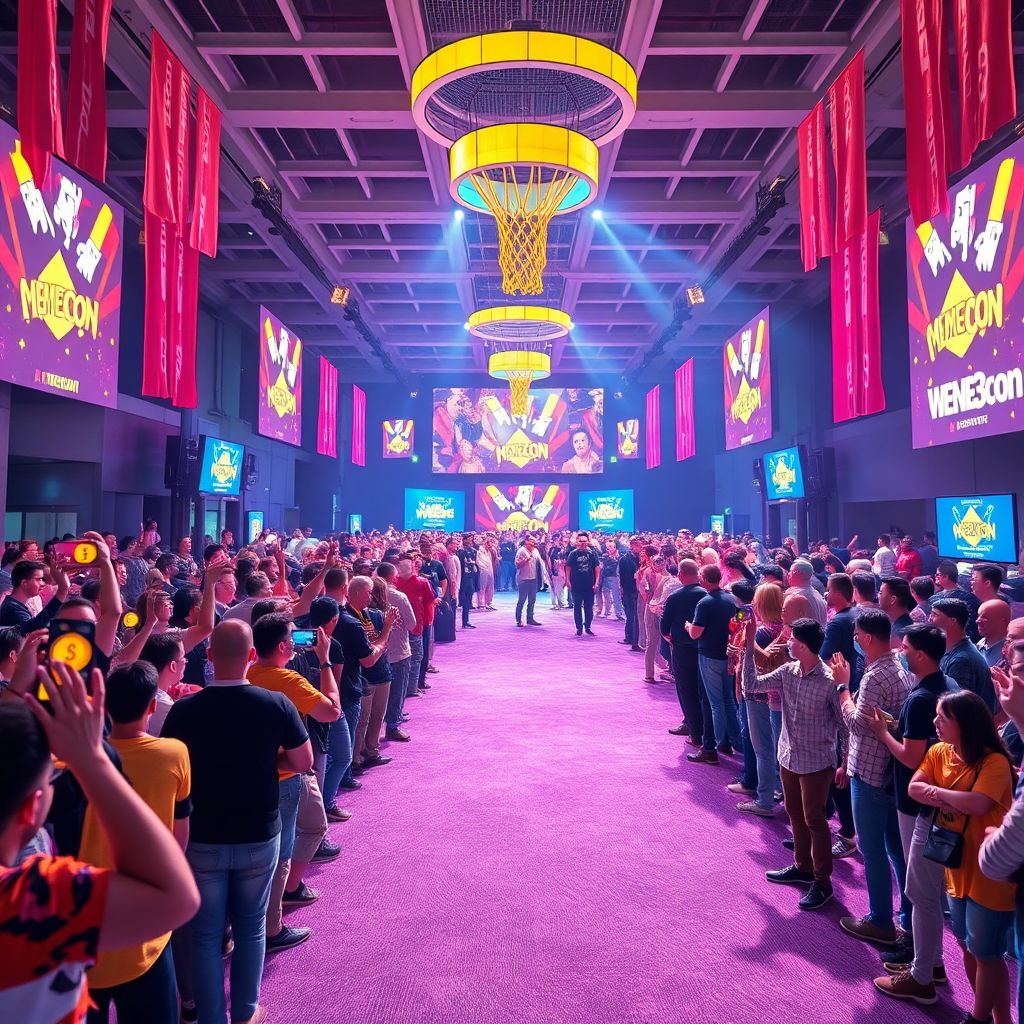
Meme Con Unites Internet Culture and Crypto Under a Single Banner
Memes have traveled a long way from being random jokes shared in comment sections. What began as throwaway humor has transformed into a powerful engine for storytelling, identity, and even price discovery in digital markets. Today, memes shape how people behave online, influence what they buy, and drive engagement across Web3 ecosystems. They inspire entire token economies, move billions of dollars in volume, and can flip market sentiment in a matter of hours.
Against this backdrop, Meme Con emerges as a dedicated event built around the collision of memes, cryptocurrency, and community-driven digital economies. Organized with a strong focus on culture, the conference aims to gather creators, traders, founders, marketers, and digital natives in one physical space to examine how meme culture is rewriting the rules of Web3.
Unlike traditional blockchain events that concentrate on protocols, scalability, or regulation, Meme Con puts cultural dynamics at the center. The core assumption is clear: markets frequently move not just on code or fundamentals, but on shared narratives, in-jokes, and viral content that bind communities together. The conference is designed around this reality, treating memes not as side entertainment but as structural forces in the new digital economy.
The rise of meme coins over recent years is one of the clearest examples of this shift. Tokens that began as satires or experiments have grown into vast ecosystems with passionate communities, branding strategies, and long-term roadmaps. These projects show that attention itself can be monetized, and that humor, relatability, and identity can be as powerful as whitepapers when it comes to attracting users. Meme Con sets out to dissect these dynamics through honest, practitioner-led conversations.
Participants can expect discussions spanning the full spectrum of meme-driven phenomena in crypto. Panels will explore how meme coin ecosystems form and mature, what psychological levers underpin viral trends, and how community-led strategies can outcompete traditional marketing in Web3. Speakers will also break down how memes shape narratives that ripple across trading desks, exchanges, and investor chats, influencing liquidity and valuations in real time.
A key theme of the event is sustainability. Meme Con goes beyond the surface-level hype to ask why some meme ecosystems build enduring value while others vanish after a fleeting surge in attention. Experts will examine what distinguishes communities that evolve into lasting brands from those that remain short-lived fads. Topics such as governance, community incentives, and the role of long-term builders within meme projects will be brought into focus.
At its heart, Meme Con is not meant to be a celebration of speculation or a shrine to inside jokes. It is a deep dive into the cultural mechanics that underpin modern digital economies. In the Web3 environment, attention functions as a new kind of currency, and memes are among the sharpest tools for capturing, amplifying, and directing that attention. A single image, a clever slogan, or a shared narrative can accelerate adoption, expand visibility, and even guide capital flows across the crypto landscape.
The design of the event reflects this focus on participation and interaction. Rather than encouraging attendees to simply sit through long keynotes, Meme Con emphasizes dialogue. Panel sessions will feature voices from across the spectrum: meme creators who understand virality at a granular level, traders who respond to narrative shifts, founders building meme-driven products, and Web3 architects observing how culture reshapes technology.
Structured networking opportunities will be woven into the schedule, creating deliberate spaces where founders can swap ideas with community managers, meme creators can meet builders, and traders can compare notes with marketers. The goal is to foster collaborations that extend beyond the event and lead to more thoughtful, culture-aware projects in the months and years ahead.
Open-format discussions will tackle sensitive but essential issues that are often brushed aside. These sessions will look at the thin boundary between hype and genuine value, evaluating how to differentiate organic excitement from manufactured buzz. Another recurring question will be the long-term viability of meme-driven initiatives: how do projects maintain relevance once the original joke loses freshness? The role of communities in determining and defending value will be a focal point, especially in markets where sentiment can flip overnight.
By gathering creators, investors, and builders in one environment, Meme Con aims to encourage a more grounded conversation around meme culture in crypto. Rather than glorifying quick wins or speculative manias, the event pushes for a realistic view of opportunities, risks, and responsibilities. This includes examining how memes can mislead or manipulate, as well as how they can educate, mobilize, and empower.
The audience expected at Meme Con will mirror the diversity of the broader Web3 space. Crypto traders and analysts will have the chance to gain a deeper understanding of how cultural cues drive trading patterns and liquidity spikes. Meme artists and influencers will be able to present their craft not just as entertainment, but as a form of digital branding and community building with measurable economic outcomes. For Web3 founders, marketers, and community leaders, the event offers a chance to refine strategies around storytelling, symbolism, and virality.
Observers who follow internet culture more broadly will find a unique vantage point on how memes are turning into economic infrastructure. What was once pure entertainment now underpins loyalty programs, brand identities, and token distribution methods. Meme Con positions itself as a lens through which to view this evolution and to forecast where culture-led innovation might head next.
What truly differentiates Meme Con from more conventional crypto conferences is its explicit culture-first narrative. Many industry gatherings still treat culture as an accessory to technology, something that can be layered on after the core protocol is built. Meme Con inverts that logic, positing that cultural resonance is often the prerequisite for a successful Web3 ecosystem. In this view, code provides the rails, but culture determines whether anyone shows up to use them.
The media platform behind the event continues to deepen its focus on emerging crypto trends, digitally native communities, and the fast-growing meme economy. Through Meme Con, this editorial mission extends into physical space, amplifying crucial conversations about how Web3 is being reimagined by internet-born creativity. It highlights the ongoing shift from top-down brand narratives to bottom-up, community-defined identities.
Beyond the formal program, Meme Con is also a testing ground for new formats of engagement. Organizers are experimenting with live meme creation sessions, collaborative workshops, and interactive installations that show how narratives spread. These elements are intended to blur the lines between audience and creator, illustrating that in the meme economy, consumers frequently become contributors and co-authors of a project’s story.
Another important angle is education. While many participants will be deeply familiar with crypto and meme culture, others may be arriving from traditional marketing, gaming, or content creation backgrounds. For them, Meme Con serves as an entry point into understanding tokenized communities, on-chain incentives, and the ways memetic storytelling can plug into decentralized technologies. Introductory sessions, case studies, and practical guides will help bridge gaps between cultures and disciplines.
Regulation and ethics will also be part of the dialogue. As meme assets gain visibility and capital, questions arise about responsibility, transparency, and fair communication. Panels are expected to explore how projects can embrace humor and irreverence without misleading participants, how influencers should disclose interests, and what best practices might look like in a world where comedy and finance are increasingly intertwined.
The event will likely dedicate space to exploring how memes intersect with other sectors evolving alongside Web3. Gaming, social platforms, digital fashion, and virtual worlds are all fertile ground for memetic expression. Discussions may highlight how in-game assets, avatars, and virtual spaces borrow from or inspire meme culture, creating feedback loops that further intensify engagement and experimentation.
Tools and infrastructure built specifically for meme economies are another emerging frontier. Analytics dashboards tracking viral trends, platforms for coordinating decentralized creative campaigns, and marketplaces designed around memetic IP are all part of the conversation. By spotlighting these tools, Meme Con underscores that behind every viral joke lies a growing layer of serious infrastructure.
For builders and investors, one of the most valuable aspects of Meme Con is the opportunity to refine their understanding of narrative timing. Memes thrive on momentum and context; a concept that lands perfectly in one moment may fall flat in another. Sessions focusing on market cycles, social sentiment, and data-driven trend analysis can help participants better align creative output with the shifting moods of online audiences.
Community health is likely to emerge as a recurring theme. Memes can unite, but they can also exclude or divide. Attendees will examine how to foster inclusive cultures within meme-driven projects, how to handle conflicts or controversial content, and how to maintain alignment between early adopters and new entrants as communities scale. These questions become especially pressing when tokens or assets with real value are tied to the evolving narrative.
Ultimately, Meme Con positions memes as more than casual entertainment. It treats them as the social protocols that run on top of blockchains: flexible, rapidly evolving, and deeply human. Where smart contracts encode rules for value transfer, memes encode meanings, hopes, fears, and shared jokes that give those values context. The event’s central message is that ignoring memes means misunderstanding a fundamental layer of the Web3 stack.
As memes continue to steer conversations, rally communities, and shape perception across the internet, their impact on decentralized ecosystems will only grow. Meme Con captures this moment of transition, offering a space where culture and crypto are not competing narratives but interdependent forces. For anyone trying to understand where digital economies are heading, the stories told through memes may be as revealing as any technical roadmap or market report.