
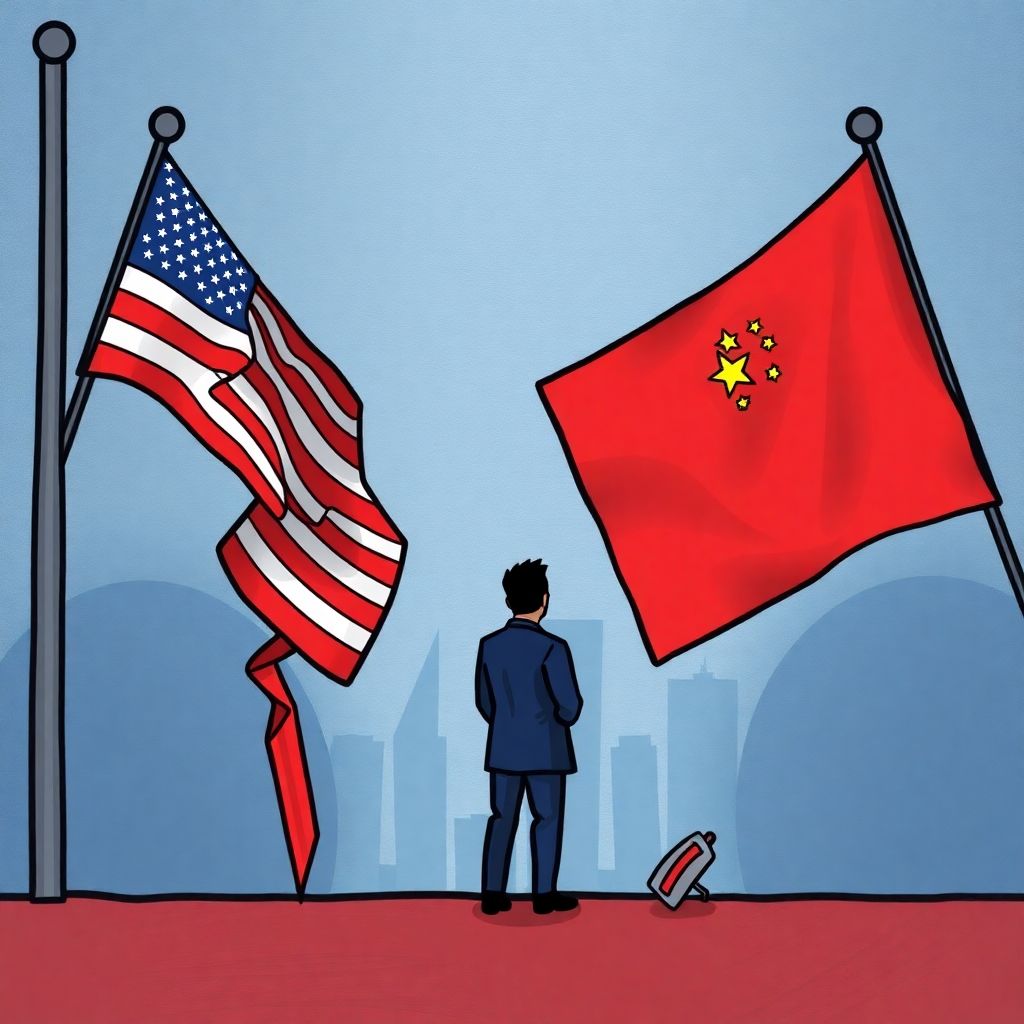
US-China Trade Tensions Cool, Boosting Market Optimism
Recent developments between the United States and China have led to a noticeable easing in trade rhetoric, sparking renewed optimism among investors and market analysts. After a week marked by escalating friction, both nations have publicly indicated a willingness to return to the negotiating table, softening the tone that had previously rattled global markets.
Sunday brought a series of conciliatory statements from officials on both sides. In a significant shift, China’s Ministry of Commerce expressed readiness to engage in more constructive dialogue on trade matters. The Ministry specifically mentioned its openness to reconsider certain aspects of its newly announced rare earth export controls, which had triggered alarm in Washington and sent shockwaves through the financial and cryptocurrency markets.
According to the Ministry, Beijing is prepared to “actively assess” potential exemptions from licensing requirements under the rare earth policy in order to support global trade flows and enhance supply chain cooperation. This step is seen as a possible olive branch to the U.S., whose industries rely heavily on Chinese rare earth materials for manufacturing advanced technologies.
In a parallel development, U.S. President Donald Trump also made a notable shift in tone. While his administration had previously responded to China’s export control measures with a threat of imposing 100% tariffs on Chinese goods, Trump’s latest comments suggested a more measured approach. This shift in attitude has been interpreted by financial observers as a possible signal of forthcoming diplomatic engagement.
On Friday, Trump had stated there was “no reason” to meet Chinese President Xi Jinping at the upcoming Asia-Pacific Economic Cooperation (APEC) summit in Seoul at the end of October. However, his rhetoric on Sunday appeared to soften, raising hopes that a face-to-face meeting between the two leaders might still occur. Some observers, such as Jeff Park from Bitwise Asset Management, remain confident such a meeting is inevitable. According to Park, the summit offers Trump a valuable opportunity for global visibility and political symbolism, which may outweigh current trade disagreements.
The possibility of renewed U.S.-China dialogue has already started influencing investor sentiment. Analysts from The Kobeissi Letter noted that markets remain highly sensitive to any public statements from Trump, warning of increased volatility but also pointing to strong upside potential if diplomatic progress is made. The crypto market, which suffered a historic 24-hour liquidation event earlier in the week following Trump’s initial tariff announcement, could see a rebound if tensions continue to ease.
Bitcoin, in particular, experienced a dramatic plunge to $102,000 on Binance amid the uncertainty. While this drop was likely exacerbated by algorithmic trading and panic selling, the underlying cause was clearly linked to geopolitical developments. The correlation between macroeconomic policy and digital assets continues to grow stronger, making diplomatic affairs increasingly relevant to crypto investors.
The rare earth issue lies at the heart of the current dispute. These critical minerals are essential for the production of everything from smartphones and electric vehicles to military hardware. China controls the vast majority of global supply, giving it significant leverage in trade negotiations. The proposed export restrictions were seen as a strategic move to counterbalance U.S. tariffs, but Beijing’s recent softening suggests it may be prioritizing long-term economic stability over short-term political gains.
Meanwhile, broader financial markets are watching closely. Equities, commodities, and currencies have all shown signs of heightened sensitivity to U.S.-China developments. A de-escalation in trade tensions could inject some much-needed stability into global markets, which have been battered by months of uncertainty.
The potential for renewed negotiations also bodes well for the tech sector, which is heavily reliant on cross-border supply chains. Any progress toward resolving trade barriers could ease upward pressure on costs and help restore investor confidence in technology stocks, many of which have suffered amid the ongoing trade war.
Looking ahead, the scheduled APEC summit may provide a crucial platform for diplomatic engagement. If Trump and Xi do meet, analysts believe it could mark a turning point in bilateral relations. Even a symbolic handshake or joint statement could help calm markets and lay the groundwork for more substantive talks.
At the same time, caution remains. While both sides have made verbal overtures, concrete policy actions will be needed to restore trust. Tariffs, export controls, and regulatory barriers still loom large, and a single misstep could reignite tensions.
Investors are advised to remain vigilant and monitor developments closely. The evolving nature of U.S.-China relations means market conditions can shift rapidly, particularly in sectors like technology, manufacturing, and digital assets. For now, the mood is cautiously optimistic—but the next few weeks will be critical in determining whether this thaw in rhetoric leads to real progress.