
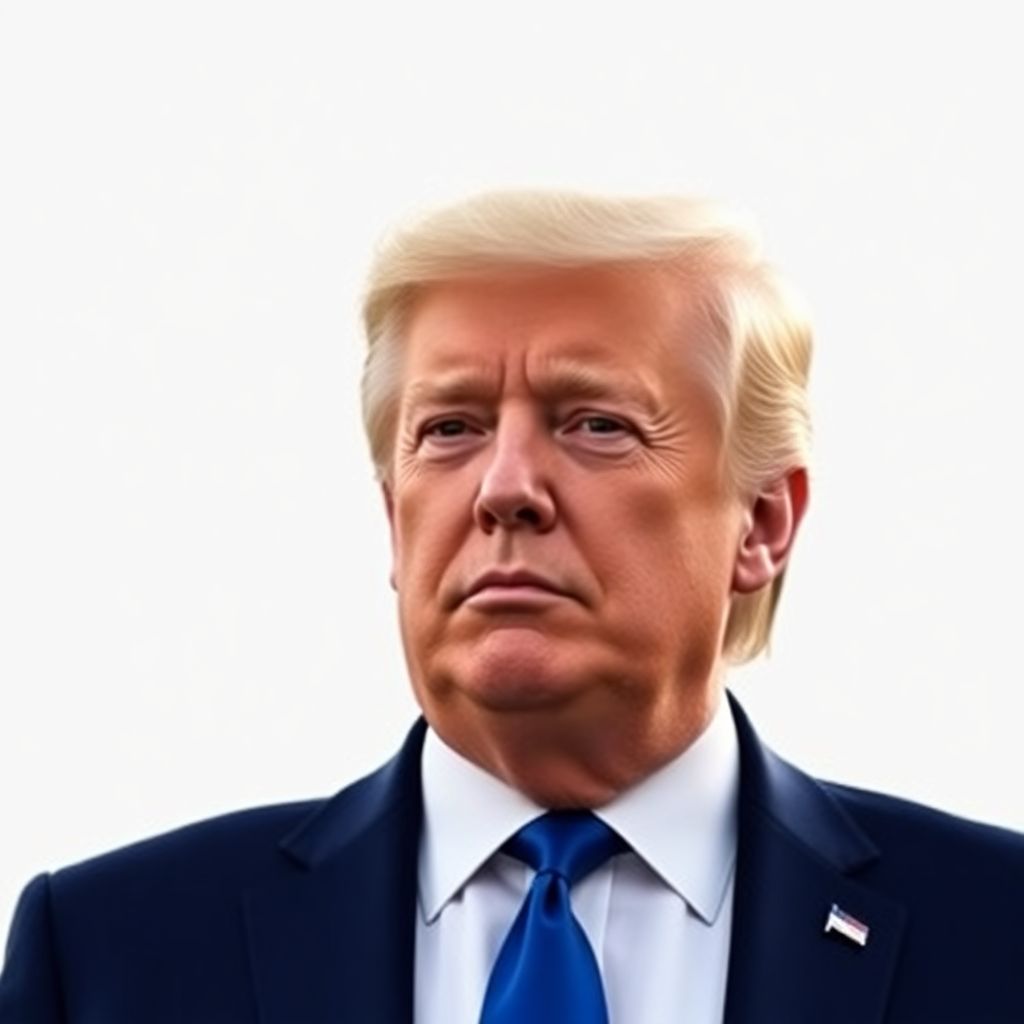
Crypto Traders Seek a Scapegoat in Market Downturn, Point to Trump’s Tariffs
Following a sharp decline in the cryptocurrency market this past Friday, retail traders were quick to attribute the plunge to former U.S. President Donald Trump’s announcement of a 100% tariff on Chinese imports. According to blockchain analytics firm Santiment, this reaction is emblematic of a broader behavioral pattern among retail investors — the tendency to search for a single, definitive cause behind complex market movements.
Santiment noted that this “rationalization” behavior is typical during times of volatility, where traders latch onto prominent news headlines to explain drastic price movements. “Retail participants often seek a singular narrative to make sense of a turbulent market,” the firm stated in its latest market report.
While the geopolitical tension between the U.S. and China may have played a role in triggering the sell-off, analysts stress that it was far from the only factor. Financial strategists from The Kobeissi Letter highlighted that excessive risk exposure and overwhelming leverage in the crypto markets were central to the scale of the downturn. With a notable bias towards long positions, the market saw approximately $16.7 billion in long liquidations—compared to just $2.5 billion in shorts—leading to a near 7:1 liquidation imbalance.
Bitcoin itself suffered a steep drop of over 10% within a 24-hour window, with BTC/USDT futures on Binance falling as low as $102,000 amid escalating concerns about the tariffs. That dramatic price move triggered widespread panic and prompted a surge in social media chatter linking the market crash to the U.S.-China trade developments.
Santiment emphasized that the evolving relationship between the U.S. and China will remain a critical influence on retail traders’ decision-making in the near term. If diplomatic dialogues between Trump and Chinese President Xi Jinping result in favorable developments, market sentiment could recover. Conversely, any further deterioration in relations could deepen investor pessimism and fuel predictions of Bitcoin slipping below the symbolic $100,000 level.
The psychological impact of the downturn was also evident in sentiment metrics. The Crypto Fear & Greed Index, a tool used to gauge overall market mood, plummeted from a “Greed” level of 64 on Friday to a “Fear” reading of 27 by Saturday — a dramatic 37-point drop and the index’s lowest position in nearly half a year.
This shift in sentiment could have broader implications for market behavior. Historically, such abrupt changes in trader outlook have preceded periods of increased volatility and cautious trading activity. As fear takes hold, many investors may temporarily retreat from riskier assets, potentially leading to a slowdown in trading volumes and liquidity across major crypto exchanges.
However, some analysts caution against overemphasizing short-term sentiment shifts. They argue that while fear-driven reactions are natural during price slumps, they rarely reflect the long-term fundamentals of the crypto market, which remain largely intact. Underlying blockchain adoption, institutional interest, and regulatory clarity are still progressing, providing a strong foundation for future growth.
It’s also worth noting that the crypto market has a history of recovering from geopolitical shocks. Past incidents — ranging from U.S.-China trade wars to regulatory crackdowns — have caused temporary sell-offs, only for the market to rebound once the initial panic subsided. This pattern suggests that while traders may be quick to react emotionally, the market often demonstrates resilience over time.
Nevertheless, in the absence of clear macroeconomic direction, traders are likely to remain hypersensitive to political developments, particularly those involving the United States and China. As such, any forthcoming statements or actions from either nation’s leaders could spark further volatility in the crypto space.
In the near term, investors are advised to monitor leverage levels closely and practice effective risk management. With market sentiment in a fragile state, even minor news events could trigger outsized price moves. Ensuring portfolio diversification and limiting overexposure to highly leveraged positions may be prudent strategies in the current environment.
Additionally, deeper shifts in market structure—such as the growing role of derivatives and high-frequency trading—are amplifying the speed and scale of market reactions. This means that sudden liquidations, like the one seen last Friday, could become more frequent, especially when combined with emotionally charged retail behavior.
Ultimately, while Trump’s tariff announcement served as a convenient narrative for the latest crypto sell-off, the underlying causes are more complex. A combination of leveraged speculation, macroeconomic uncertainty, and crowd psychology all played a part. Recognizing this multifaceted reality is essential for traders who aim to navigate the crypto market with a clear and rational strategy.