
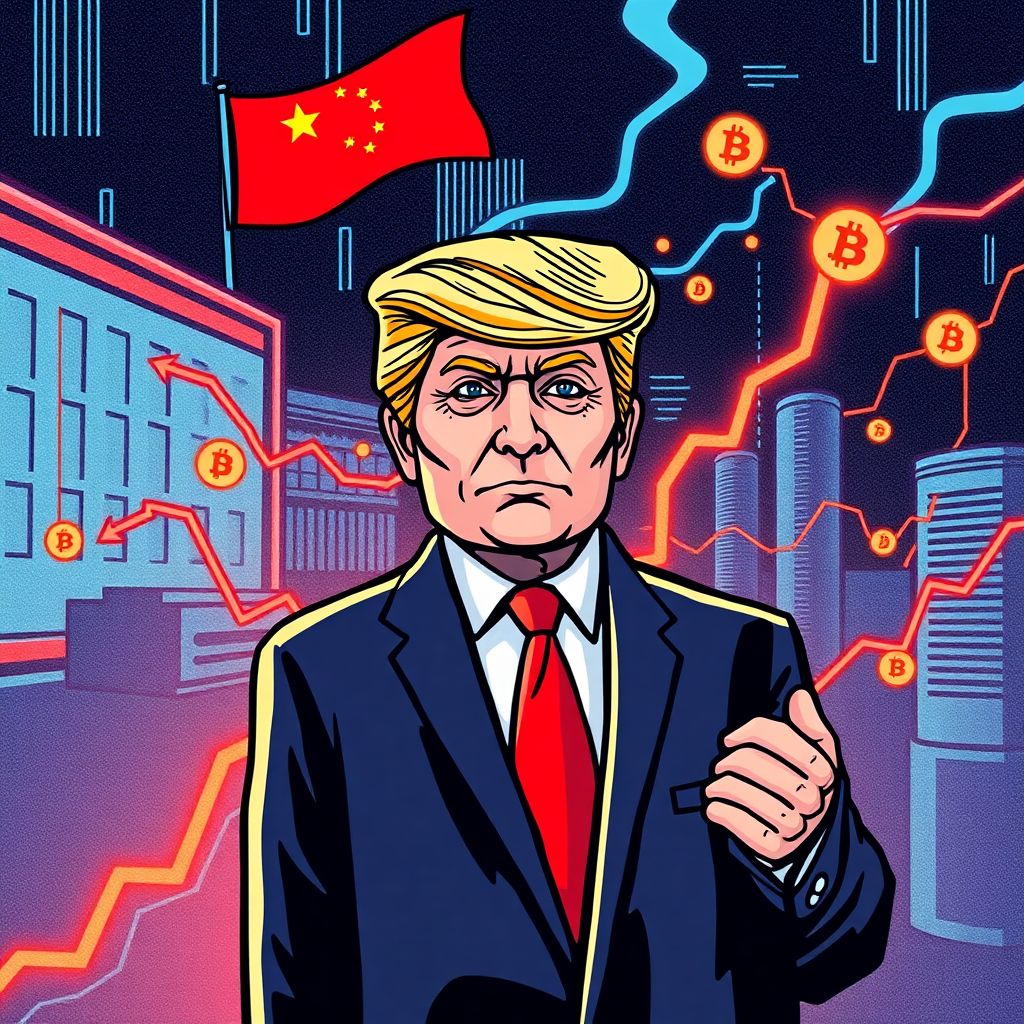
Crypto market participants often react emotionally to abrupt price corrections, and the latest plunge was no exception. According to a recent analysis by Santiment, many retail investors rushed to blame U.S. President Donald Trump’s announcement of a 100% tariff on Chinese imports as the trigger for the broad crypto selloff. However, Santiment emphasizes that this knee-jerk attribution to a single event exemplifies a common behavioral pattern—what they describe as “rationalization.”
In the wake of the market downturn, crypto traders flooded social media with theories linking the price crash to geopolitical tensions. While the tariff announcement may have served as a catalyst, analysts argue that the root causes of the slump run far deeper. Santiment’s report highlights that retail traders often search for a singular, dramatic event to rationalize volatility, overlooking the interplay of multiple market forces.
Analysts from The Kobeissi Letter supported this broader view, pointing to the excessive leverage and speculative risk-taking that had built up in the crypto ecosystem. Data showed that long positions heavily outweighed shorts, with approximately $16.7 billion in longs liquidated compared to just $2.5 billion in shorts—a nearly 7:1 ratio. This imbalance left the market vulnerable to a sharp correction, regardless of external news.
Bitcoin bore the brunt of the crash, dropping over 10% in a 24-hour period. On Binance, the BTC/USDT futures pair plummeted to as low as $102,000 shortly after the tariff news broke. The liquidation cascade that followed further accelerated the selloff, creating a feedback loop that intensified market losses.
Santiment noted that developments in the U.S.-China relationship will be a key driver of sentiment among retail crypto traders in the near term. An improvement in diplomatic relations or a de-escalation of trade tensions could help stabilize investor sentiment and encourage buying activity. Conversely, escalating conflict could fuel further bearish predictions, including forecasts of Bitcoin slipping below the $100,000 mark.
The psychological impact of the decline has been evident in market sentiment indicators. The Crypto Fear & Greed Index, which tracks investor emotions, plunged from a “Greed” level of 64 on Friday to just 27—a “Fear” reading—on Saturday. This 37-point drop marks the most significant shift in sentiment in nearly six months and reflects the uncertainty looming over the market.
While some traders remain focused on external geopolitical events, others are beginning to recognize the structural weaknesses exposed by the crash. The widespread use of leverage, coupled with herd behavior and emotional trading, has once again demonstrated the fragility of crypto markets during periods of stress.
Importantly, Santiment warns against attributing complex market dynamics to a single event. The tendency to isolate one cause for a multifaceted downturn may offer psychological comfort but fails to provide a comprehensive understanding of market behavior. These oversimplified narratives can mislead investors and obscure the real risks embedded in trading strategies.
Looking ahead, market watchers are keeping a close eye on upcoming negotiations between U.S. and Chinese officials. Positive developments could inject optimism back into the crypto space, while continued friction may serve as a drag on prices. Retail investors, in particular, are expected to react strongly to any perceived progress or setbacks in these talks, making geopolitical news a potent short-term influencer.
Institutional investors, meanwhile, are likely to maintain a broader perspective, focusing on macroeconomic indicators such as inflation, interest rates, and monetary policy from major central banks. These factors may ultimately carry more weight in determining the long-term trajectory of digital assets than short-term political headlines.
In addition to geopolitical and leverage-related risks, the crypto market is also grappling with concerns about regulatory scrutiny and technological vulnerabilities. Recent security breaches and ongoing debates about central bank digital currencies (CBDCs) are shaping investor expectations and influencing capital flows.
For new and seasoned investors alike, the recent correction serves as a stark reminder of crypto’s inherent volatility. Diversification, risk management, and a sober understanding of market psychology are more important than ever in navigating this unpredictable landscape.
As the dust settles, traders and analysts alike are reassessing their strategies. The market’s reaction to future news—whether positive or negative—will provide vital clues about its resilience and maturity. For now, caution remains the prevailing tone, with many waiting for stabilization before making bold moves.
Ultimately, while Trump’s tariffs may have triggered a reaction, they are far from the only factor behind the crypto market’s recent turmoil. A complex interplay of leverage, sentiment, macroeconomics, and geopolitics continues to shape the digital asset landscape, and investors must look beyond surface-level explanations to truly understand market behavior.