
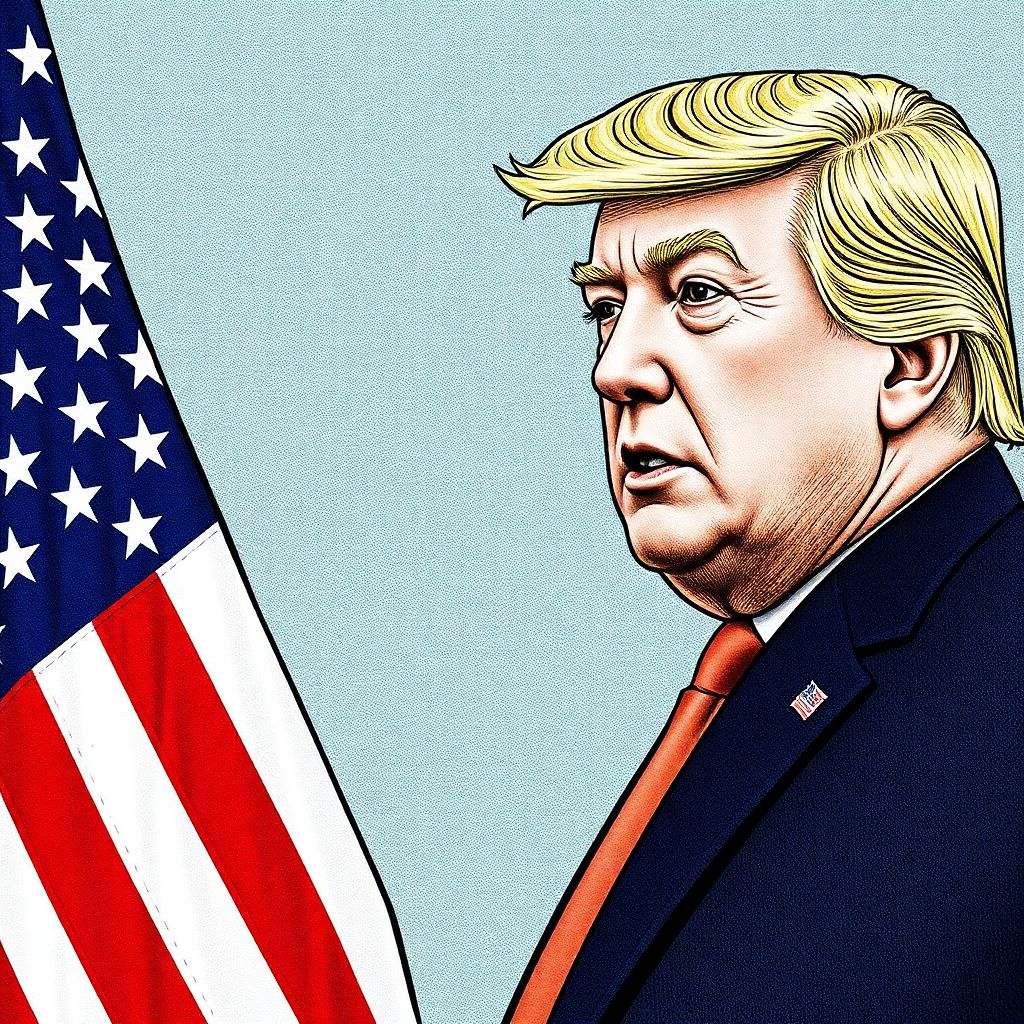
From Incarceration to Immunity: Could Trump Wipe CZ’s Slate Clean?
Speculation is intensifying around the possibility that former U.S. President Donald Trump may issue a presidential pardon to Changpeng “CZ” Zhao, the founder and ex-CEO of Binance. This potential act of clemency has sent ripples through the crypto industry and sparked fierce debate among investors, legal experts, and the broader financial community.
Changpeng Zhao served a four-month federal prison sentence after pleading guilty in 2023 to failing to implement sufficient anti-money laundering (AML) controls at Binance, one of the world’s largest cryptocurrency exchanges. The U.S. Department of Justice found that the platform enabled users to bypass sanctions and flouted key compliance regulations. As part of a broader settlement, Zhao resigned from his CEO role, paid a personal fine of $50 million, and Binance itself was hit with a staggering $4.3 billion penalty—one of the largest corporate fines in American history.
The idea of a presidential pardon for Zhao first emerged through a post by journalist Charles Gasparino, who claimed Trump is “leaning toward” extending clemency to the Chinese-Canadian entrepreneur. CZ acknowledged the report, clarifying that he was never charged with fraud, but only with a single violation of the U.S. Banking Secrecy Act.
While some see a potential pardon as a corrective measure against what they perceive to be a politically charged prosecution, others are vehemently opposed. Critics argue that excusing Zhao’s actions sets a dangerous precedent for accountability in the financial sector. Comparisons have already emerged, with some questioning whether disgraced FTX founder Sam Bankman-Fried might be next in line for such leniency.
A presidential pardon wouldn’t erase CZ’s legal history but would effectively remove the felony conviction from his record. This could dramatically change his professional prospects in the U.S., allowing him to regain access to banking services, travel visas, and eligibility for corporate directorships—opportunities that are currently off-limits due to his criminal record.
However, even with a pardon, Zhao is unlikely to return as a leader at Binance. Regulatory settlements have explicitly barred him from holding any management or executive roles at the platform in the foreseeable future. Still, the door could reopen for him to become involved in the crypto sector again—perhaps as an investor, advisor, or founder of a new initiative.
The crypto market has reacted swiftly to the rumor mill. Binance Coin (BNB), the native token of Binance, initially surged to a 20-month high of $1,355 amid the buzz. However, excitement quickly waned, and BNB fell more than 6% to hover around $1,095. Technical indicators show mixed signals: the Stochastic RSI remains in overbought territory at 83.8, suggesting potential for a pullback, while the MACD still hints at bullish momentum. If downward pressure continues, traders are watching the $1,000 support level closely, with the 50-day exponential moving average (EMA) near $869 representing a critical secondary support.
Beyond market fluctuations, the potential pardon reignites deeper questions about the intersection of politics, finance, and justice. Trump, who has openly embraced cryptocurrency in recent months, may view such a move as a signal to crypto-friendly voters ahead of the upcoming presidential election. Pardoning a high-profile figure like CZ could underscore his positioning as a deregulation advocate who supports innovation in the digital asset space.
From a legal and ethical standpoint, the case presents a complex dilemma. On one hand, CZ’s punishment has already been served, and a pardon could symbolize a second chance for a prominent entrepreneur. On the other, critics warn that absolving high-stakes financial misconduct undercuts efforts to enforce compliance and deter illicit activity in the crypto industry.
It’s also worth noting that CZ’s influence extends far beyond Binance. He has long been considered one of the most powerful figures in crypto, often shaping industry trends through his social media presence and strategic investments. With or without a direct role at Binance, a legally unshackled CZ could wield significant influence across the decentralized finance (DeFi) landscape.
Moreover, the timing of the pardon talks is significant. As global regulators ramp up scrutiny of digital assets, industry leaders are watching closely to see how the U.S. government handles high-profile cases. A pardon could send a message that Washington is willing to reconcile with crypto’s past missteps in favor of future growth—an approach that would contrast sharply with the current regulatory climate, which many view as hostile or ambiguous.
There’s also a broader implication for international policy. A Trump pardon might be interpreted by other governments as a softening U.S. stance toward crypto oversight, potentially influencing global regulatory frameworks. Countries still shaping their digital asset policies could follow suit, especially if they see political capital in aligning with pro-crypto sentiment.
If CZ does reemerge in the crypto world, his return will likely be strategic and calculated. Given his vast network and deep understanding of blockchain ecosystems, he could pivot into venture capital, blockchain infrastructure development, or even policy advocacy. With the legal cloud potentially lifted, the possibilities are wide-ranging—though not without controversy.
In summary, the prospect of a Trump-issued pardon for CZ is more than a personal redemption story—it is a litmus test for how the U.S. views the future of cryptocurrency regulation, executive accountability, and the political utility of financial innovation. Whether seen as a pragmatic step forward or a dangerous rollback of justice, the decision carries weight far beyond one man’s criminal record.
Комментарии
Из свежего опыта — сейчас прохожу курс в онлайн‑школе, где есть и индивидуальные уроки по английскому, и китайский с носителями, можно сначала взять пробное бесплатное занятие, чтобы понять уровень и формат. Ссылка тут: https://novaspeak.ru. Там как раз удобно расписание под себя подстроить и не переплачивать за то, чем не пользуешься.