
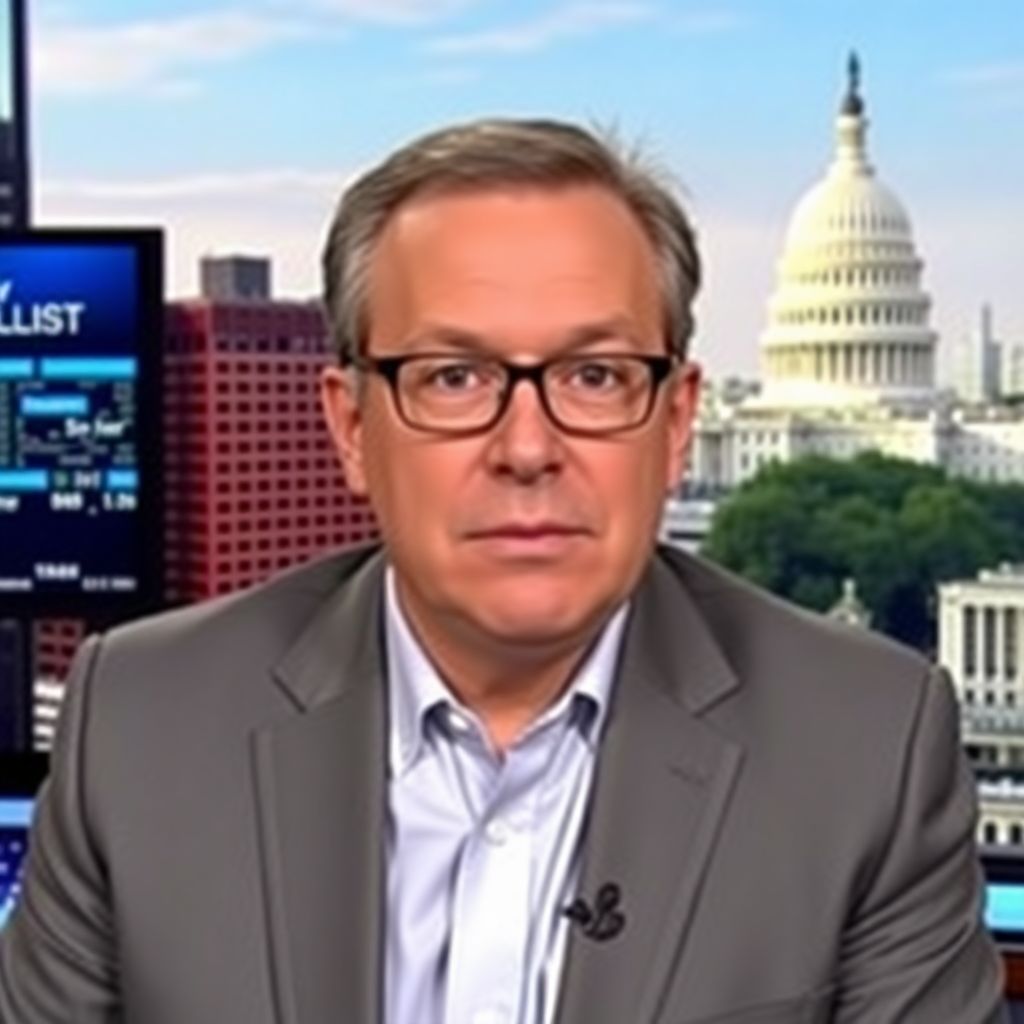
Banks, Not Crypto, Desperately Need the CLARITY Act, Says Former CFTC Chair
US banks – not crypto startups – are the ones most at risk from Washington’s regulatory paralysis, according to former Commodity Futures Trading Commission (CFTC) chairman Chris Giancarlo. Without clear rules, he warns, American banks could find themselves structurally disadvantaged against global competitors and left behind by the next wave of financial innovation.
Giancarlo, often nicknamed “Crypto Dad” for his comparatively open stance toward digital assets during his CFTC tenure, laid out his argument in a recent interview on Scott Melker’s *The Wolf Of All Streets* podcast. He described a profound policy shift under the Trump administration that effectively jump-started US crypto innovation, anchored by two key legislative pillars: last year’s stablecoin law, the GENIUS Act, and the much-debated market structure bill, popularly referred to as the CLARITY Act.
GENIUS Act as the “Appetizer,” CLARITY Act as the “Main Course”
Giancarlo framed the GENIUS Act, passed in July, as merely the opening move in a much bigger regulatory overhaul. That law outlined a formal framework for stablecoins, addressing core issues such as reserves, issuance and basic oversight – but only within a fairly narrow segment of the digital asset space.
By contrast, the CLARITY Act is designed to tackle the more consequential question: how digital assets are classified and supervised across the broader financial system. It aims to define which assets are securities, which are commodities, how platforms can operate legally, and where banks fit into this redesigned architecture.
In Giancarlo’s words, the stablecoin bill was “the appetizer” and the CLARITY Act is “the main dish” – but it’s also become “the hard part,” precisely because it cuts across so many entrenched interests: banks, securities markets, crypto-native firms and existing regulators.
A Bill Stuck in Neutral
The CLARITY Act has been effectively on hold since mid-January, when the Senate Banking Committee released a draft that sparked intense criticism from both crypto advocates and parts of the traditional financial sector. Provisions aimed at restricting or tightly controlling stablecoin issuers and certain types of market activity set off a prolonged tug-of-war.
This stalemate, Giancarlo argued, isn’t just an abstract policy fight. The longer lawmakers delay, the more competitive ground US banks potentially lose, even as crypto firms simply shift operations to more welcoming jurisdictions.
Why Banks Need Clarity More Than Crypto
Giancarlo’s central point is counterintuitive: the crypto industry has already demonstrated an ability to innovate under pressure, while banks remain bound by legal risk and internal compliance culture.
“Banks can’t afford regulatory uncertainty,” he stressed. Their general counsels are advising boards that they cannot justify multi-billion-dollar investments into new platforms, tokenization, custody solutions or payment rails without a stable legal framework.
From a bank’s perspective, the calculus is straightforward:
– No clear rules → high legal and regulatory risk.
– High risk → boards refuse to commit serious capital.
– No investment → legacy systems linger while competitors experiment.
Giancarlo insisted that banks must be “in the forefront, not in the rear guard” of innovation. Without the CLARITY Act, he believes they will sit on the sidelines, watching as other countries’ institutions deploy blockchain-based settlement systems, tokenized deposits, instant cross-border payments and programmable financial products.
Crypto companies, on the other hand, have already shown they will keep building regardless. “They are risk-takers,” he said. “They’re going to build it here, or they’re going to build it abroad.” For them, the absence of clarity is an obstacle, but not a showstopper. For banks, it can be a full stop.
What Happens If the CLARITY Act Fails?
Giancarlo does not think a complete regulatory vacuum is likely. If Congress cannot pass the CLARITY Act, he expects financial watchdogs like the Securities and Exchange Commission (SEC) and the CFTC to cobble together a workable framework through rulemaking, guidance and enforcement.
In that scenario, the sector would operate under a patchwork of agency rules:
– No overarching statutory mandate from Congress
– Legal battles and interpretive disputes over jurisdiction
– Year-to-year policy shifts tied to agency leadership changes
Such an approach might “make it work for now,” he said, but it would not deliver the long-term predictability institutional investors and large banks want. Crypto builders might tolerate that uncertainty – they “were building even under the whip hand of Gary Gensler,” as Giancarlo put it – but major banks are far less likely to gamble on ambiguous terrain.
Politics, Not Technology, Are in the Way
Giancarlo stressed that the fight over digital asset rules is no longer primarily technical; it’s political. The legislative debate has hardened into familiar battle lines:
– Republicans vs. Democrats
– Traditional finance (TradFi) vs. decentralized finance (DeFi)
– Incumbent institutions vs. emerging platforms and protocols
That polarization is exacerbated by the election calendar. “If we could not be in a worse time, we’re in an election year,” he observed. During such periods, virtually everything in Washington is filtered through the lens of voter impact and partisan advantage. Compromises become harder, not easier, even when both sides broadly agree that the status quo is unsustainable.
Time Pressure and Political Risk
Treasury Secretary Scott Bessent recently urged lawmakers to push the stalled bill across the finish line this spring, highlighting work by a bipartisan group trying to bridge divides. He argued that there is genuine interest on the Democratic side to cut a deal with Republicans, at least in principle.
But he also warned of a narrow window: if Democrats secure full control of the House in November, the odds of a balanced framework could diminish, given the administration’s tougher posture toward the industry. A more aggressive regulatory stance without clear statutory guidance could further chill bank participation while sending even more crypto business overseas.
Why This Matters for the Global Role of US Banks
Giancarlo’s warning is ultimately about global competitiveness. Other major financial centers are not waiting:
– Europe has introduced comprehensive rules for crypto asset markets.
– Jurisdictions in Asia and the Middle East are experimenting with central bank digital currencies, tokenized bonds and regulated digital asset hubs.
– Large foreign banks are piloting blockchain-based settlement, collateral management and tokenized money market instruments.
If US banks hesitate because they lack legal certainty, their systems risk being overtaken by more agile, better-positioned rivals abroad. That doesn’t just affect crypto; it affects how quickly and cheaply money moves across borders, how trades settle, and how capital markets function.
In a world where finance is increasingly software-driven, the institutions that master tokenization, programmable payments and real-time settlement will shape the next decade of global banking. Giancarlo’s message is that without the CLARITY Act or an equivalent statutory foundation, American banks may not be among them.
What the CLARITY Act Is Expected to Address
Although the bill is still in flux, the CLARITY framework is generally expected to tackle several core questions that matter directly to banks:
– Asset classification: Clear boundaries between securities, commodities and payment tokens, reducing the risk of after-the-fact enforcement.
– Market structure: Rules for digital asset trading platforms, clearing, custody and settlement, including where banks can participate.
– Stablecoin integration: How banks can issue, hold or transact with stablecoins, and under what capital, liquidity and risk rules.
– Custody and tokenization: Standards for tokenized deposits, on-chain securities and bank-level custody of digital assets.
For banks considering large-scale investments in tokenized assets, distributed ledger infrastructure or digital custody, these details are not theoretical. They determine capital requirements, internal risk models, product design and how quickly new offerings can be rolled out.
Why Crypto Can Afford to Be More Flexible
Crypto-native firms, unlike banks, do not carry the same systemic responsibilities or regulatory baggage. They are typically:
– Smaller and more agile
– Willing to move to friendlier jurisdictions
– Used to operating amid legal grey areas
– Structurally built around experimentation and rapid iteration
For them, the CLARITY Act would be beneficial, but not existential. If the US remains unclear, they relocate or focus on regions where licensing regimes are already in place. This asymmetry is why Giancarlo insists that the real cost of US inaction falls disproportionately on banks and on the broader US financial system, not on crypto.
The Political Optics Problem
Another layer complicating the CLARITY debate is perception. To some lawmakers, backing digital asset legislation still looks like “being pro-crypto,” which can carry political baggage amid headlines about scams, hacks and speculative bubbles.
Giancarlo implicitly argues that this framing is outdated. The question is no longer whether to bless crypto speculation, but whether to define the rails on which tomorrow’s financial infrastructure will run. In that light, the CLARITY Act is less about endorsing a speculative asset class, and more about ensuring that US law does not block its own banks from participating in the next generation of finance.
Odds of Passage: Slightly in Crypto’s Favor
Despite the gridlock and rising political temperature, Giancarlo remains cautiously optimistic. He puts the odds of passage at roughly 60-40 in favor, pointing out that the bill contains “a lot of good” for multiple constituencies:
– Banks get the certainty they crave.
– Regulators gain clearer mandates.
– Crypto firms obtain a more predictable operating environment.
– Lawmakers can claim credit for modernizing outdated financial laws.
He believes there is a growing recognition among both parties that digital assets are not a passing fad, but the emerging “new architecture” of finance – something no major economy can responsibly ignore.
The Stakes: An Architectural Shift in Finance
Underneath the politics and technical drafting, Giancarlo’s core thesis is that the US is witnessing the early stages of an architectural shift in how value moves. Just as the internet restructured information flows, distributed ledgers and tokenization are reshaping how money, assets and contracts operate.
The choice facing the US is not whether that transformation happens, but whether American laws allow its own institutions to lead it. In that equation, passing something like the CLARITY Act is ultimately less about helping crypto and more about protecting the long-term relevance of US banks and the US financial system itself.