
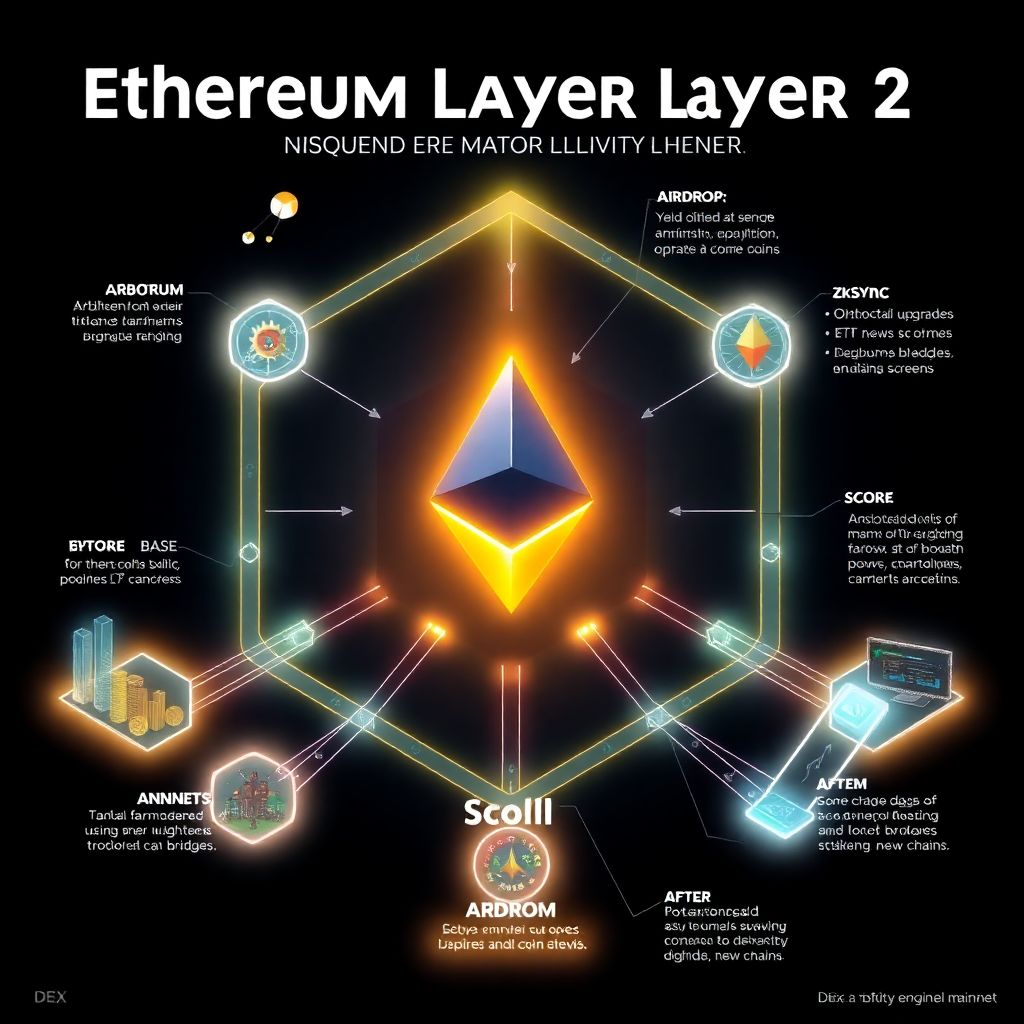
Why L2 Liquidity Goes Crazy Around Big Events
If you’ve watched markets during airdrops, token upgrades, or hot crypto etf news today, you’ve probably seen something weird:
Nothing… nothing… and then BOOM — in a few hours liquidity shifts, gas spikes, bridges clog, and prices on some layer 2s move way more than on mainnet.
This guide breaks down, шаг за шагом, how flows on Ethereum L2s react to big catalysts, how to not get rekt by it, and where pros actually make money in these windows.
We’ll walk through:
1. What “L2 flows” really are
2. How different events (airdrops, upgrades, ETF news) trigger them
3. What happens in the first 1–24 hours
4. How advanced traders position early
5. Concrete tips for beginners, plus common mistakes to avoid
Step 1: Understand What “L2 Flows” Actually Mean
Liquidity on L2: Not Just “More Users”
When people say “liquidity moved to Arbitrum” or “everyone’s on Base now,” they rarely mean just one thing. On Ethereum layer 2 scaling solutions, “flows” usually describe a combo of:
– Capital moving in or out (bridging ETH, stablecoins, blue chips)
– Trading volume spiking in specific pairs or pools
– Liquidity providers (LPs) shifting to higher-yield or safer venues
– New users arriving (wallets interacting with contracts for the first time)
On L2s this happens faster than on mainnet because:
– Fees are lower → more people can react with small size
– Confirmation times are faster → you can move, get rekt, and move again in minutes
– Bridges and aggregators make it trivial to reroute capital
This “fast money” behaviour is exactly why major announcements can reshape the whole landscape in hours, not weeks.
How L2s Differ From Mainnet During Stress
On mainnet, big events often mean: gas 300 gwei, mempool wars, and bots front-running everything.
On L2s:
– Gas does rise, but it usually stays accessible for retail
– DEX prices can dislocate more because fewer arbitrageurs are watching all L2s at once
– Bridging delays and limits create short-term premiums or discounts
That combination opens both opportunities and traps — especially when you chase upcoming crypto airdrops 2025 and related “quests” on autopilot.
Expert tip:
Pros don’t just track price; they track *where* the trades and LPs are moving. Dune dashboards, DeFiLlama, and block explorers for each L2 become your radar during these events.
Step 2: See How Airdrops Reshape L2 Liquidity in Hours
Before the Airdrop: The “Quiet Farm” Phase
Usually, the real game starts *before* the airdrop is even confirmed.
People farm points, volume, or “loyalty” on L2s where they *expect* tokens to appear. For example:
– Using a DEX or bridge with a token “not yet live”
– Opening small perpetuals positions over and over
– Bridging to obscure L2s or appchains for “future yield”
This creates:
– Sticky TVL in farming protocols
– Thin but constant trading volume
– A false sense of stability in liquidity
Beginners see it and think: “Safe yield, nothing’s happening.”
In reality, it’s a coiled spring.
Announcement Day: The Stampede
When an airdrop is actually announced (date, snapshot rules, distribution formula), things change quickly:
1. Confusion phase (0–30 minutes)
– People are reading threads, docs, X posts
– Liquidity stays where it is, but prices start twitching
– Bridges see the *first* uptick in volume
2. Realization phase (30–180 minutes)
– Users understand what *counts* for the airdrop: volume, fees, bridging, staking
– Bots start spamming eligible actions
– Degens pile into the L2 if they think it’s “not too late”
3. Constraint phase (3–12 hours)
– Bridging fees rise, wait times stretch
– Certain DEX pools become extremely imbalanced (e.g., lots of stablecoins, not enough ETH)
– Yield in “qualifying” pools and money markets collapses as everyone dogpiles in
This is when L2 flows look dramatic on charts: massive spikes in bridge volume, DEX volume, and unique active wallets.
After the Claim: Rotation and Exit
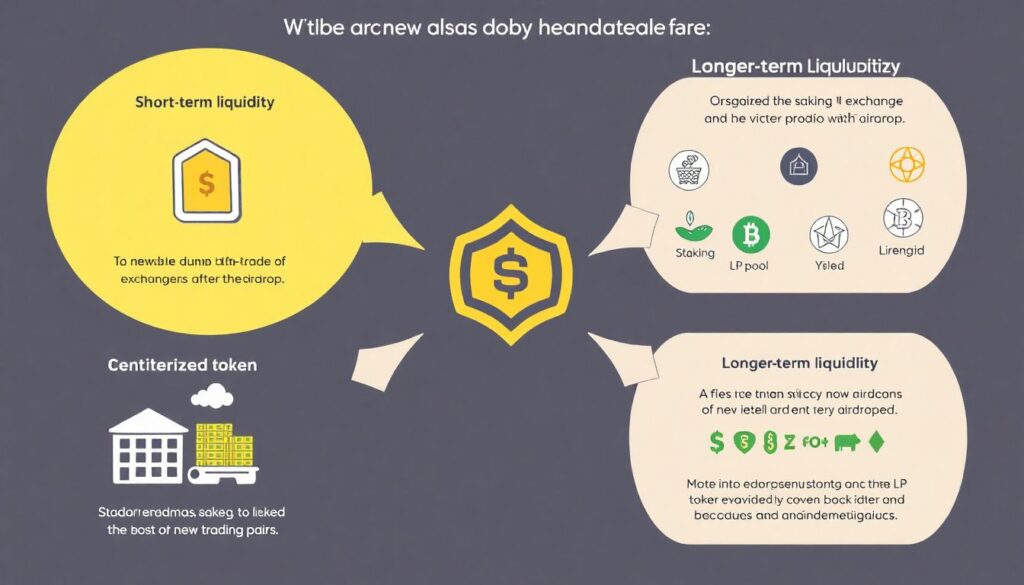
Once tokens are claimable:
– Short-term liquidity moves to wherever people dump or trade the airdrop
– Longer-term liquidity rotates into:
– Staking the new token
– Providing LP to new pairs
– Other ecosystems that *haven’t* yet airdropped (the “next farm” meta)
This is why many advanced traders already know where they’ll move their capital the *same day* they claim.
Newbie warning:
If you only think “free money” and ignore *where* everyone will run next, you’ll be left farming the thing that’s already over. The edge is usually in anticipating rotation, not in chasing the current party.
Step 3: How Upgrades and Tech Announcements Move L2 Liquidity
What Counts as a “Major Upgrade” for L2s
For top ethereum layer 2 scaling solutions like Arbitrum, Optimism, Base, zkSync, Scroll, and others, big upgrades typically involve:
– Lower fees (e.g., better compression, calldata reductions)
– Faster finality or cheaper bridges
– New VM features or EVM-equivalence improvements
– Shared sequencers or modular data availability layers
These upgrades often look “technical,” but markets care because they change unit economics for:
– Traders (cheaper swaps → more volume)
– LPs (cheaper rebalancing → better net yield)
– Protocols (cheaper to run keepers and rebase mechanisms)
Pre-Upgrade Positioning
Sophisticated players position *before* upgrades go live:
– They bridge to the L2 that’s about to get cheaper/more scalable
– They deploy or migrate protocols that are fee-sensitive (like perp DEXes)
– They buy governance tokens if they think revenue will grow with volume
This often makes that L2 show up on lists of the best layer 2 crypto projects to invest in — not only due to hype, but because real cash flows can improve.
Expert tip:
Watch *development timelines* and testnets as closely as you watch prices. Early signs of a killer upgrade are often visible weeks in advance in GitHub, testnet usage, and dev chatter.
Post-Upgrade: Liquidity Hunts the Best Environment
After an upgrade:
– Arbitrageurs expand from mainnet to that L2 to capture price dislocations
– More retail users move there because UX finally doesn’t suck
– Protocols migrate liquidity mining or incentives to reignite activity
In the first 24 hours, the obvious pattern is: more volume and TVL.
But the non-obvious pattern is: less attention on other L2s.
Newbie tip:
Don’t just ape into the “upgraded” chain. Check:
1. Are incentives (points, tokens, fee rebates) migrating *with* the upgrade?
2. Are major protocols actually deploying there, or is it just infra devs cheering for themselves?
3. Is liquidity thick, or are you trading in shallow pools that can slip 2–5% on size?
Rational LPs chase *real demand*, not just new tech buzzwords.
Step 4: The ETF Effect – When Off-Chain News Hits On-Chain L2 Flows
Why ETF News Matters for L2s at All
At first glance, crypto ETF approvals (or rejections) feel like a mainnet + CeFi story: spot BTC or ETH ETFs, TradFi inflows, etc.
But look at any big “crypto etf news today” spike and then pull up L2 analytics:
– DEX volumes explode on the big L2s within hours
– Perp DEXes on L2s see higher open interest and funding swings
– Bridges suddenly move stables and ETH *toward* the chains where traders prefer perp leverage
The path is:
ETF news → narrative shift in majors (BTC/ETH) → traders try to front-run or hedge → L2 perps/DEXes provide the cheapest playground → liquidity relocates to the most efficient battlefield.
Positive vs. Negative ETF Surprises
1. Positive surprise (approval or better-than-expected flows)
– ETH and BTC volatility jump
– Traders pile into L2 perps for leverage
– Liquidity concentrates on the L2s with the most battle-tested perp platforms
– Alts on those chains get “dragged along” with improved liquidity and attention
2. Negative surprise (delay, rejection, weak flows)
– De-risking: people close leverage, pull liquidity from risky alt pools
– For a few hours, L2s can see *outflows* even if activity spikes (it’s traders retreating)
– Stablecoin pools swell as people sit on the sidelines waiting for clarity
And yet, some traders specialize in how to profit from crypto etf and airdrop announcements *together*. For instance:
– Positioning long ETH on L2 perps ahead of expected ETF news
– Hedging with stablecoin LP on the same L2 to earn fees from volatility
– Rotating into L2-based governance tokens that benefit from increased perpetual volumes
Expert tip:
During ETF-driven volatility, think in terms of *where leverage is cheapest* and *where liquidation engines are most battle-tested*. That’s usually where flows will end up in the next few hours.
Step 5: The First 24 Hours – A Play-by-Play of L2 Flow Dynamics
Hour 0–1: Information and Mispricing
– News drops: airdrop, upgrade, ETF headline
– Prices move first on centralized exchanges and the biggest DEX pairs
– L2s lag slightly, especially minor chains or fringe pairs
– LPs are still half-asleep or confused
Opportunities:
– Catching price lag between mainnet and L2
– Small arbitrage between different L2s on the same token
– Exiting illiquid positions before everyone else reacts
Hour 1–6: Liquidity Churn
– Bridges heat up; gas rises modestly on popular L2s
– Volume surges in tokens directly hit by the news
– LPs withdraw from low-fee pools and move to where volatility is paying better
This is when spreads widen and slippage can hurt unprepared traders.
Newbie warning:
During this window, avoid:
– Market orders of size in shallow pools
– Trading on obscure L2s with almost no arbitrage bots (prices can be very wrong)
– Bridging your *only* stack onto a chain that you haven’t used before (UI mishaps under stress are brutal)
Hour 6–24: Repricing and Rotation
– Markets digest the news: what actually *changed*?
– Initial overreactions calm down; liquidity redistributes to sustainable yields
– New “winners” and “losers” among L2s emerge:
– The L2 that got the airdrop or upgrade
– The L2 whose perp DEX snagged all the ETF volatility
– The L2 that got ignored (often where next rotations quietly begin)
If you’re not chasing seconds, this is usually the safer window to:
– Deploy LP positions in pools that clearly survived the chaos
– Open directional trades with better liquidity and lower spreads
– Rotate into L2 ecosystems that benefited structurally, not just speculatively
Step 6: Where Pros Actually Find Edge in L2 Events
1. Prepare Playbooks Before the News Hits
Experienced traders don’t improvise when something big drops — they run checklists.
Typical playbook:
1. List key L2s and their main DEX/perp venues
2. For each major upcoming catalyst (airdrop, upgrade, regulatory decision), write:
– Which tokens are first-order affected
– Which L2s host the main liquidity
– How you’ll hedge if you’re wrong
3. Decide in advance:
– When you’ll stop trading (max loss or max chaos level)
– Where to park stables if things go insane
Then when the catalyst hits, you’re executing, not guessing.
2. Focus on Friction Points
Liquidity doesn’t move smoothly. It:
– Hits bridge bottlenecks
– Gets stuck in underdeveloped UIs
– Misprices assets where arbitrage is slow or expensive
Pros watch:
– Bridge queues and fees
– Exchange downtime and failed txs
– Differences between CEX prices and each L2
The aim is to step in *where friction is highest* but risk is controlled — not just where noise is loudest.
3. Respect the Time Horizon
There are three different games:
– Minutes to hours: arbitrage, fast airdrop farming, volatility plays
– Days to weeks: positioning in governance tokens and L2 infra that win structurally
– Months: choosing which ecosystems to build in or treat as the long-term “best layer 2 crypto projects to invest in”
Trying to play all three at once usually ends in confusion. Pick your lane.
Step 7: Practical Tips for Beginners Navigating L2 Events
A Simple Step-by-Step Plan
If you’re new but want to participate without gambling everything:
1. Choose 1–2 major L2s to focus on
Start with Arbitrum, Optimism, or Base — they’re battle-tested and widely integrated.
2. Set up and fund wallets early
Bridge a small, fixed amount ahead of time so you’re not rushing during chaos.
3. Make a “panic checklist”
– Max slippage: 0.5–1% unless liquidity is deep
– Never use your whole stack in one trade
– Always double-check the chain, token contract, and app URL
4. Treat airdrops as a bonus, not a salary
Farm what you *understand*. If rules are vague, size down.
5. Use analytics to avoid illusions
Check real TVL, volume, and active users before assuming a narrative is “true.”
Common Mistakes to Avoid
– Over-bridging: moving your entire stack to a single L2 for one airdrop or news event.
– Ignoring withdrawal time: some L2s or rollup modes have exit delays — bad if you need fast liquidity.
– Buying illiquid governance tokens post-announcement without a plan: you might become involuntary “long-term investor.”
– Assuming “ETF approval” = “all coins go up forever”: ETF catalysts mostly affect majors and volatility, not every meme on every chain.
Newbie tip:
Survival > max profit. If you come out of a volatile event with your stack intact, a few lessons learned, and some small gains, that’s a win. Opportunities will keep coming.
Step 8: Connecting Airdrops, Upgrades, and ETF News Into One Strategy
Think in Ecosystems, Not Isolated Events
Instead of chasing each headline separately, combine them:
– Airdrops tell you where user and dev attention is heading.
– Upgrades tell you which L2s will be cheaper and more attractive structurally.
– ETF and macro news tell you when volatility will spike and where leverage will cluster.
When these overlap — say, an L2 with a major upgrade that also hosts the dominant perp DEX during ETF news and has talked about future token incentives — you have a *stacked thesis*, not just a narrative.
Building a Simple Long-Term Framework
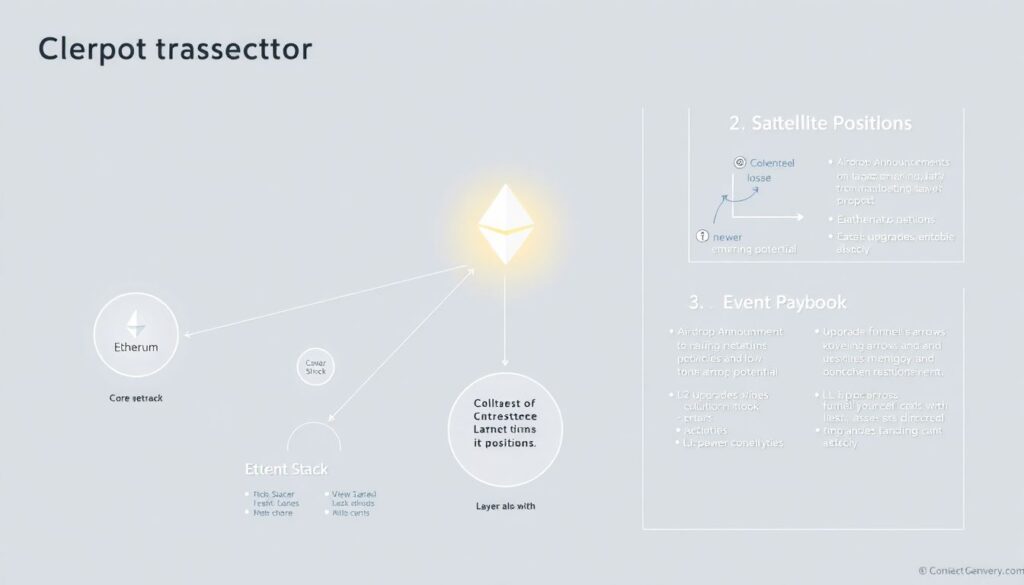
1. Core stack on mainnet and 1–2 major L2s you understand deeply.
2. Satellite positions on emerging L2s with credible upgrades or upcoming crypto airdrops 2025, sized small.
3. Event playbook for:
– Airdrop announcements (what to farm, when to exit)
– L2 upgrades (which tokens/LPs benefit directly)
– ETF / macro surprises (how much risk you’re allowed to take)
Over time, you stop reacting emotionally to headlines and start *routing liquidity intentionally*, just like the pros you’re trying to learn from.
—
In short: L2 flows during major events are chaotic, but not random.
If you understand why liquidity moves — not just that it moves — you can turn wild hours into structured opportunities instead of expensive lessons.