
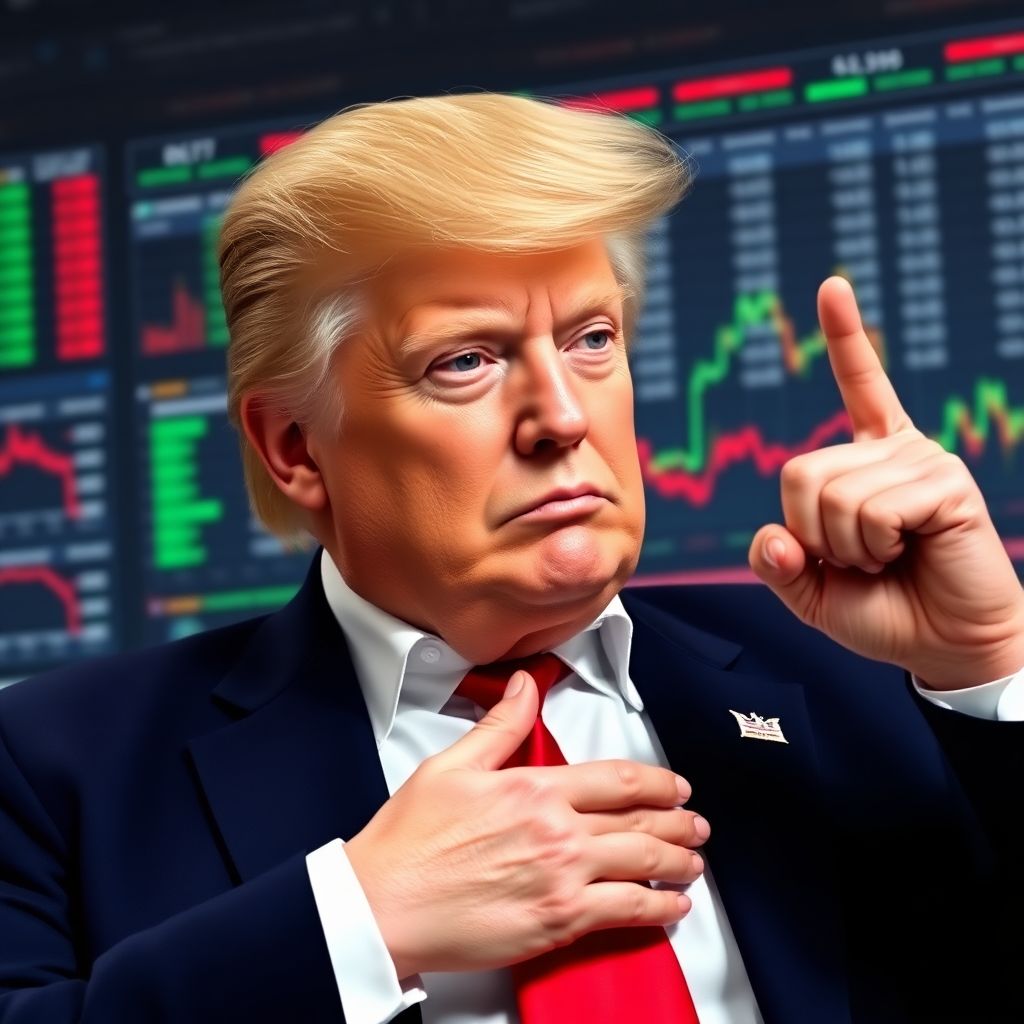
World Liberty Financial insists it is “nowhere near liquidation,” yet unease around the project is mounting as questions grow over its borrowing practices, collateral management, and upcoming token unlocks.
The Trump family-backed DeFi protocol has come under fire after on-chain data showed that it deposited a massive tranche of its native WLFI tokens into WLFI Markets, a lending platform powered by Dolomite. Initially, World Liberty Financial supplied 3 billion WLFI as collateral; that figure has since climbed to 5 billion WLFI, reportedly valued at around $429 million and sourced entirely from the project’s treasury.
Leveraging this collateral, the team borrowed over $75 million in USDC. The move had an immediate impact on WLFI Markets: USDC lending yields spiked to an eye-catching 13.5%, attracting attention from yield-hungry lenders but simultaneously draining available liquidity. With so much of the pool’s USDC locked up in a single borrower, smaller lenders suddenly found themselves unable to withdraw funds unless World Liberty Financial repaid or at least partially closed its position.
This dynamic quickly triggered alarm. Observers warned that concentrating so much counterparty risk in one entity could lead to a “bad debt” scenario if market conditions turned against WLFI or if the team chose not to repay. Some critics went further, suggesting that, if the token price slumped following political or macro events, WLFI Markets could be left holding collateral that had collapsed in value, leaving lenders exposed.
In response, World Liberty Financial labeled the concerns as “wrong FUD” and argued that market participants were misinterpreting how DeFi lending and collateralization work. The project acknowledged that it is among the largest suppliers and borrowers on WLFI Markets but emphasized that the position is carefully managed. According to the team, the loan is not approaching any liquidation threshold, and they reiterated that even in the event of a sharp market downturn, they would simply add more collateral to keep the position safe.
“We are nowhere near liquidation,” the team stated, stressing that the strategy is deliberate and controlled. They further argued that this is “not risk” in the way critics describe it, but rather a core feature of how leveraged positions and collateralized lending operate in DeFi. In their view, the large USDC borrow is designed to generate “outsized, compelling yield for everyone” involved in the ecosystem, including USDC lenders who are benefitting from elevated interest rates.
However, detractors question whether that characterization underestimates the systemic risk. In any collateralized lending market, the value of collateral relative to the borrowed asset is crucial. If WLFI’s token price continues to slide, the protocol could face either forced liquidations or a need to constantly top up collateral to maintain safe collateralization ratios. Critics argue that this creates a feedback loop: fears of liquidation or insolvency pressure the token price, which in turn increases the risk of exactly the scenario everyone is worried about.
The controversy is further aggravated by uncertainty surrounding WLFI token unlocks. Roughly 70% of the token’s total supply is currently locked, with only about 31 billion WLFI in circulation out of a maximum of 100 billion. Many early and long-term investors still have their tokens vested, and the market has been speculating on when and how those tokens will be released.
World Liberty Financial has moved to clarify this aspect, stating that it will soon put forward a proposal for a “structured, phased approach” to unlocks. According to the team, a community vote is expected next week to decide on the framework. The intent, they say, is to avoid a sudden flood of supply that could overwhelm the market and to give investors confidence that unlocks will follow a predictable schedule rather than abrupt surprises.
Despite those assurances, sentiment around WLFI has weakened in recent days. As worries over the borrowing strategy and unlock timeline intensified, the token’s price fell roughly 15% over a three-day period, dropping to a yearly low of around $0.081. For market participants, this reinforces the concern that when locked tokens begin to unlock, early investors might rush to sell and exit, pushing the price even lower unless there are compelling reasons to hold.
From a risk management perspective, the core issues revolve around three interconnected factors: concentration risk on WLFI Markets, collateral volatility, and token supply overhang. First, a single borrower controlling such a large share of the lending pool’s liabilities means that the entire system is heavily dependent on that borrower’s behavior and financial health. If World Liberty Financial mismanages the position, delays repayment, or faces external shocks, lenders could be stuck with illiquid positions or impaired capital.
Second, the collateral itself-WLFI tokens-is volatile and tightly linked to the protocol’s reputation. Any loss of confidence in the project can quickly translate into steep price declines, reducing the effective value of the collateral. This is different from using more established, relatively less volatile assets like major stablecoins or blue-chip cryptocurrencies, where price movements, while still risky, are generally less correlated to the specific project’s governance controversies.
Third, the looming unlocks represent a large supply of tokens that could hit the market. Even a carefully phased release schedule can weigh on prices if demand does not keep up. For existing holders, the risk is that early investors with low entry prices see unlocks as an opportunity to take profits, regardless of long-term fundamentals, thereby adding persistent selling pressure.
For World Liberty Financial, restoring confidence will likely require more than simply asserting that liquidation is not imminent. Transparency around collateral ratios, liquidation thresholds, and the concrete mechanics of how “more collateral” would be supplied in a stress scenario would help market participants better assess the true risk. Detailed disclosures on how the borrowed USDC is being used-whether for liquidity provision, market-making, yield strategies, or operational financing-would also be valuable in gauging sustainability.
Similarly, the upcoming vote on token unlocks will be a critical moment. A well-structured unlock schedule could incorporate vesting cliffs, linear releases, and potential incentives for long-term staking or governance participation. For example, offering enhanced staking rewards or governance rights to token holders who commit to longer lock-up periods could reduce immediate sell pressure while aligning incentives with the project’s long-term health.
Investors and lenders also need to consider broader crypto market conditions. In a risk-off environment, highly leveraged strategies and tokens with significant unlock overhangs tend to underperform, as participants de-leverage and rotate into more liquid, lower-risk assets. Any macro shock, regulatory headline, or political event affecting the Trump brand could amplify volatility around WLFI in particular, given its high-profile backing.
On the flip side, if World Liberty Financial successfully navigates the current storm-by maintaining overcollateralization, repaying a portion of the loan over time, and implementing a measured unlock plan-the protocol could stabilize and even benefit from the current elevated yields attracting new users. Clear communication, consistent execution, and visible skin in the game from the team would be essential elements of such a turnaround.
Ultimately, the tension around WLFI captures a broader theme in DeFi: the fine line between aggressive, yield-seeking strategies and systemic risk. High yields do not appear out of thin air; they are usually a byproduct of leverage, volatility, or concentrated risk. Market participants need to look beyond headline APYs and scrutinize who is borrowing, what collateral supports those loans, and how resilient the system is under stress.
For now, World Liberty Financial maintains that its position is safe, that it is far from any liquidation event, and that the borrowing strategy is designed to enhance returns for all participants in its ecosystem. Whether the market accepts that explanation will depend on how the next few weeks unfold-especially the outcome of the token unlock vote, the evolution of WLFI’s price, and any new steps the team takes to de-risk its growing web of on-chain obligations.