
SEC freezes crypto ETF decisions as government shutdown stalls regulators
As of 31 January 2026, the gears of U.S. financial regulation have almost ground to a halt. With Congress failing to pass a new federal budget, the Securities and Exchange Commission (SEC) has been pushed into its official shutdown mode, dramatically slowing its ability to oversee markets and approve new products — including crypto-related instruments.
Crucially, the SEC has not gone fully dark. Core infrastructure such as the EDGAR filing system remains online, and companies can still submit registration documents and disclosures. On paper, the regulatory machine is still receiving input. In practice, however, very few people are on the other side to process it.
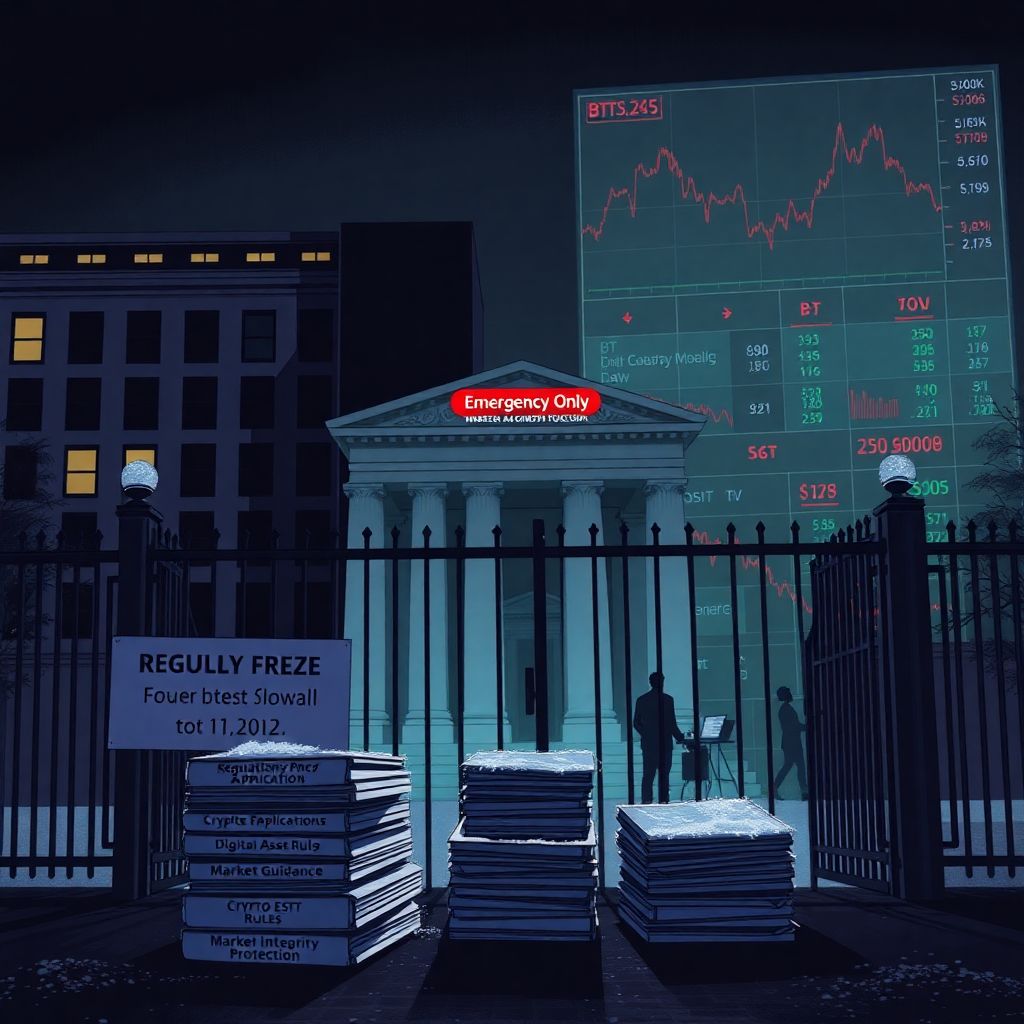
The vast majority of SEC staff have been furloughed, leaving only a skeleton crew to keep essential operations alive. This small emergency team is allowed to intervene solely in cases where “market integrity and investor protection” are at immediate risk. Anything that does not qualify as an urgent threat is effectively put on ice.
That includes the day-to-day work that has become critical for the digital asset sector. The personnel who typically review crypto exchange-traded fund (ETF) applications, examine registration statements from blockchain-related firms, and issue interpretive guidance on new rules are, for now, largely unavailable. The net result is a sweeping pause on the regulatory progress that market participants had been counting on.
This playbook is not new. Every time the U.S. government shuts down, financial agencies revert to similar contingency plans: keep the lights on just enough to respond to crises, while suspending most proactive oversight, policy development, and product approvals. For traditional markets, this is inconvenient. For crypto, where regulation is still in its formative phase, it is potentially defining.
The timing could hardly be worse for digital assets. The broader crypto market is already under pressure, with total capitalization sliding more than 6% to roughly 2.64 trillion dollars. Bitcoin has retreated to around 78,000 dollars, while Ethereum has slipped to near 2,400 dollars. A shaky price environment is now colliding with a regulatory vacuum, adding another layer of uncertainty for traders, institutions, and builders.
The ETF segment, in particular, is feeling the impact. Over the past year, crypto ETFs have moved from a speculative idea to a centerpiece of the industry’s institutional narrative. Many issuers have products in the pipeline, ranging from spot-based Bitcoin and Ethereum ETFs to more complex multi-asset and yield-focused vehicles. With the SEC in shutdown mode, timelines for reviews, comment periods, and final decisions are all being pushed back, with no clear restart date.
At the leadership level, this disruption has already forced a reset. SEC Chair Paul Atkins was expected to deliver a series of policy updates and clarifications on digital asset oversight in early 2026 — touchpoints the industry hoped would finally bring greater predictability to U.S. rules. Those briefings and statements have now been postponed, leaving market participants to navigate the current downturn without new guidance.
Adding to the frustration, 2026 had been widely seen as a potential turning point for U.S. crypto legislation more broadly. Optimists believed that, after years of debate, Congress might finally advance a more comprehensive legal framework around digital assets, stablecoins, and market structure. A prolonged budget standoff makes bipartisan cooperation more difficult and shifts legislative attention away from specialized topics like crypto toward immediate fiscal survival.
Just before the shutdown took effect, there were promising signs of greater regulatory coordination. Senior officials from the SEC and the Commodity Futures Trading Commission (CFTC) met and agreed to work more closely together on digital asset oversight. Their objective was to end jurisdictional turf wars, harmonize overlapping requirements for firms, and move toward a coherent rulebook that could support long-term industry development rather than leave it in a gray area.
Those efforts are now stalled. Joint working groups, staff-level consultations, and interagency planning sessions are among the first casualties when staffing is cut to the bone. Without continuous dialogue, it becomes harder to resolve key questions such as which assets qualify as securities versus commodities, how to regulate decentralized protocols, or how to treat staking, yield products, and tokenized real-world assets.
For crypto businesses, the immediate consequence is a bottleneck in approvals and an extension of the “wait and see” environment that has defined the U.S. market for years. Companies that were preparing to launch ETFs, register new token offerings, or upgrade their compliance frameworks under anticipated rules will now have to adjust roadmaps, delay launches, or pivot to other jurisdictions.
Investors are left with a similar dilemma. On one hand, a regulatory freeze can reduce the risk of abrupt new enforcement actions or surprise rule interpretations in the short term. On the other hand, the absence of decisions prevents the launch of new, regulated products that could increase liquidity and offer more secure access points for institutional money. This mix of reduced clarity and stalled innovation can deepen volatility rather than calm it.
For the crypto market right now, the key implication is that timeframes stretch out. Any filing waiting in the SEC’s queue — whether an ETF, a new exchange registration, or an updated disclosure from a major issuer — is likely to sit untouched until normal staffing resumes. Even after the government reopens, there will be a backlog, meaning that already delayed decisions may be pushed further into the year.
This slowdown also affects sentiment. Markets do not just react to actual policies; they react to expectations. The promise of clearer rules and new ETF approvals had been one of the narratives supporting long-term bullishness, especially among institutions slowly warming to digital assets. With that narrative interrupted, some investors may reprice their assumptions, becoming more cautious about the pace of U.S. adoption.
At the same time, it is important to recognize that a shutdown does not change the underlying trajectory of crypto regulation; it merely pauses it. The structural forces pushing regulators and lawmakers toward clarity — institutional demand, global competition, the growth of tokenization, and the integration of blockchain infrastructure into finance — remain intact. When the government eventually restarts, these pressures will likely resume, and the work left unfinished will come back onto the agenda.
In the near term, however, market participants will need to adapt. Issuers may focus on non-U.S. markets where regulators are currently more active and predictable. Builders might prioritize technological progress and user growth over regulatory-dependent products. Traders and funds will have to manage portfolios in an environment where macro politics — not just macroeconomics — can abruptly reshape the regulatory landscape.
Paradoxically, periods of official inaction can also spur more self-regulation within the industry. Exchanges, custodians, and protocol teams that want to attract institutional capital may voluntarily adopt stricter compliance standards, clearer disclosures, and more transparent governance, anticipating where regulation is likely to land once policymakers are back at full capacity. This can help reduce some of the risk that comes with a temporarily muted watchdog.
Over the longer run, the repeated cycle of shutdowns and restarts may fuel arguments for more resilient regulatory structures that are less exposed to political gridlock. For the crypto sector, which thrives on the idea of decentralization and permissionless innovation, the contrast between always-on blockchains and occasionally offlined regulators is becoming increasingly stark.
For now, the message to the crypto ecosystem is straightforward: don’t expect rapid approvals, fresh guidelines, or breakthrough policy moves from Washington until the budget deadlock is resolved. The market must operate in a holding pattern, with price action driven more by sentiment, global developments, and internal innovation than by new U.S. regulatory milestones.
Ultimately, how the industry weathers this pause will be a test of its maturity. If projects can continue building, investors can maintain disciplined risk management, and institutions can stay engaged despite delays, the shutdown will be a temporary setback rather than a structural blow. But as long as the SEC is constrained to emergency-only operations, the path to clear, stable, and timely regulation — especially for ETFs and other flagship products — remains on hold.