
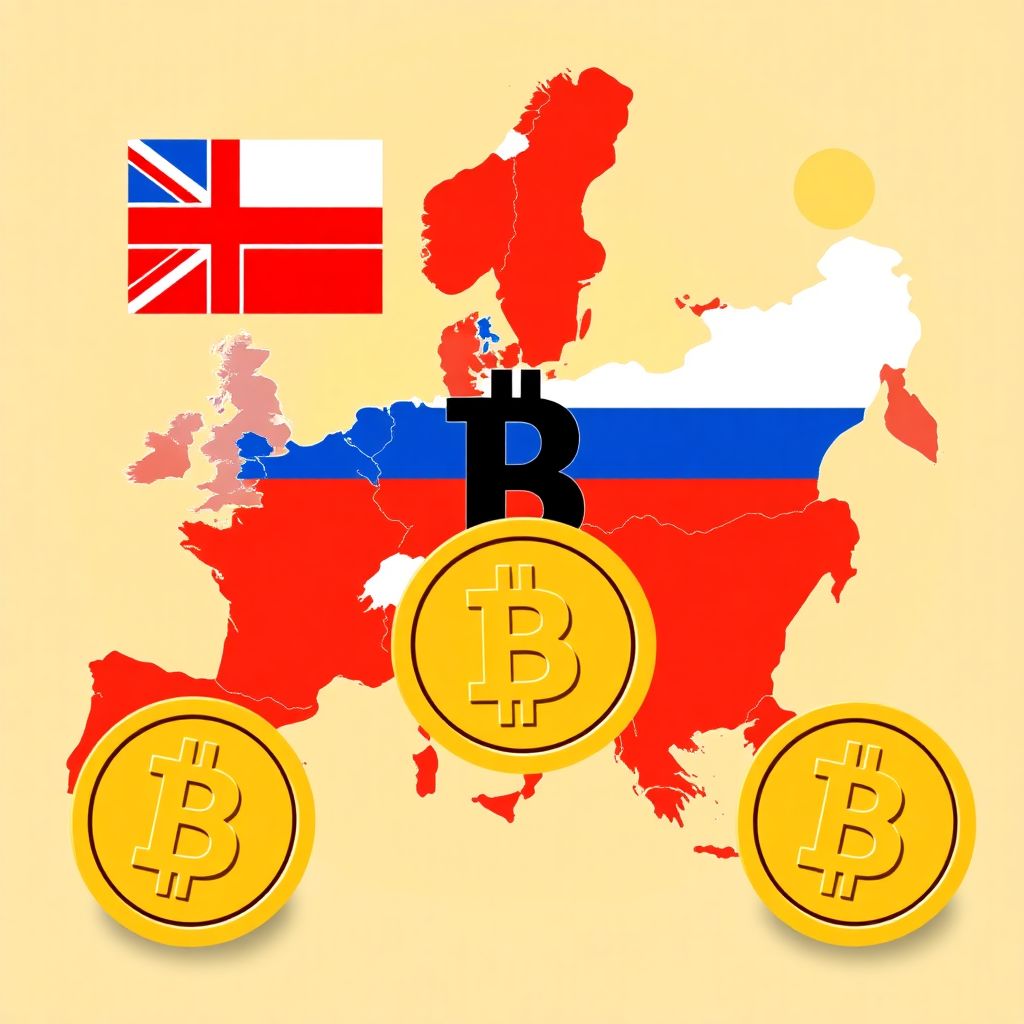
Russia Surpasses Europe in Crypto Transfers With $376 Billion Milestone, Driven by Stablecoins and DeFi Surge
Between July 2024 and June 2025, Russia emerged as a leading force in the global crypto economy, receiving more than $376 billion in on-chain cryptocurrency transfers, according to recent data from Chainalysis. This figure places Russia ahead of the United Kingdom, which recorded $273 billion over the same period, marking a significant shift in the digital finance landscape across Europe.
The dramatic increase in Russia’s crypto inflows is largely attributed to a combination of high-value transactions, explosive growth in decentralized finance (DeFi) activity, and the widespread adoption of stablecoins—especially those tied to the Russian ruble.
Spike in Large-Scale Crypto Transfers
One of the primary drivers of Russia’s crypto boom has been the surge in large transactions. Over the 12-month period, the volume of transfers exceeding $10 million grew by 86%—a rate far outpacing similar activity in other European countries. This rise indicates the growing involvement of institutional players, such as asset managers, trading firms, and high-net-worth individuals, who are increasingly turning to blockchain-based solutions for capital movement and settlement.
DeFi Expansion Gains Momentum
DeFi also played a crucial role in Russia’s ascension. Activity in decentralized finance platforms soared nearly eightfold in early 2025 compared to mid-2023 levels. Although this rate eventually stabilized at about 3.5 times the 2023 benchmark, it still highlights the intensification of blockchain-based financial services in the region. Tools like decentralized exchanges, lending platforms, and liquidity pools have opened new avenues for Russian users to manage and grow digital assets outside of traditional banking structures.
Ruble-Backed Stablecoins Fuel Cross-Border Transactions
Another key element in Russia’s crypto trajectory is the increasing use of stablecoins, especially those pegged to the national currency. The ruble-linked stablecoin A7A5 has become a major tool for cross-border settlements. By October 2025, A7A5 had reached a market capitalization of approximately $500 million, with on-chain transfers linked to the token surpassing $40 billion in recent months.
These stablecoins provide a flexible and borderless alternative to traditional remittance systems, particularly valuable in a climate where international sanctions and financial restrictions complicate fiat transactions.
Geopolitical Concerns and Regulatory Attention
The rapid expansion of ruble-backed stablecoins has not gone unnoticed. Western regulators have expressed growing concern about the potential for these crypto assets to be used in circumventing sanctions or facilitating transactions with restricted entities. While no direct violations have been confirmed, the involvement of stablecoin infrastructure in global transfers has brought increased scrutiny to the origins and destinations of these funds.
Russia’s Roadmap for a Digital Ruble
Amid this backdrop of growing crypto activity, the Russian government is moving forward with formal digital currency plans. The central bank is set to introduce a central bank digital currency (CBDC), the digital ruble, on September 1, 2026. Preliminary legislation suggests that large enterprises may be mandated to support the digital ruble from the outset, signaling the state’s intent to tightly integrate the CBDC into the financial ecosystem.
The proposed framework includes the potential launch of a national crypto bank and broader access to crypto trading for retail users. These steps could convert some of the unregulated and informal crypto activity into officially sanctioned financial channels.
Wholesale Activity Dominates, But Retail Usage Remains Limited
Despite the eye-catching totals, the majority of Russia’s crypto flows are not driven by everyday consumer use. Instead, the figures are dominated by wholesale transactions—large-scale trading operations, institutional settlements, and business-to-business transfers. While this points to a robust infrastructure for digital asset movement, it also highlights that average citizens are yet to widely adopt crypto for daily transactions.
Nevertheless, the rapid scalability of platforms like A7A5 demonstrates how quickly alternative payment systems can gain traction when traditional routes are limited or restricted.
Strategic Importance of Crypto in Russia’s Financial Future
As global tensions reshape financial alliances and access to international markets, crypto has emerged as a strategic lever for Russia. By building its own stablecoin ecosystem and pushing forward with a sovereign digital currency, Moscow is laying the groundwork for a parallel financial infrastructure that could reduce its dependency on Western systems.
This isn’t just about technology—it’s a geopolitical maneuver. With crypto, Russia gains autonomy in cross-border finance, mitigating the impact of international sanctions and bolstering sovereignty over monetary flows.
Impact on Global Crypto Regulation
Russia’s outsized presence in crypto markets may also influence global regulatory efforts. As concerns mount about the use of digital assets for illicit or sanction-evading purposes, international bodies like the G20 are under pressure to establish unified standards for stablecoin transparency and DeFi oversight. Russia’s example might become a case study for both innovation and risk, shaping future policy debates.
What This Means for Crypto Investors and Developers
For investors, Russia’s crypto surge signals the rising importance of emerging markets in shaping the future of digital finance. Developers, meanwhile, may find new opportunities to build infrastructure tailored to the unique needs of such regions—particularly in areas like compliance tech, localized stablecoins, and scalable DeFi protocols.
The Role of Blockchain Infrastructure in Sanctioned Economies
The Russian case also illustrates how blockchain technology can offer resilience in economies under pressure. From remittance channels to supply chain financing, decentralized tools are being adapted to fill gaps left by withdrawn Western services. As more countries explore similar strategies, the global crypto map may see increasing fragmentation, with regional ecosystems rising around specific needs and constraints.
Looking Ahead: Will Retail Adoption Follow?
The next phase of Russia’s crypto evolution may hinge on whether retail users begin to embrace digital assets for everyday use. While current volumes are driven by large institutions, efforts to legitimize and integrate crypto into the mainstream economy—through CBDC rollouts, regulatory clarity, and public-private partnerships—could shift that balance.
If successful, Russia might not only lead Europe in crypto volume but also become a model for how digital currencies can reshape national economies in the face of global economic constraints.