
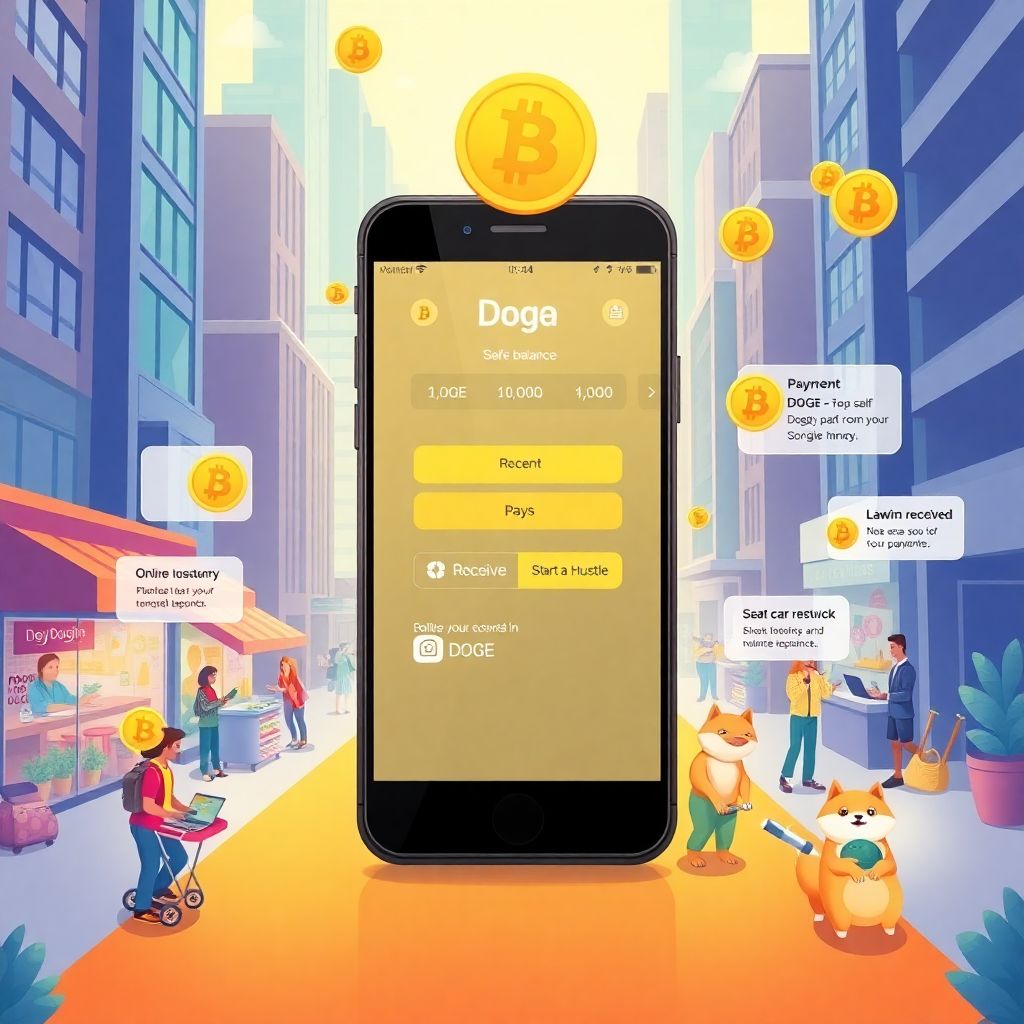
Dogecoin Foundation’s Corporate Arm Unveils “Such” App to Turn DOGE Into Everyday Money
House of Doge, the official corporate entity aligned with the Dogecoin Foundation, has announced plans for a new consumer-focused mobile application called “Such.” The app is being built to make it simpler for users to hold and spend Dogecoin, while equipping small businesses, independent sellers, and side‑hustlers with straightforward tools to accept DOGE in routine transactions.
According to a press release and posts on X, Such is scheduled to debut in the first half of 2026. At launch, the platform is expected to combine a self‑custodial Dogecoin wallet with real‑time transaction tracking and an integrated commerce environment branded “Hustles.” The Hustles feature is positioned as a streamlined on‑ramp for individuals and micro‑merchants who want to sell products or services directly for DOGE without complex technical setup.
House of Doge describes Such as its inaugural consumer product, with additional offerings planned in the same 2026 timeframe. The company is framing the app as an attempt to reduce friction on both ends of a Dogecoin payment: making it less cumbersome for holders to actually spend their coins, and giving sellers a way to plug Dogecoin payments into everyday retail or service activity without needing deep crypto expertise.
Timothy Stebbing, CTO of House of Doge and a director at the Dogecoin Foundation, linked the product vision directly to the culture that has grown up around the meme coin. He pointed to the large number of people informally building small businesses within the ecosystem — from artists moving prints to individuals offering local services such as lawn care. In his view, this “side hustle” mentality is already there; the missing piece is infrastructure that makes it trivial to start earning in DOGE. Stebbing said the goal is for anyone to be able to launch and list their “hustle” inside Such in just a handful of clicks.
The Dogecoin Foundation’s official account on X echoed this positioning, describing Such as arriving in the first half of 2026 and emphasizing three core components at launch: self‑custodial Dogecoin wallets, instant visibility into payments and balances, and dedicated merchant tools for selling goods and services against DOGE. In its messaging, the Foundation stressed that the app is intended to add tangible utility to Dogecoin, not simply provide another place to store tokens.
A development team of approximately twenty people, based in Melbourne, Australia, is building the app under Stebbing’s leadership. House of Doge says work on Such began in March 2025, making it a multi‑year effort by the time it reaches users. The company notes that the app is being constructed atop open‑source technology created by the Dogecoin Foundation, tying the corporate initiative back to the broader technical stack that underpins the network.
CEO Marco Margiotta argues that Such is not meant to be just another entry in the long line of crypto wallet apps that add a simple buy button and call it a day. He says House of Doge is designing a broader experience with distinctive features, guided by the development team’s prior product expertise and a focus on ease of use. The ambition, as Margiotta frames it, is to push Dogecoin toward being a widely adopted, decentralized global currency rather than a purely speculative asset. By shipping its own vertically integrated solution and leaning on “strategic partnerships,” House of Doge aims to pull more people into using DOGE in practical, everyday ways.
On X, the official Such app account has begun sketching out the personality and tone of the product, introducing a character named “Kubo” who is described as a guide for users navigating the app. The account repeats the project’s central promise that Such will be “more than just a wallet,” highlighting its intended role as a platform where individuals can launch side hustles and accept Dogecoin for their products and services from day one.
The announcement also emphasizes the link between House of Doge and Brag House Holdings Inc., identified as the corporate merger partner for House of Doge and described as a Nasdaq‑listed company under ticker TBH. Brag House CEO Lavell Juan Malloy II presented Such as a bridge between community engagement and actual monetization in a digital‑first environment. In his framing, the app should give users tools to build, earn, and interact using Dogecoin as a real medium of exchange, not merely an investment concept. He framed the initiative as part of a broader effort to “democratize access to opportunity” through digital technologies and open participation in crypto‑based commerce.
What “Self‑Custodial” Really Means for DOGE Users
A key design choice for Such is its self‑custodial wallet model. This means users, not a centralized company, will hold the private keys that control their Dogecoin. In practice, that approach can significantly reduce counterparty risk — there is no single corporate custodian that can freeze accounts or lose access to user funds through mismanagement. For seasoned crypto users, this aligns with the ethos of decentralization and personal control.
However, self‑custody also shifts responsibility. Users must safeguard recovery phrases and device access, and there is typically no “forgot password” option that can magically restore lost keys. If House of Doge wants to reach a broad audience that may be unfamiliar with crypto security, the app will need to strike a careful balance between usability and safety, potentially with robust onboarding, clear in‑app education, and intuitive backup and recovery flows.
Why the “Hustles” Feature Matters for Adoption
The Hustles marketplace concept is arguably the most strategic part of the Such app. Instead of just being a wallet with a few payment options, the product is trying to create a built‑in micro‑economy where people can list what they do — from digital art and handmade crafts to tutoring, consulting, or local services — and get paid directly in DOGE.
This approach has two important implications:
1. It creates immediate reasons to spend Dogecoin, not just hold it. When users can seamlessly pay a designer, a musician, or a neighbor offering services inside the same app that stores their coins, the line between “investment” and “money” starts to blur.
2. It gives freelancers and small operators access to a global customer base that can pay them instantly without traditional banking friction. For those who struggle with access to financial services, this could be an appealing alternative channel.
If successfully executed, Hustles could help Dogecoin progress from a meme‑driven asset to a functioning payment rail embedded in real economic activity, especially at the small‑business and creator level.
Implications for Small Merchants and Independent Sellers
For many small merchants, adopting cryptocurrency payments has historically been complicated: they need payment gateways, sometimes hardware, and often must navigate compliance and volatility issues. House of Doge appears to be betting that a smartphone‑first app, with integrated wallets and transaction tools, can shortcut much of that complexity.
In a best‑case scenario, Such could make it realistic for a street vendor, a local café, or an online craft seller to accept DOGE within minutes: download the app, set up a merchant profile, share a payment code or link, and start receiving funds. If the user experience is polished enough and fees are competitive, that simplicity could be a powerful differentiator against both traditional payment providers and competing crypto solutions.
At the same time, merchants will likely look for additional functionality beyond simple payments: invoicing, basic accounting exports, integration with existing point‑of‑sale systems, and perhaps some way to handle price volatility (for example, instant conversion to stable value, if that becomes part of the product roadmap). The extent to which Such provides or partners for these features will influence how attractive it is to more serious business operators.
How Such Fits Into Dogecoin’s Long‑Running Narrative
Dogecoin has spent much of its existence straddling two identities: a lighthearted meme project and a serious, large‑cap cryptocurrency with a global following. Despite its market size and name recognition, its use as a day‑to‑day payment instrument has lagged behind its cultural impact. High‑profile endorsements and speculative cycles have helped keep it in the spotlight, but they have not fully translated into deep merchant penetration.
By launching a dedicated consumer app tightly aligned with commerce, House of Doge is effectively trying to tilt the narrative back toward utility. If Such can show consistent transaction volume tied to real goods and services — especially if it empowers creators and micro‑entrepreneurs — it may help Dogecoin shake off some of its image as just a speculative meme coin and solidify its role as a functioning currency.
Strategic Timing and Competitive Landscape
Targeting the first half of 2026 for launch gives House of Doge a clear runway but also places the project in a competitive environment where numerous wallets, super‑apps, and payments platforms are racing to capture crypto transaction volume. Established players already support multi‑asset wallets, fiat on‑ramps, and merchant tools.
What may differentiate Such is its singular focus on Dogecoin and the cultural capital that comes with it. By optimizing every part of the app around DOGE — from UX language and branding to fees and network integrations — House of Doge can build a specialized product instead of a generic multi‑coin tool. The addition of characters like Kubo and the playful branding also signal an intent to stay aligned with Dogecoin’s irreverent, approachable identity, which could lower psychological barriers for new users entering crypto for the first time.
Potential Challenges and Risks
For all of its promise, Such will have to navigate several practical challenges:
– Regulatory uncertainty: Payments and digital assets sit under evolving legal frameworks in many jurisdictions. Depending on how on‑ramps, off‑ramps, and merchant services are structured, the team may need to adapt to region‑specific rules around money transmission, KYC/AML, and consumer protection.
– User security and education: Self‑custody introduces learning curves and risks. If new users mismanage keys or fall victim to scams, the reputation of the platform can suffer even if the underlying tech works correctly.
– Network and fee dynamics: Dogecoin transactions are typically inexpensive and fast, but scaling usage for thousands or millions of micro‑transactions could pressure network capacity. The team may need to consider layer‑two solutions or optimization techniques as adoption grows.
– Merchant demand: Even with excellent tooling, merchants must see real demand from customers to justify new payment options. Driving both sides of the market — spenders and acceptors — at the same time is a classic bootstrapping challenge.
How House of Doge responds to these issues, both technically and in terms of policy and partnerships, will shape the app’s long‑term sustainability.
What This Could Mean for Everyday DOGE Holders
For regular Dogecoin holders, Such could mark a shift in how they think about their coins. Instead of sitting passively in an exchange account or long‑term wallet, DOGE might become something they use to pay friends, tip creators, buy digital goods, or support small businesses they discover through Hustles.
If the app delivers on its promise of quick setup, intuitive design, and low‑friction payments, it could also reduce the psychological barrier to spending. Many crypto users hesitate to part with coins they see as speculative investments. A well‑designed commerce environment, however, can reframe those tokens as money in motion — especially for small, everyday purchases or support for independent creators and service providers.
The Bigger Vision: Dogecoin as a Global Decentralized Currency
Both Margiotta and Malloy frame Such not merely as a product but as part of a broader push to cement Dogecoin’s status as a truly global, decentralized currency. That vision requires more than hype and branding; it demands infrastructure, liquidity, stable user experiences, and tangible reasons for people to transact.
If Such succeeds, it could become one of the main consumer‑facing front ends for the Dogecoin ecosystem, performing a role similar to that of super‑apps and payments platforms in other financial systems. It would give users a place to store, send, earn, and spend DOGE without needing to navigate a fragmented set of tools and interfaces. Whether it can reach that scale will depend on execution, but the strategy is clear: move Dogecoin from the realm of jokes and price charts into the space of daily economic life.