
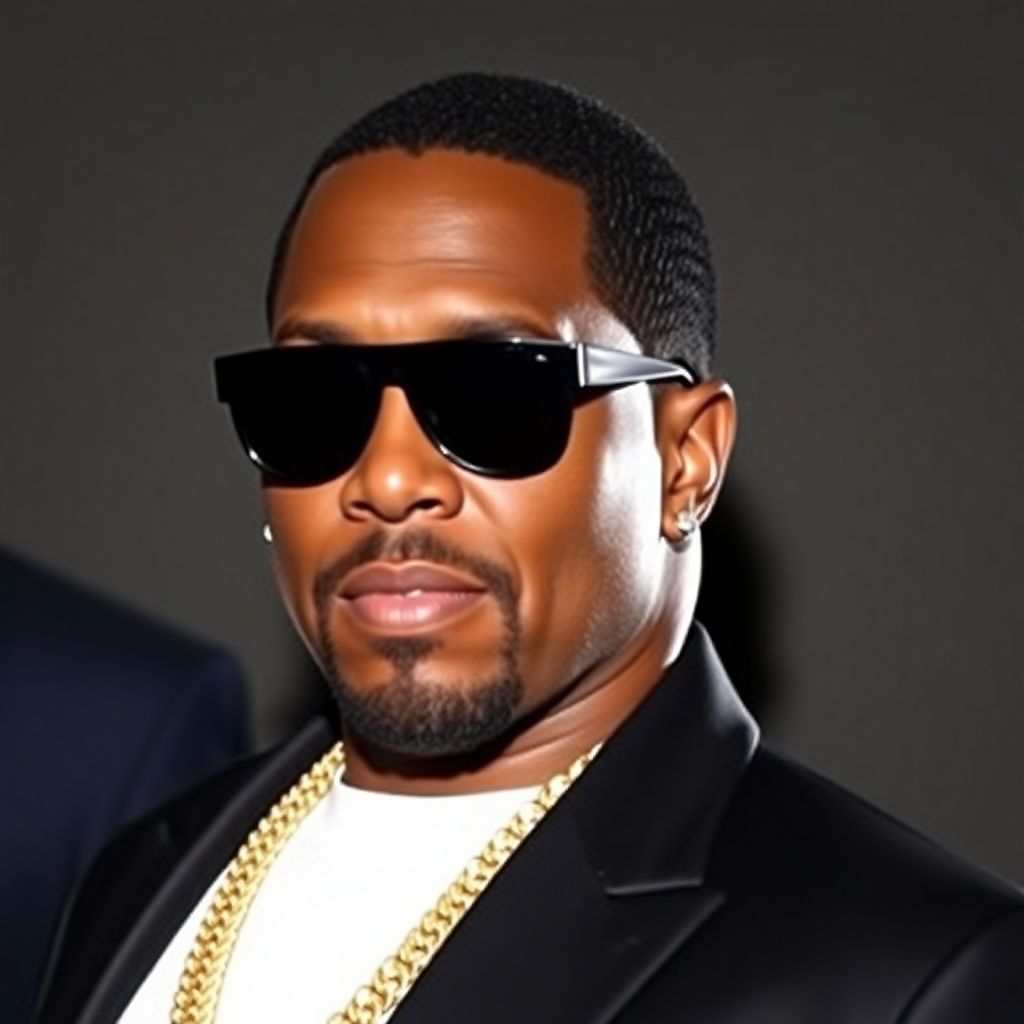
Diddy Launches Legal Counterattack Amid Ongoing Controversy and Crypto Connections
Sean “Diddy” Combs is mounting a legal counteroffensive following his recent conviction in a federal criminal case. His legal team has formally filed a notice of appeal, challenging both the jury’s verdict and the 50-month prison sentence imposed by a US federal court. The rapper and business mogul was found guilty on two counts related to the transportation of individuals for the purpose of prostitution, although he was acquitted on more serious charges, including sex trafficking and racketeering.
The trial, which concluded after nearly two months of proceedings, captivated public attention due in part to Combs’s celebrity status and the disturbing nature of the allegations. Prosecutors presented witnesses who testified that Combs leveraged his power in the entertainment industry to manipulate and coerce women into unwanted sexual encounters. One key witness, Cassandra Ventura, described being physically abused and forced into what the prosecution called “hotel nights.” Another, identified only as Jane, testified that she felt compelled to engage with Combs despite being in poor health at the time.
In his sentencing hearing, Judge Arun Subramanian emphasized that the punishment needed to reflect the gravity of the misconduct. “Abuse of women must be met with real accountability,” the judge declared, as he handed down a sentence that included four years and two months in prison, a $500,000 fine, and five years of supervised release. Combs, who had requested a significantly lighter 14-month term citing time served, expressed remorse and described his actions as “disgusting, shameful, and sick.” He publicly apologized to the women who took the stand against him, stating that he had “lost himself in excess.”
While the convictions on the transportation charges solidified Combs’s legal troubles, the split verdict leaves room for further legal maneuvering. His defense team is expected to argue that inconsistencies in the jury’s decision and procedural issues during the trial merit a reversal or reduction of the sentence on appeal.
Adding another layer to the story is the unusual detail of Combs’s detainment. During his incarceration at the Metropolitan Detention Center in Brooklyn, he reportedly shared a unit with Sam Bankman-Fried, the disgraced FTX founder convicted on multiple counts of fraud and conspiracy. Although there is no evidence tying Combs to Bankman-Fried’s financial crimes, their proximity generated media interest, especially given their overlapping involvement in tech and crypto ventures.
Combs has historically invested in various technology startups. He was listed as a backer of ECO, a digital banking app that raised about $26 million, and participated in a $12 million funding round for a holographic communication firm. Financial disclosures have also linked him indirectly with X Corp., a tech conglomerate involved in AI and digital media. Additionally, a “DIDDY” meme token briefly surged to a market capitalization of nearly $180 million, though no direct link between Combs and the token has been confirmed.
This convergence of legal battles, crypto ventures, and celebrity intrigue paints a complex picture of a man who once dominated the music charts but now finds himself at the center of a high-profile legal and media storm.
Legal analysts believe that Combs’s appeal could hinge on several key arguments. First is the question of judicial bias and whether the court gave adequate weight to the inconsistencies in witness testimonies. Second, his defense may argue that the prosecution relied heavily on circumstantial evidence and public perception rather than concrete proof of coercion. Third, the appeal could challenge the severity of the sentence, especially when compared to similar cases with lesser penalties.
Moreover, the public reaction to the case has been sharply divided. Some view the conviction as a long-overdue reckoning for a powerful figure who allegedly operated with impunity. Others believe that the legal system may have been influenced by Combs’s celebrity status, either to make an example of him or to appease a media-fueled public outcry.
In the broader context, this case also reflects evolving societal standards around consent, power dynamics, and accountability in the entertainment industry. The #MeToo movement has already led to the downfall of several high-profile figures, and Combs’s conviction may further embolden victims of abuse to come forward.
Meanwhile, his business empire faces increasing scrutiny. Several brand partnerships and investment deals have reportedly been paused or canceled pending the outcome of his appeal. Industry insiders suggest that his legal troubles could have lasting repercussions on his financial portfolio and public image, regardless of the appeal’s result.
The connection to Sam Bankman-Fried, though unofficial and unrelated to the charges, also highlights a curious intersection of celebrity culture, tech investment, and criminal justice. While both men face different accusations, their shared time in detention underscores how far-reaching the legal system has become in reining in figures from vastly different sectors.
As the appeal process unfolds, Combs’s legal team is expected to file comprehensive documentation outlining their arguments for overturning the conviction. The appellate court’s decision could take months, or even years, depending on the complexity of the case and the court’s docket.
In the meantime, Combs remains incarcerated, awaiting potential developments in his case. His legal strategy, public relations efforts, and business decisions will all play a critical role in determining whether he can stage a professional comeback—or whether this marks a permanent fall from grace for one of hip-hop’s most influential figures.