
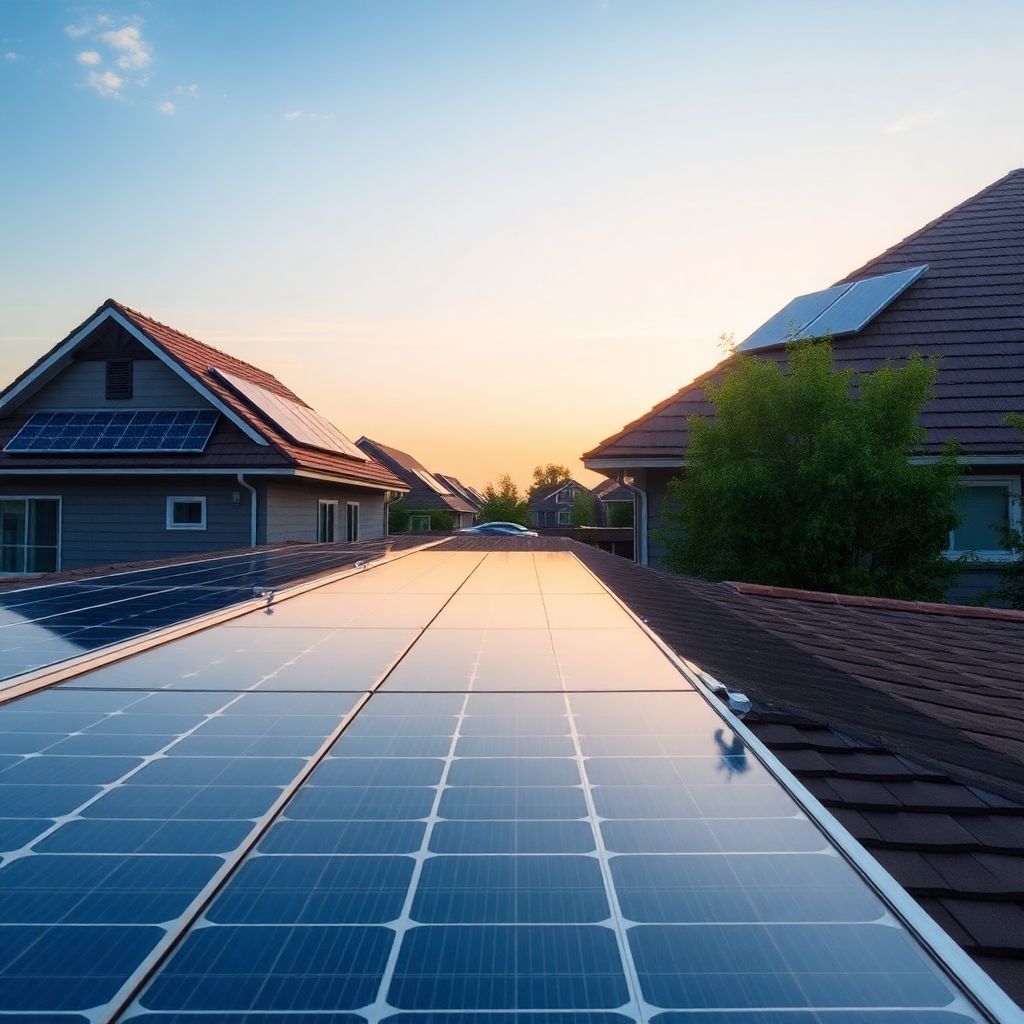
Daylight, a decentralized physical infrastructure network (DePIN), has secured $75 million in funding to accelerate the development of its distributed solar energy system across the United States. The initiative aims to transform how homes access and consume renewable power by offering solar energy as a subscription service, eliminating the traditionally high cost barrier associated with installing panels and batteries.
The conventional power grid struggles to meet the rising energy demands of high-performance computing sectors, including artificial intelligence (AI) and cryptocurrency mining. Daylight seeks to address this challenge by decentralizing energy production, empowering individuals to both consume and contribute energy through its networked solar grid.
Instead of requiring homeowners to invest upwards of $30,000 in solar installations, Daylight introduces a flexible subscription model. This approach makes solar energy more accessible to a broader demographic, especially as energy costs continue to climb near technology hubs. Customers who join the network benefit not only from clean energy but also from earning “sun points”—a rewards system designed to incentivize participation in the decentralized grid. These points are expected to be converted into a native token in the future, enabling further monetization and community ownership.
The $75 million funding round was backed by prominent venture capital firms including a16z Crypto, Framework Ventures, Lerer Hippeau, M13, EV3, Room40 Ventures, and Turtle Hill Capital. The capital injection will be used to expand infrastructure, onboard new users, and refine the platform’s tokenomics as it transitions from its testnet phase, which launched in 2024, toward a broader operational rollout.
Daylight exemplifies how decentralized infrastructure can serve real-world needs. Unlike traditional centralized systems, which are often inflexible and costly to modernize, DePINs like Daylight align user incentives with operational efficiency. This model fosters community-driven, scalable systems that can operate in parallel with legacy energy grids while offering resilience and cost benefits.
The strain on existing power infrastructure continues to grow. Data centers—especially those supporting AI training and blockchain ecosystems—consume vast amounts of electricity. According to recent data, wholesale energy prices near such facilities have surged by 267% since 2020. This surge threatens to inflate energy costs for average consumers as demand outpaces supply.
Industry experts warn that the centralized nature of AI data centers could push the world toward an energy crisis. As a countermeasure, decentralized computing and energy systems are gaining traction. By tapping into distributed sources such as home computers and industrial processors, and integrating them with decentralized energy networks like Daylight, the tech industry can reduce its dependence on centralized infrastructure.
Major corporations are also beginning to pivot toward alternative energy to power their growing AI operations. Amazon, for instance, signed an agreement with Talen Energy to secure 1,920 megawatts of nuclear energy for its data centers in Pennsylvania. Similarly, other tech giants including Microsoft, Google, and Meta are exploring renewable energy partnerships and infrastructure investments to reduce grid reliance.
Daylight’s approach could serve as a blueprint for future energy distribution models. By decentralizing both production and consumption, it creates a feedback loop where users not only utilize power but also contribute excess energy back into the system. This peer-to-peer model could increase grid stability, reduce transmission losses, and drive down costs for consumers.
In addition to residential users, the platform could eventually extend its services to small businesses and community hubs, further enhancing energy equity. By scaling its network, Daylight may also facilitate microgrids in underserved or remote areas, offering a path toward energy independence where traditional utilities fall short.
The integration of blockchain technology into Daylight’s infrastructure ensures transparency, traceability, and efficient energy accounting. As tokens and rewards are distributed, smart contracts can handle transactions and validate contributions, minimizing administrative overhead while maximizing trust in the system.
As climate change and rising energy costs push the world toward more sustainable solutions, projects like Daylight highlight the critical role of decentralized systems in building a more resilient, equitable energy future. By aligning economic incentives with environmental stewardship, Daylight is not just a solar provider—it’s a catalyst for a new era of energy democratization.
Looking ahead, further development of token-based incentives and partnerships with local governments or utilities could amplify Daylight’s impact. By integrating with existing smart grid technologies and electric vehicle (EV) charging networks, the platform could support broader goals around decarbonization and electrification.
In summary, Daylight’s $75 million raise marks a significant step toward reshaping the energy landscape. By removing financial barriers and harnessing the power of decentralization, the company is well-positioned to redefine how energy is produced, distributed, and consumed in the digital age.