
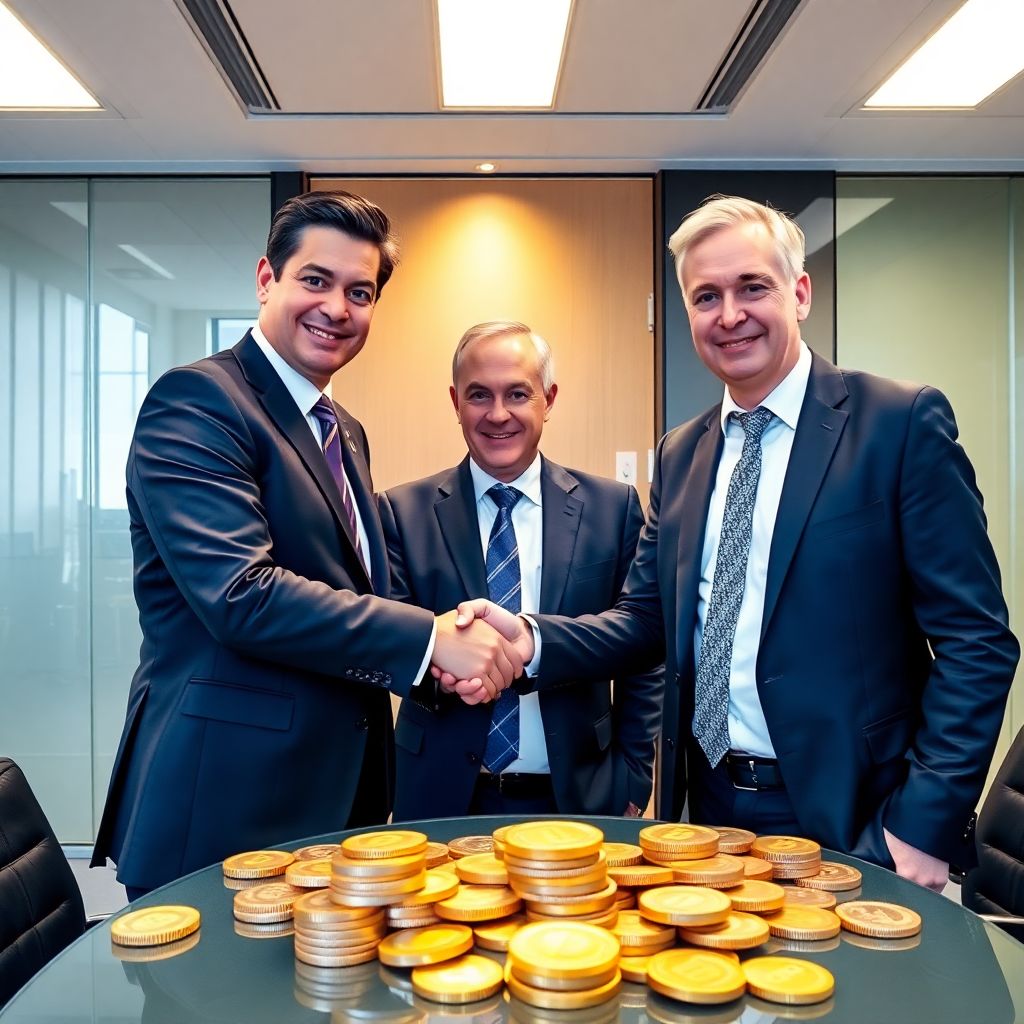
Crypto tycoons pour millions into Nigel Farage’s pro-crypto Reform UK
Nigel Farage’s Reform UK has emerged as the UK’s best-funded political party so far this year, largely thanks to two ultra-wealthy figures from the cryptocurrency industry. In the first quarter alone, the party raised around $12.5 million, outstripping both Labour and the Conservatives and signaling how aggressively crypto money is moving into mainstream politics.
Electoral Commission data for the period shows that Reform UK secured 7 million British pounds (about $9.4 million) from just two donors: Christopher Harborne and Ben Delo. Both men built their fortunes in the digital asset space and now appear determined to back a party that openly champions crypto-friendly policies.
Harborne, who holds a significant stake in the stablecoin issuer Tether, contributed approximately $4 million to Reform UK in the quarter. Delo, best known as a co-founder of the crypto derivatives exchange BitMEX, donated around $5.4 million. Combined, their cash injections account for the vast majority of the party’s quarterly haul.
By comparison, the UK’s two traditional political heavyweights lagged behind. Labour and the Conservative Party each raised roughly $5.4 million in the same period, meaning Farage’s organization has, at least for now, leapfrogged the major parties in campaign funding. For a relatively new and insurgent movement, this financial muscle is unprecedented.
Reform UK has deliberately positioned itself as the most overtly pro-crypto formation in British politics. It was the first party in the country to accept donations in Bitcoin, a symbolic move that dovetails with Farage’s broader messaging about disrupting the status quo and embracing financial innovation. Beyond symbolism, the party has tied its identity to concrete policy proposals aimed at attracting crypto investors and entrepreneurs.
Among Farage’s flagship ideas is a sharp reduction in capital gains tax on cryptocurrency profits, from the current 24% down to 10%. He argues that such a cut would draw investment, encourage tech startups to base themselves in the UK, and signal that Britain is open for digital asset business. Reform UK also backs the concept of the Bank of England building a strategic reserve of Bitcoin, framing it as a potential hedge against monetary instability and a way to keep pace with the evolving global financial system.
The size and nature of the donations underline how deeply the crypto sector is now enmeshed in political funding battles. Internationally, digital asset firms and their founders have become increasingly active in lobbying and campaign support as governments move to tighten rules on trading, taxation, and stablecoins. In other countries, crypto-funded political organizations have already spent millions trying to shape regulation and support candidates seen as sympathetic to the industry.
Christopher Harborne is no stranger to large-scale political giving. The latest gifts lift his total donations to Reform UK over the past year to around $20 million, making him one of the party’s most influential backers. His personal support for Farage also extends beyond party coffers. Previously, Harborne made a separate personal gift of about $6.7 million to Farage himself, money that has since landed under the microscope of parliamentary authorities.
That personal transfer is currently the subject of an inquiry into whether it should have been registered under parliamentary standards rules. Farage maintains that no breach occurred. He insists the funds were provided before he became a member of parliament and were spent on his personal security needs, rather than political activity that would require a formal declaration. He later described the gift as a reward for his leading role in the Brexit campaign, arguing that it was recognition of political success rather than an attempt to buy influence in the House of Commons.
Ben Delo, in contrast, is a new entrant to Reform UK’s donor list. This first major donation marks his debut as a financial supporter of the right-wing populist party. Delo’s presence is especially notable given his international profile in the crypto world and the legal scrutiny that has surrounded BitMEX in recent years. His contribution suggests that some high-profile industry players now view Reform UK as the most promising vehicle for promoting a light-touch regulatory environment for digital assets in Britain.
Financially, the momentum behind Reform UK is striking. The party’s first-quarter fundraising is roughly six times higher than what it managed in the same period a year ago, when it received about $2 million. At the same time, overall political funding has surged across the board: combined donations to all UK parties more than doubled compared with the previous year’s first quarter. Against this backdrop, Reform’s growth stands out as especially dramatic.
The broader crypto market context adds another layer to the story. While individual tokens and projects have faced severe volatility – with some assets dropping sharply and leveraged traders suffering heavy liquidations – the industry’s wealthiest participants still command enormous capital. As regulators mull new frameworks and central banks explore digital currencies, those capital pools are increasingly being deployed to influence the political and regulatory environment that will shape crypto’s future.
Reform UK’s explicit courting of this capital is part of a wider strategy to cast Britain as a top-tier crypto hub. Farage and his allies contend that the UK risks falling behind financial centres that move more quickly to clarify rules for exchanges, stablecoins, and digital asset custody. They argue that lower taxes on crypto gains and a more welcoming tone from regulators could entice both companies and high-net-worth individuals to relocate or expand operations in the country.
Critics, however, warn that heavy dependence on a narrow group of crypto billionaires could raise questions about whose interests Reform UK would ultimately serve. When a small number of donors account for a large share of a party’s war chest, concerns inevitably arise about policy capture and undue influence. The debate goes beyond Reform itself and taps into larger anxieties over the role of big money in politics, whether that money comes from traditional finance or the digital asset world.
Supporters of Reform counter that major backers are simply aligning with a party that already shares their ideological and economic vision. From this perspective, wealthy crypto donors are not buying new policies but reinforcing a platform that was always oriented toward low taxes, limited regulation, and skepticism toward centralized financial control. They also point out that large contributions are fully disclosed and governed by existing electoral rules.
For UK voters who hold crypto or work in related industries, the rise of a clearly pro-crypto party could be appealing. Lower tax rates on gains, a friendlier regulatory mood, and the potential for the UK to market itself as an innovation hub may look attractive against a backdrop of uncertain global rules. At the same time, those same voters must weigh whether close alignment with a relatively young and polarizing party carries political or reputational risks, particularly if the broader public sees crypto involvement as speculative or unstable.
More broadly, the flow of crypto money into political campaigns is likely to intensify pressures on regulators and lawmakers. As digital assets grow more embedded in the financial system, questions about consumer protection, financial stability, and fair competition will persist. Parties that lean heavily in favour of the industry may be pushed to clarify where they stand on issues such as anti-money-laundering enforcement, exchange licensing, and the treatment of stablecoins within existing banking rules.
For now, the numbers tell a clear story: Reform UK has transformed itself from a marginal insurgency into a fundraising powerhouse, powered significantly by fortunes made in cryptocurrencies. Whether that financial firepower can be converted into votes – and ultimately into legislative influence over the UK’s crypto framework – will become clearer in the coming election cycles. What is already evident is that crypto billionaires are no longer watching regulatory debates from the sidelines; they are now paying to help shape them.