
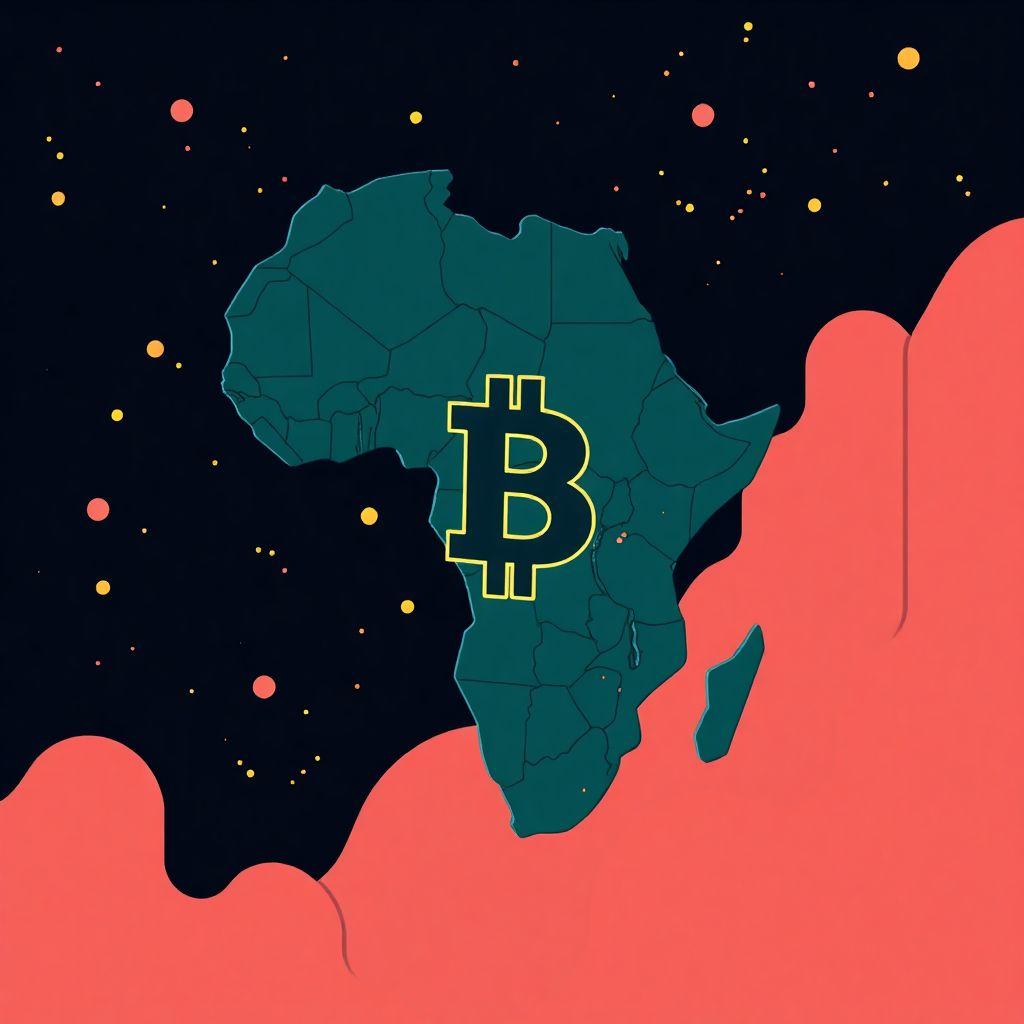
Crypto’s explosive growth presents Africa with a decisive choice: embrace and regulate this financial revolution to empower its economies and reduce dependency on foreign aid, or risk deepening economic instability and exclusion. With the global digital currency market approaching a valuation of $4 trillion, the stakes for the continent could not be higher.
As the world grapples with the implications of cryptocurrencies—from meme coins like Dogecoin to politically charged tokens such as TRUMP coin—Africa finds itself at the epicenter of a potentially transformative moment. The continent’s youthful population, fast-growing markets, and increasing mobile connectivity make it uniquely positioned to benefit from digital finance. Yet, without effective governance, the same forces could destabilize already fragile economies.
One of the most compelling opportunities lies in unlocking new capital sources. By embracing blockchain infrastructure, African nations could attract significant investment, redirect remittance flows, and even reshape the sovereign debt landscape. Currently, African countries owe the International Monetary Fund a staggering $42.2 billion. Egypt alone carries over $7.4 billion of that burden. Crypto-based financing could offer an alternative path, reducing reliance on international loans and enabling autonomous economic development.
However, the risks cannot be understated. The proliferation of stablecoins could lead to capital flight from traditional banks, undermining central banks’ ability to control monetary policy. Smaller, vulnerable economies—such as those of Sierra Leone, Uganda, and Guinea—could experience heightened currency volatility. In nations where financial literacy remains low and regulatory frameworks are underdeveloped, the sudden influx of digital assets could do more harm than good.
There’s also a paradox inherent to crypto: while it promises financial democratization, in practice it often reinforces inequality. Wealthier individuals and institutional investors are typically better equipped to navigate and profit from the volatility of crypto markets. In Africa, where many communities are still excluded from basic financial services, this could widen existing gaps if not carefully managed.
Remittances are another critical area. Every year, African nations receive over $95 billion in remittances—funds that often serve as lifelines for families and communities. If these flows migrate to blockchain-based platforms, traditional financial institutions and regulators could be bypassed entirely, potentially destabilizing domestic financial systems.
In contrast, other regions are already leveraging crypto in strategic ways. The United States, under pro-crypto policies, has integrated stablecoins into government debt markets. Tether alone has invested more than $120 billion in U.S. Treasury assets. Europe continues to experiment with blockchain under strict regulatory supervision. Meanwhile, China has rolled out its digital yuan to strengthen ties with Belt and Road nations, using its digital currency as a tool of geopolitical influence.
Africa lacks such institutional buffering. This absence underscores the urgent need for a coordinated regulatory framework. Proper governance can mitigate fraud, protect users, and create an environment where investors feel secure supporting African crypto projects. With strong oversight, the continent could tap into the estimated $35 to $50 trillion in global ESG capital expected by 2030.
But regulation alone won’t be enough. Education must play a central role. Investments in financial literacy, blockchain understanding, and DeFi skills are essential to ensure communities can safely use digital assets. Without this foundation, even well-intentioned projects risk failure.
The potential for crypto to serve the public good is already being demonstrated. The World Food Programme’s Building Blocks initiative used blockchain technology to distribute aid efficiently to refugees in Jordan. Through iris-scan verification, recipients could access funds at local markets, cutting costs and increasing transparency. In 2022 alone, the program supported 65 organizations and achieved savings of $67 million.
Other global examples provide further inspiration. Estonia’s blockchain-based e-voting system has enhanced electoral trust and efficiency. In the U.S., Climate Collective is using tokenized natural assets to fund environmental protection, while Chicago’s $210-million Immaculata Living Project—powered by crypto and backed by a university—combines social impact with commercial development.
These models show that crypto doesn’t have to be purely speculative. With thoughtful design, it can fuel inclusive growth, support public services, and protect the environment.
To prepare for this future, African governments must take concrete steps:
1. Establish pan-African regulatory standards to encourage cross-border integration and reduce regulatory arbitrage.
2. Create public-private partnerships focused on blockchain infrastructure, enabling scalable and secure systems.
3. Develop national digital wallets and stablecoins backed by local assets to protect monetary sovereignty.
4. Launch educational campaigns to build grassroots understanding of crypto risks and opportunities.
5. Encourage the tokenization of public infrastructure projects—roads, energy, housing—making investment more transparent and participatory.
Moreover, regional institutions like the African Union and the African Development Bank can play a vital coordinating role, ensuring that efforts are harmonized and aligned with broader development goals.
Africa does not have to choose between innovation and stability. With proactive leadership, the continent can shape a financial future that is inclusive, resilient, and sovereign. The crypto revolution is not a storm to weather—it’s a tool to wield. But like any powerful tool, its impact will depend on how wisely it is used.
In this defining moment, Africa must not remain a bystander. By crafting smart regulation, investing in education, and prioritizing social impact, it can not only protect its citizens but also lead the charge in creating a more equitable global financial system. Crypto could break Africa—or it could be the key to its financial independence. The time to decide is now.