
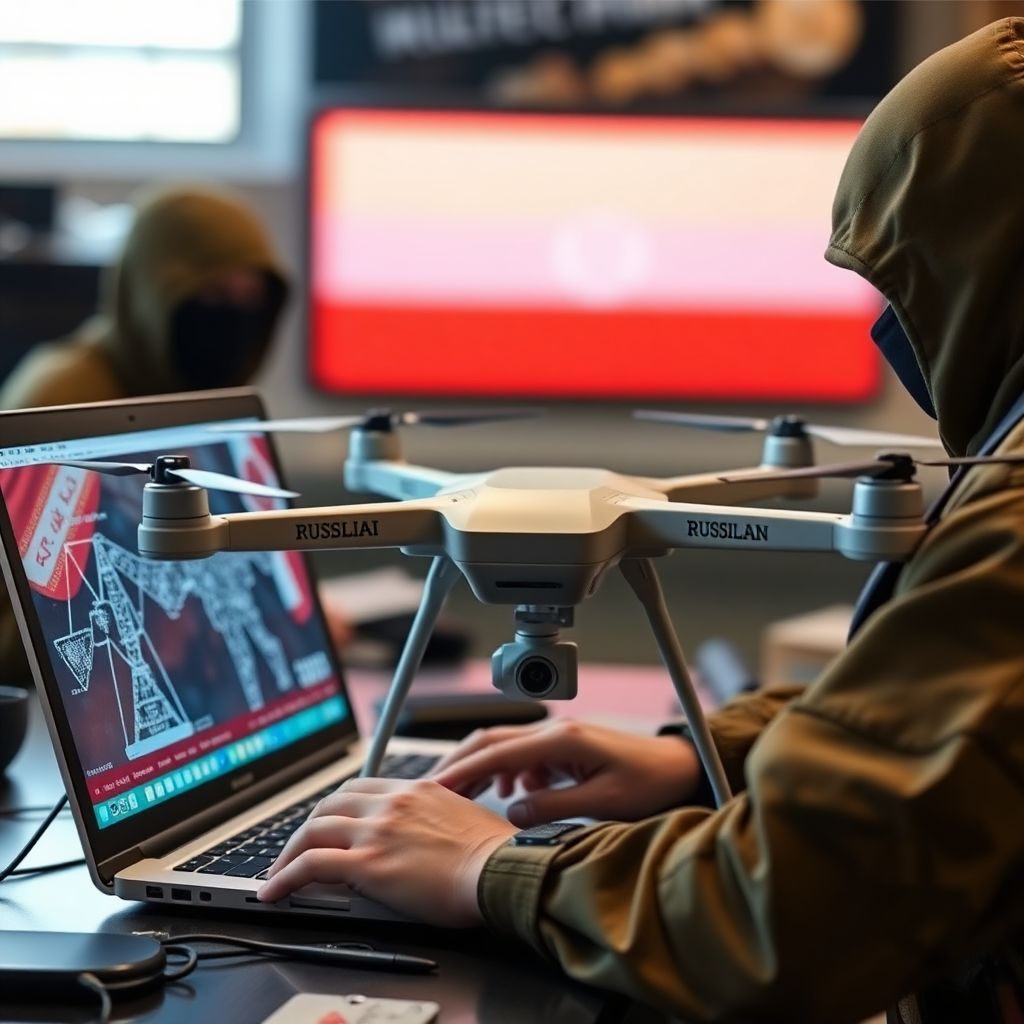
Russia- and Iran-Linked Groups Turn To Crypto To Finance Battlefield Drones
Armed groups aligned with Russia and Iran are increasingly using cryptocurrencies to pay for commercially available drones and their components, according to a new analysis that highlights how digital assets are reshaping the economics of modern warfare.
Blockchain intelligence firm Chainalysis reported that wallets tied to pro-Russian militias and Iran-backed organizations have been used to buy low-cost drones and dual‑use electronics from vendors on global e-commerce platforms. These purchases, while relatively small in dollar terms, are directly converting online crowdfunding campaigns into battlefield capabilities.
Commercial Drones At The Heart Of Modern Conflict
In recent years, inexpensive, off‑the‑shelf drones have become indispensable on contemporary battlefields. Both state and non‑state actors now rely on commercially produced systems for reconnaissance, targeting, and in many cases as improvised munitions.
Chainalysis notes that this shift has lowered the barrier to entry for armed groups. Instead of relying solely on state‑supplied equipment or complex procurement channels, militias can buy civilian drones and adapt them for military purposes. For groups aligned with Russia in Ukraine and Iran-backed organizations across the Middle East, this has turned consumer technology into a critical strategic asset.
How Crypto Enters Drone Supply Chains
Most drone purchases worldwide still flow through conventional banking and trade finance systems. However, the Chainalysis report stresses that crypto is beginning to intersect with these procurement networks in two primary ways:
1. Direct payments to drone makers
Some manufacturers or intermediaries openly accept cryptocurrencies on their websites. In these cases, militias or affiliated groups can simply send digital assets to acquire drones, bypassing the need for bank transfers that might flag compliance officers or trigger sanctions screening.
2. Indirect purchases via e-commerce platforms
A more common route involves vendors selling drones or dual-use components through large online marketplaces. These sellers may accept crypto payments while knowing little about their customers’ identities or how the items will be used. This creates a gray zone where ostensibly civilian sales can end up supplying military operations.
By following on‑chain transactions, analysts were able to link specific wallets to purchases from such vendors, often in jurisdictions with less stringent export controls.
Iran-Linked Crypto Activity And Drone Procurement
The report highlights multiple examples of Iran‑related activity. One wallet associated with Iran’s Islamic Revolutionary Guard Corps (IRGC) was observed purchasing drone components from a supplier based in Hong Kong. These transactions illustrate how sanctioned entities can leverage cryptocurrencies and cross‑border e-commerce to obtain sensitive technology without going through the traditional banking system.
Authorities had previously signaled this direction of travel. Earlier this year, Iran’s Ministry of Defence Export Center – the government body responsible for arms exports – publicly indicated it was prepared to receive crypto in exchange for a wide range of military hardware, including drones, air defense assets, warships, and even ballistic missiles. This stance effectively normalizes digital currencies as a means of payment in state-level arms deals, not just on the black market.
Pro-Russia Militias: Crowdfunding The Front Line
According to Chainalysis, the most visible link between crypto and drone warfare emerges at the militia and volunteer level. Since Russia launched its full-scale invasion of Ukraine in 2022, dozens of pro‑Russian groups have solicited cryptocurrency donations to buy gear for fighters on the ground.
These campaigns often explicitly list drones and related equipment among their fundraising goals. Over the last four years, such pro‑Russia networks are estimated to have raised more than 8.3 million dollars in digital assets across multiple blockchains. A significant portion of these funds has been traced to purchases from international drone manufacturers and component sellers.
On‑chain data shows that some Russian‑aligned fundraising groups paid a Hong Kong‑based drone maker, while others converted donations into local liquidity through Russian‑language exchanges with little or no know‑your‑customer checks, including sanctioned platforms and over‑the‑counter services operating out of high‑profile business centers.
For investigators, the pattern strongly suggests that Russia-linked actors used these channels to acquire drones produced by Chinese manufacturers, later deployed on the Ukrainian battlefield.
Matching Crypto Transactions To Drone Price Tags
One of the most striking aspects of the analysis is the direct correlation between wallet outflows and known drone prices. Chainalysis identified transfers in the range of 2,200 to 3,500 dollars – amounts that closely mirror retail prices for specific drone models and their accessory kits on major e-commerce sites.
These are not large sums when measured against traditional defense budgets, but their operational impact is outsized. A single crowdfunding campaign that raises a few thousand dollars in crypto can rapidly translate into the purchase of one or several drones, night-vision systems, or payload components. For small units that lack access to state procurement systems, this can decisively change their capabilities on the ground.
As the report puts it, the importance lies less in the nominal value and more in the logic: low-cost, commercially available drones rank among the most tactically valuable assets that crowdfunded crypto can buy.
Why Crypto Is Attractive For Conflict Actors
Several features make cryptocurrencies appealing to militias, sanctioned organizations, and their support networks:
– Borderless transfer: Digital assets can move across jurisdictions without immediate reliance on banks, reducing exposure to sanctions controls or payment blocks.
– Speed and accessibility: Supporters worldwide can donate quickly using common wallets and user‑friendly platforms, even if traditional money transfer services are restricted.
– Pseudonymity: While blockchains are transparent, users often operate through aliases, mixers, or lightly regulated exchanges, complicating attribution efforts.
– Small, discrete transactions: Instead of large, conspicuous payments, groups can split funding into many smaller donations that appear harmless in isolation.
At the same time, these very properties create entry points for law enforcement and intelligence agencies, as every on‑chain movement leaves a permanent record.
Blockchain Analysis As A Countermeasure
The report underscores that blockchain analytics has become a crucial tool for governments, regulators, and compliance teams trying to understand and disrupt these emerging funding channels. Because all transactions on public blockchains are recorded indefinitely, analysts can:
– Trace flows from donation addresses to exchanges, merchants, or intermediaries
– Identify clusters of wallets working together to raise and move funds
– Map links between online fundraising campaigns and specific procurement events
– Flag exchanges, OTC desks, or platforms that consistently facilitate suspicious flows
In some cases, investigative work has led to the identification and sanctioning of individuals, entities, and service providers involved in arms-related crypto activity. Exchanges that fail to implement basic know‑your‑customer and anti‑money‑laundering procedures are increasingly being targeted by regulators and law enforcement.
Implications For Crypto Regulation And Compliance
The growing use of digital assets in conflict zones is intensifying pressure on the crypto industry to improve monitoring and controls. Regulators in multiple jurisdictions are pushing for:
– Stricter customer verification standards on exchanges and OTC desks
– Screening of wallet addresses against sanctions and terrorism‑financing lists
– Enhanced transaction monitoring to detect patterns consistent with arms procurement or militia fundraising
– Closer collaboration between crypto businesses and security agencies
For legitimate crypto firms, failing to recognize and block such flows can create legal and reputational risk, especially when sanctioned actors or terrorist organizations are involved. As a result, more platforms are investing in specialized compliance tools and partnering with blockchain analytics providers to stay ahead of these threats.
How Drone Crowdfunding Changes The Battlefield
The intersection of crypto, crowdfunding, and commercial drones is reshaping how smaller armed formations operate. Instead of waiting for centralized command structures or state logistics, local units can directly appeal to supporters and rapidly convert donations into mission-critical hardware.
This decentralization has several consequences:
– Shorter procurement cycles: Units can acquire equipment in days or weeks instead of months.
– Greater autonomy: Local commanders gain more control over the tools they use.
– Diffuse supply chains: Equipment arrives via fragmented commercial channels, complicating interdiction efforts.
At the same time, reliance on widely available consumer hardware creates vulnerabilities. Commercial drones are often easier to jam, spoof, or shoot down than military‑grade systems, and their widespread use drives rapid innovation in electronic warfare and counter‑drone technologies.
The Broader Transformation Of Conflict Economics
Beyond drones, the report suggests that digital assets are gradually transforming how conflicts are financed and supplied. Crypto donations have been used to fund everything from medical supplies and protective gear to propaganda and recruitment campaigns. Drones stand out because they provide a clear, measurable link between small sums of money and tangible battlefield effects.
As more actors experiment with crypto-based fundraising, the boundary between state and non‑state warfare becomes increasingly blurred. Volunteer networks, paramilitary groups, and officially sanctioned entities may all draw from the same global pool of digital assets, relying on overlapping procurement channels.
What Comes Next
The evolving connection between crypto, drones, and modern warfare is likely to remain a focus for policymakers and security services. Future efforts may include:
– Targeted sanctions against specific wallets, vendors, and intermediaries tied to drone procurement
– Tighter oversight of cross‑border e-commerce involving dual‑use components
– Increased pressure on jurisdictions that host no‑KYC exchanges and permissive OTC markets
– Development of international standards on crypto use in arms trade and conflict zones
For the crypto ecosystem, the challenge will be to preserve legitimate usage while making it harder for Russia‑ and Iran-linked groups, as well as other armed organizations, to exploit digital assets for drone purchases and broader military activities. The transparency of public blockchains gives authorities a unique vantage point – but closing the gap between data and enforcement remains an urgent task as technology continues to change the face of war.