
CLARITY Act Faces Fresh Setback As Senate Ethics Deal Falls Apart
The long-delayed CLARITY Act, a key piece of legislation aimed at establishing a clearer framework for crypto markets in the United States, has hit another serious obstacle in the Senate. A fragile ethics compromise that had been keeping the talks alive has collapsed, widening the gap between negotiators just as supporters hoped the bill was nearing a path to the Senate floor.
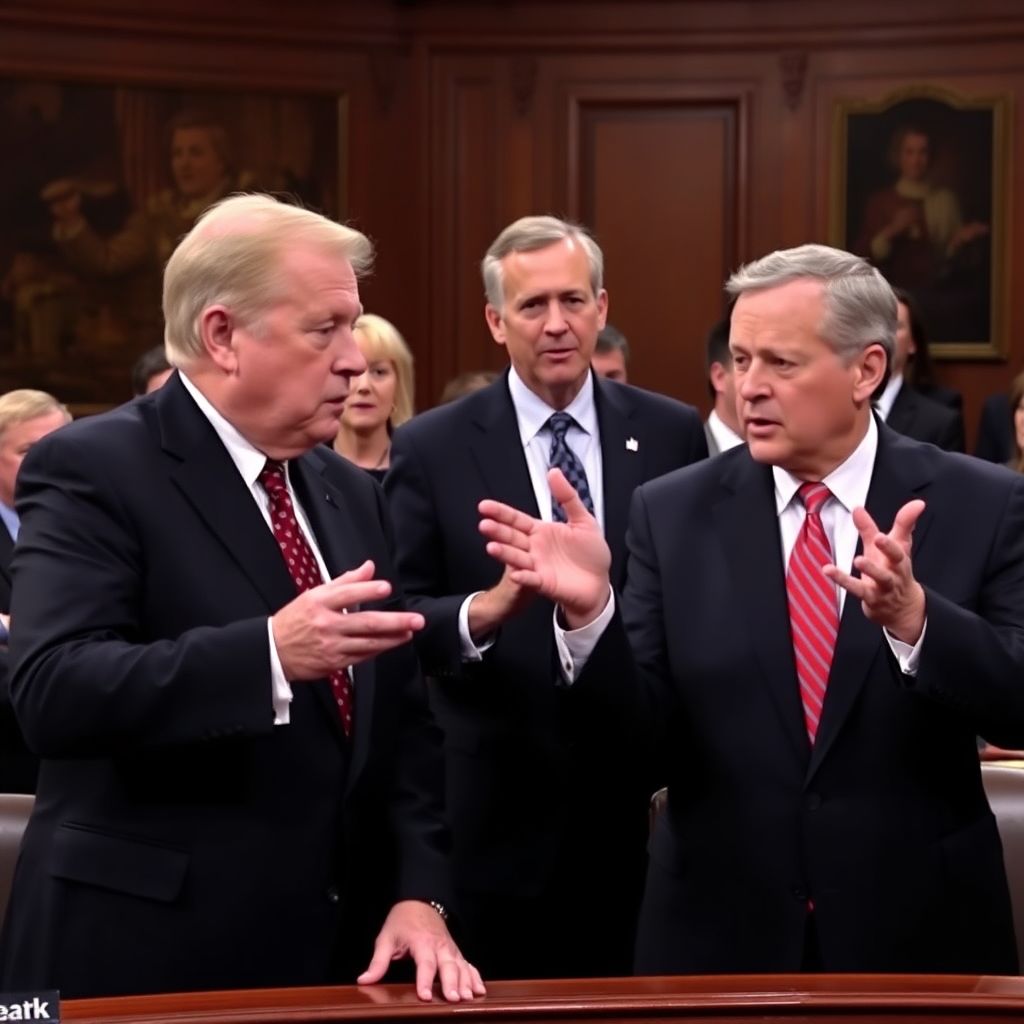
According to reporting by Eleanor Terrett of Crypto In America, Democratic senators emerged frustrated from a Tuesday negotiating session after Republican counterparts reversed course on key elements of an earlier ethics understanding. The breakdown pushed the bipartisan working group further away from consensus and cast new doubt on the bill’s near‑term prospects.
The latest meeting was the first time the core group had reconvened since they sketched out a provisional ethics deal ahead of the Senate Banking Committee’s markup of the bill back in May. That tentative framework brought together Senators Kirsten Gillibrand, Ruben Gallego, Bernie Moreno, and Cynthia Lummis, along with Patrick Witt, who serves as Executive Director of the White House Crypto Council. At that point, participants believed they had at least a working foundation for resolving the most sensitive issues.
A central point of contention in those earlier talks was a provision in the CLARITY Act that would have empowered state attorneys general to sue the Department of Justice if it failed to enforce ethics requirements tied to President Trump. The idea was to create an external enforcement mechanism in case federal officials chose not to act on potential ethics violations.
However, sources cited in Terrett’s report say that during Tuesday’s meeting, Republican negotiators and White House representatives backed away from that enforcement tool. They pointed to concerns raised by senators outside the working group, who warned that giving state officials that kind of authority could be weaponized by either party down the line, turning future political fights into legal battles wielded against lawmakers or executive branch officials.
In place of that controversial provision, Republicans reportedly floated a narrower approach. They suggested concentrating enforcement power solely in the hands of the Attorney General, removing state attorneys general from the equation. As an additional remedy, they raised impeachment as a potential avenue for addressing serious ethics violations, arguing that the Constitution already provides a political and legal process for dealing with high-level misconduct.
Democrats, however, saw these new ideas not as refinement but as retreat. They characterized the proposal to strip state attorneys general of enforcement authority as a sharp reversal from the understanding reached before the Banking Committee’s markup. In their view, the changes weaken meaningful oversight and reduce the chances that ethics provisions would be enforced consistently, particularly in politically sensitive cases.
With neither side willing to concede further on Tuesday, the meeting ended without a breakthrough. Negotiators are expected to regroup on Thursday in another attempt to bridge the divide and salvage a path forward for the CLARITY Act. Still, each failed session increases the risk that the bill will stall indefinitely or be pushed into the broader election‑year political crossfire.
Ethics disagreements are not the only barrier standing in the way of a full Senate vote. Law enforcement groups remain deeply wary of several sections of the bill, arguing that the current language could hamper their ability to pursue criminals who exploit blockchain technology for money laundering, fraud, sanctions evasion, and other illicit activity. Their opposition has become a critical factor in the political calculus for key senators.
To address those concerns, the White House Crypto Council is scheduled to host a high‑level meeting with major law enforcement organizations, including the National Sheriffs’ Association, the Fraternal Order of Police, the National District Attorneys’ Association, and others. Officials from the Department of Justice, the Treasury Department, and members of Congress are also expected to participate in the discussions.
The session will focus heavily on the Blockchain Regulatory Certainty Act (BRCA), a component of the broader CLARITY package. That section aims to clarify that certain non‑custodial software developers – for example, those building open‑source wallet tools or smart contracts – are not automatically responsible for what third parties do with their code, unless there is evidence that the developers intended to facilitate illegal activity.
Supporters argue that without such protection, innovative developers could be driven out of the United States or forced to severely limit their work out of fear of legal liability for users’ behavior. They see the BRCA language as critical to preserving the open, permissionless nature of blockchain infrastructure while still allowing authorities to go after genuinely complicit actors.
Law enforcement representatives, however, are not convinced. Even with intent‑based safeguards, they worry the wording in the CLARITY Act could create new gray areas that sophisticated criminals might exploit. If prosecutors have to meet a higher bar to show intent on the part of developers or infrastructure providers, they argue, some bad actors operating “on‑chain” – through purely blockchain‑based transactions rather than traditional bank transfers – could prove much harder to reach.
Biden administration officials plan to push back on those fears. They are expected to argue that the bill’s text does not create a safe harbor for criminals and that existing tools for combating money laundering, terrorist financing, and sanctions evasion remain intact. From their perspective, the legislation clarifies jurisdiction and liability without closing off current investigative pathways.
Democratic senators who hold pivotal votes are closely watching how these law enforcement concerns are addressed. Figures like Mark Warner and Catherine Cortez Masto have made it clear that they will not support the CLARITY Act unless police, prosecutors, and related groups feel that their operational needs and public‑safety priorities are adequately protected. Their stance effectively binds the bill’s fate not only to intraparty negotiations but also to the satisfaction of external stakeholders.
The CLARITY Act’s latest setback highlights how entangled crypto policy has become with broader constitutional questions and political anxieties. What began as an attempt to give digital asset markets more predictability has evolved into a debate about who should police ethics in Washington, how far states can go in challenging federal agencies, and how to balance innovation with security in a rapidly evolving technological landscape.
For the crypto industry, the stakes are significant. Without a clear regulatory framework, companies and investors face continued uncertainty over how digital assets will be treated under securities, commodities, and banking laws. Some firms have already shifted operations abroad or slowed U.S. expansion, citing the absence of coherent federal rules and the risk of overlapping or contradictory enforcement.
At the same time, law enforcement agencies have been under pressure to demonstrate that they can keep pace with criminals who increasingly use cryptocurrencies, mixers, and decentralized finance tools to obscure their activities. For them, any law that appears to narrow liability or constrain investigatory powers is viewed with skepticism, even if its stated purpose is to bring clarity and consistency to regulation.
The ethics dimension adds another layer of complexity. Provisions that touch on the conduct of former or current presidents, and the mechanisms for holding them accountable, are inevitably charged. As Republicans and Democrats weigh the long‑term implications of empowering state officials to challenge federal agencies like the DOJ, they are also calculating how those tools might be turned against their own party in future disputes.
Looking ahead, much will depend on whether Thursday’s follow‑up meeting can produce even a modest compromise on enforcement and ethics. One possible path could involve more narrowly tailored triggers for state action, clearer thresholds for DOJ inaction, or additional reporting requirements that increase transparency without inviting constant legal warfare between states and Washington.
On the law enforcement side, negotiators may explore more precise language around intent, carve‑outs for critical infrastructure, or enhanced funding and training provisions that reassure agencies they will not be left behind as blockchain technology advances. If those reassurances can be woven into the bill, skeptics like Warner and Cortez Masto may find it easier to support moving the legislation forward.
For now, the CLARITY Act sits at the intersection of competing priorities: fostering innovation versus preventing abuse, decentralizing power versus maintaining federal control, and insulating ethics enforcement from politics versus acknowledging that ethics in Washington is inherently political. Whether the Senate can reconcile these tensions will determine not just the future of this particular bill, but also the trajectory of U.S. crypto policy in the years to come.