
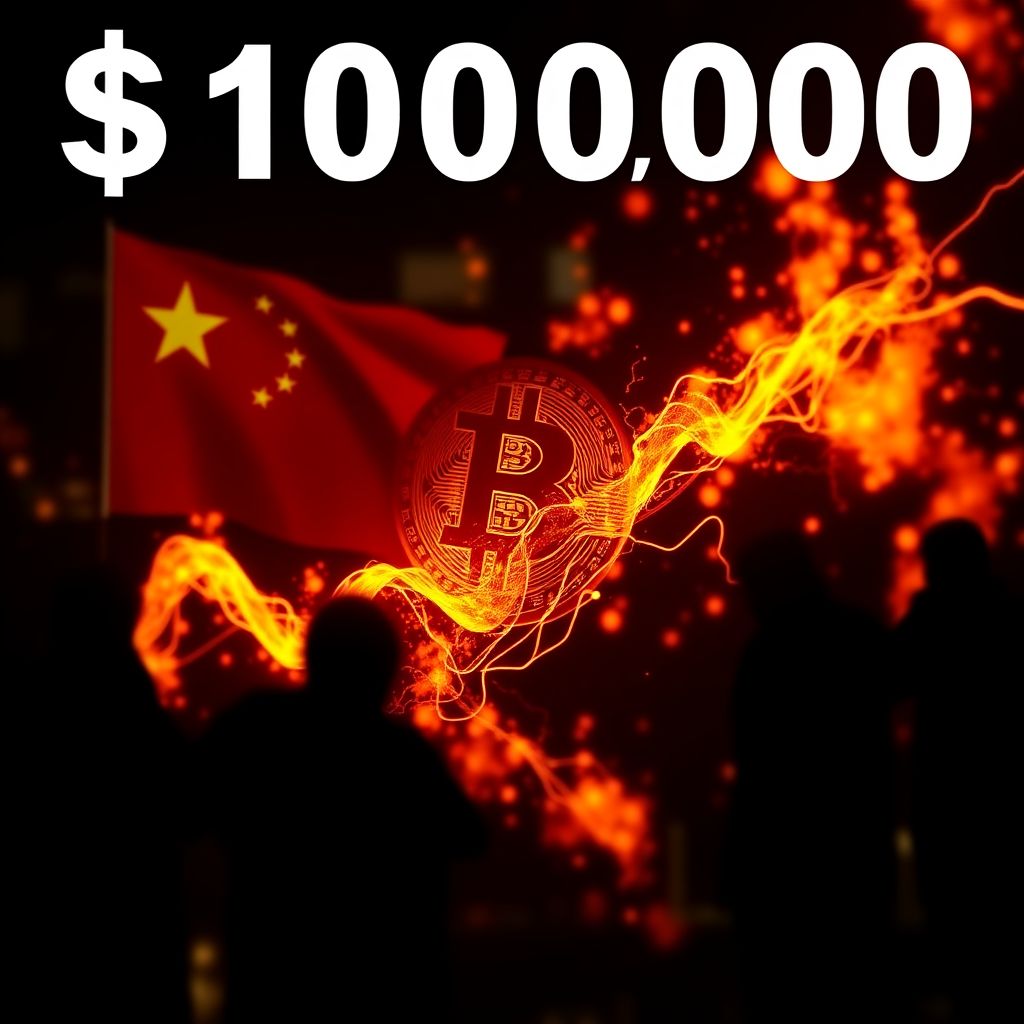
Bitcoin Surges to $101K Before Tumbling Amidst Trump’s 100% Tariff on China
In a dramatic turn for global financial markets, Bitcoin briefly surged to an all-time high of $101,000 before rapidly collapsing, as geopolitical tensions between the United States and China escalated. The sudden spike and subsequent crash were triggered by former U.S. President Donald Trump’s announcement of a sweeping 100% tariff on all Chinese imports, a move that roiled not just traditional markets but sent shockwaves across the entire crypto sector.
The flagship cryptocurrency had been under pressure throughout Friday, October 10, 2025, but the tipping point came after Trump’s explosive statement on the Truth Social platform. He revealed that, effective immediately, Chinese goods would be subjected to a full 100% import duty, doubling down on a trade war that had been simmering since early 2025.
This aggressive stance was a direct response to China’s announcement of broad export restrictions on rare earth elements—materials vital for the production of semiconductors and other high-tech components. Trump accused Beijing of engaging in hostile economic warfare, stating that the new export controls were part of a long-planned strategy to disrupt global supply chains.
The market didn’t take long to react. Bitcoin, which had already shown signs of weakness earlier in the day, plummeted from its intraday high of $101,000 to around $77,000, marking one of the most volatile sessions in the asset’s history. The broader cryptocurrency market mirrored this collapse, with major altcoins also registering double-digit losses.
According to blockchain analytics firm CoinGlass, more than $10 billion in open interest was wiped out in a single day—making it the largest liquidation event ever recorded in crypto markets. Traders who were heavily leveraged found themselves liquidated en masse, exacerbating the downward spiral.
By the end of the day, Bitcoin had recovered slightly, trading at approximately $112,581. However, the damage was evident: the coin had lost 7.6% over the preceding 24 hours and more than 8% over the past week, per CoinGecko data.
Trump’s rhetoric didn’t stop at tariffs. He warned that if China proceeded with its export bans, the U.S. would introduce its own export controls on critical software technologies as early as November 1, or even sooner. Nonetheless, he left the door open for diplomacy, noting that he was willing to meet with Chinese President Xi Jinping and potentially reverse the tariffs if Beijing backed off its restrictions.
This isn’t the first time Trump’s trade policies have disrupted crypto markets. Back in April 2025, his initial announcement of tariffs on Chinese goods had already sent Bitcoin tumbling, although the impact was less pronounced. This latest round of economic brinkmanship, however, has ignited fears of a prolonged trade war with far-reaching consequences for both traditional and digital assets.
Market Reaction and Strategic Implications
Institutional investors scrambled to reassess their risk exposure. Some took shelter in stablecoins, while others opted to temporarily exit the crypto space altogether. The sharp correction also reignited debates about Bitcoin’s role as a safe-haven asset. While it has often been hailed as “digital gold,” its performance during geopolitical crises remains inconsistent. In this instance, the currency failed to hold its ground amid widespread panic selling.
Meanwhile, altcoins such as Ethereum, Solana, and Cardano also suffered sharp declines, with losses ranging from 10% to 18% across the board. The total crypto market capitalization shrank by more than $150 billion in less than 24 hours.
Global Supply Chain Concerns
The broader economic picture looks increasingly uncertain. China’s rare earth restrictions could severely disrupt the global semiconductor industry, affecting everything from smartphones to electric vehicles. If the U.S. responds with its own export bans on software and technology, analysts warn of a technological Cold War that could cripple innovation and economic growth on both sides.
Regulatory Pressure Intensifies
The U.S. Securities and Exchange Commission (SEC) and Commodity Futures Trading Commission (CFTC) are rumored to be closely monitoring the situation. There is growing speculation that the agencies may accelerate plans for tighter regulation of crypto exchanges, especially those offering leveraged trading. The recent liquidation wave has exposed the risks of excessive speculation and may prompt calls for investor protection mechanisms within the crypto ecosystem.
Investor Sentiment and Psychological Impact
Retail investors, many of whom entered the market during the 2024 bull run, are now facing significant losses. Fear, uncertainty, and doubt (FUD) are once again dominating crypto forums and trading platforms. Sentiment indicators have plunged to levels not seen since the 2022 bear market, suggesting that a prolonged recovery may be necessary.
Potential for a Rebound?
Despite the chaos, some analysts believe the long-term outlook for Bitcoin remains bullish. They argue that macroeconomic instability, rising inflation, and waning trust in centralized financial systems could eventually drive more capital into decentralized assets. However, in the short term, much will depend on how the geopolitical landscape evolves and whether diplomatic channels between the U.S. and China remain open.
Mining Industry Faces New Challenges
The unexpected price dip has also impacted Bitcoin miners, particularly those operating on thin profit margins. With energy prices still elevated and block rewards halved earlier in the year, many mining firms are now reassessing their operational strategies. Some may be forced to shut down or consolidate, potentially reducing network hash power in the coming months.
Looking Ahead
As the global economy braces for the implications of a renewed U.S.-China trade war, Bitcoin and the broader crypto market are once again at a crossroads. The next few weeks will be critical in determining whether this was a temporary setback or the beginning of a more sustained downturn.
For now, all eyes remain on Washington and Beijing, as traders, investors, and policymakers alike wait to see what the next move will be in this high-stakes geopolitical chess match.