
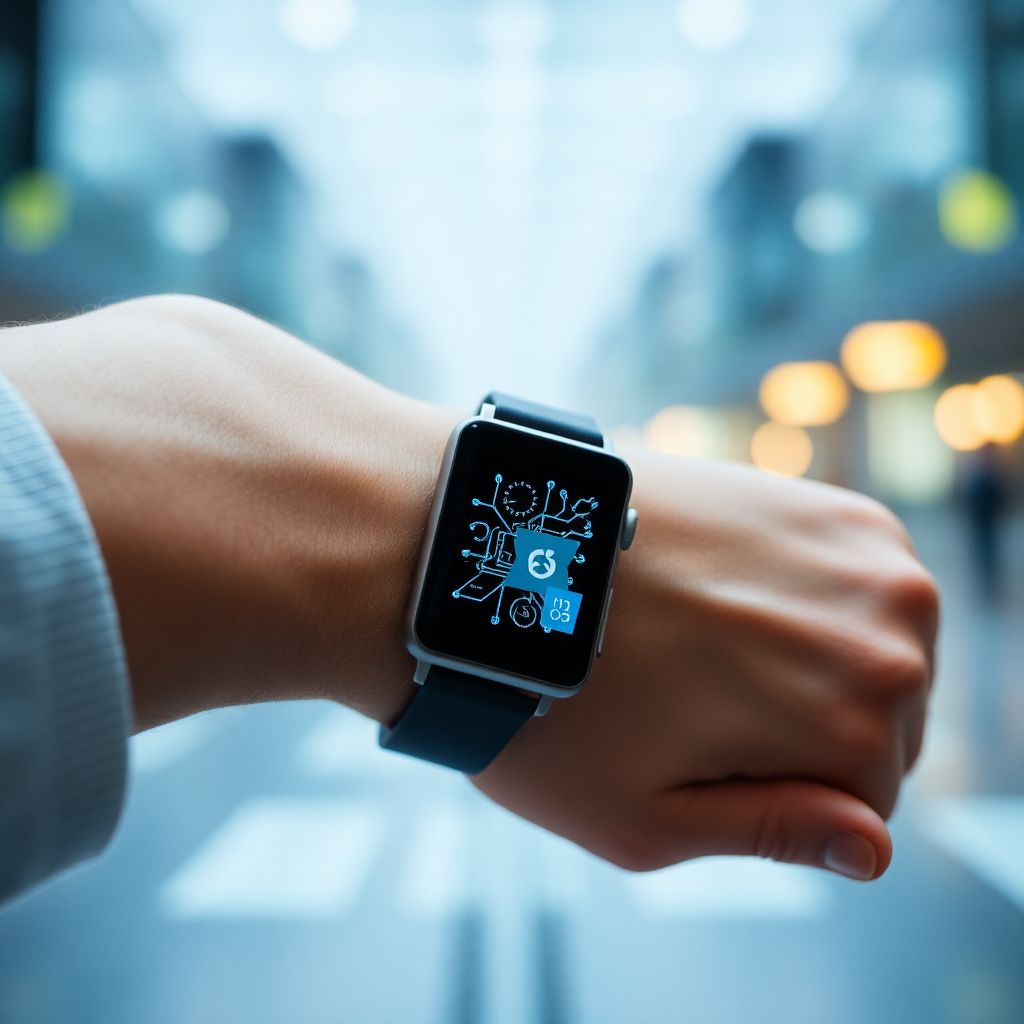
AI Wearables Are Reshaping Our Expectations of Privacy in the Digital Age
As artificial intelligence continues to integrate seamlessly into everyday life, wearable devices powered by AI are ushering in a new era of surveillance — one that challenges and redefines our understanding of privacy. These devices, once considered futuristic novelties, are quickly becoming ubiquitous, with major tech companies offering incentives in exchange for unprecedented access to our personal data.
Historically, surveillance was limited to physical observation — whether by law enforcement or fellow citizens. It was visible, direct, and its scope was constrained by human limitations. With the digital revolution, that changed. The rise of the internet and later mobile technology enabled mass data collection on a scale previously unimaginable. Now, with AI-infused wearables, surveillance has become intimate, continuous, and often invisible.
By 2025, wearable technology is expected to dominate the landscape of public and private monitoring. Devices like smartwatches, augmented reality glasses, and AI assistants are poised to collect far more than location data or search histories. They will gather emotional cues, vocal inflections, biometric signals, and behavioral patterns — the subtle data points that reveal who we truly are.
This shift is not inherently dystopian, but it is deeply transformative. It represents a new social contract between individuals and technology providers. Just as society eventually came to tolerate CCTV cameras and online tracking, there is a growing likelihood that people will accept this next phase of surveillance as a trade-off for convenience, personalization, and technological advancement.
A key difference lies in the depth of data being harvested. Traditional surveillance might have logged your whereabouts or online activity. AI wearables, on the other hand, can assess your mood through voice analysis, detect stress levels via heart rate variability, or infer habits based on subtle physical movements. In essence, they digitize aspects of our identity that were once exclusively private.
Consider the evolution from Google Glass — dismissed a decade ago as invasive or impractical — to today’s advanced AR glasses from Meta and Apple. These new devices are not simply about visual augmentation; they are multi-functional AI hubs that blend seamlessly into daily life, offering voice-controlled features, environmental awareness, and real-time data analysis.
The proposition from Big Tech remains consistent: access to cutting-edge technology in exchange for deeper insights into our lives. But the intimacy of the data these devices collect amplifies existing privacy concerns. Unlike browser histories, which can be deleted, biometric and behavioral data is inherently tied to one’s identity and far harder to anonymize.
Yet it is not all bleak. Emerging cryptographic technologies offer a promising path forward. Among them, zero-knowledge proofs (ZK-proofs) stand out as a potential safeguard. These cryptographic methods allow systems to verify information — such as age, location, or identity — without exposing the underlying data. This means users can retain some control over their digital identity while still accessing services that require verification.
For instance, a wearable could confirm that a user is of legal drinking age without revealing their exact birth date. Or a health app could confirm a biometric trend without storing raw heart rate data. This model not only protects individual privacy but also builds trust between users and service providers.
The broader implication is a shift from passive data surrender to active data stewardship. Individuals are beginning to demand transparency and autonomy over how their information is used. As a result, we may be witnessing the birth of a more ethical data economy — one that values consent, minimalism, and dignity.
This transformation is also fueling a broader discussion about digital sovereignty. People are no longer content to be data points in a corporate algorithm. They want a say in the rules of engagement — in what is collected, how it’s used, and who has access to it. Legislation around the world is starting to reflect this shift, with stronger data protection laws and growing support for decentralization.
However, regulation alone cannot keep pace with the speed of technological innovation. The responsibility also lies with developers, designers, and consumers to demand and implement privacy-respecting tools by default. This includes building AI systems that are transparent, explainable, and aligned with human values.
Moreover, education plays a crucial role. Users need to understand the mechanics of data collection and the long-term implications of wearable surveillance. Digital literacy should include awareness of privacy settings, consent protocols, and the functionality of encryption technologies like ZK-proofs.
As AI wearables become more deeply embedded in our routines — from fitness tracking to workplace productivity to healthcare diagnostics — the stakes will rise. What we normalize today will define the boundaries of personal freedom tomorrow. It is imperative that we approach this future with intention, foresight, and a strong ethical compass.
In conclusion, AI-powered wearables are not just gadgets; they are agents of societal change. They compel us to reconsider long-held assumptions about privacy, autonomy, and identity. While the convenience they offer is undeniable, so too are the risks they pose. Fortunately, with the right combination of cryptographic tools, informed consent, and proactive regulation, it is possible to shape a future where technology enhances life without compromising dignity. The time to act is now — before the line between voluntary sharing and involuntary surveillance disappears entirely.