
CLARITY Act absent from August 3 Senate agenda, fueling concern and political tension
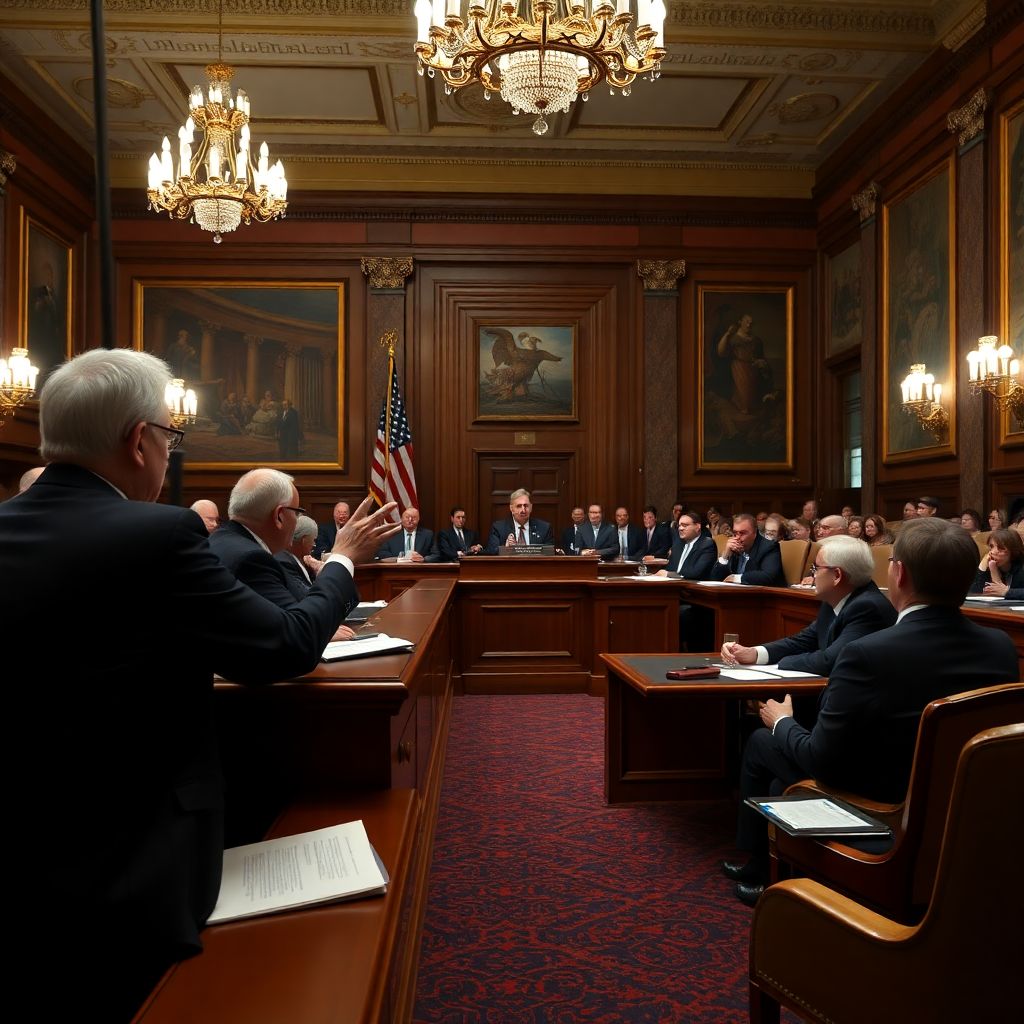
The latest publicly released Senate floor schedule for 3 August has confirmed a growing fear in the digital asset industry: the Digital Asset Market Clarity Act (H.R. 3633), widely referred to as the CLARITY Act, is still nowhere to be found on the official calendar.
Instead of moving ahead with one of the most closely watched crypto-focused bills in years, Senate leadership is prioritizing a procedural vote on H.R. 6500, a continuing resolution aimed at keeping the government funded. For now, that leaves CLARITY in legislative limbo – visible enough to spark debate, but not yet close to a final floor vote.
No cloture filing yet – but the bill is not dead
As of 31 July, the Senate’s cloture ledger – the formal record of motions to end debate on pending measures – showed no petition filed for the CLARITY Act. On the surface, that absence underscores that the bill has not yet become a top-of-the-agenda item for leadership.
However, the missing cloture motion does not mean the legislation is finished. It simply signals that Senate leaders have not taken the public procedural steps needed to bring it before the full chamber. A cloture filing is often a late-stage move, used when leadership believes there is a pathway to debate and a final decision.
If a cloture petition is filed by 5 August, senators could vote as early as 7 August on whether to end debate on the motion to proceed to the bill. That first vote is not on the substance of the legislation itself, but on whether the Senate should formally take it up.
A complex procedural window before the August recess
Even if the motion to end debate on proceeding to CLARITY collects the required 60 votes, the Senate’s rules still allow up to 30 hours of additional debate before the chamber officially moves on to the bill. In a compressed pre-recess calendar, those 30 hours are politically valuable – and leadership may be reluctant to spend them on a measure that is still controversial in some corners.
There are ways to move faster. Senate leaders could attempt to secure a unanimous consent agreement, which would streamline or bypass some of the standard timing requirements. Alternatively, they could rally support around a bipartisan cloture petition that reflects a broader consensus. Both paths, however, rely on one crucial ingredient: the absence of serious objections. A single senator’s resistance can derail or slow down such efforts.
Adding to the uncertainty is a basic procedural question that still appears unsettled: which legislative vehicle will the Senate ultimately use? Lawmakers could advance the House-passed H.R. 3633 or instead rely on revised Senate language put forward by Senator Cynthia Lummis. The choice of vehicle can influence amendment strategy, negotiation dynamics, and the timeline for eventual reconciliation with the House.
Political maneuvering ahead of the elections
With national elections approaching, the CLARITY Act is increasingly being viewed not just as a policy proposal, but as a potential bargaining chip in a much larger partisan game. Some market participants and political observers are beginning to suspect that timing is no accident.
Anthony Scaramucci, a long-time industry figure and political commentator, voiced frustration with what he sees as a deliberate slowdown. In his view, the current stalemate suggests that some Republicans would prefer to keep the bill from passing in the near term. He argued that this delay could allow them to fault Democrats for inaction and then seek political and financial support from the crypto industry later in the year. His message to Congress was blunt: “Put this bill on the floor.”
This perception – that the bill is being used more as a campaign talking point than as a serious regulatory effort – is aggravating tensions between policymakers and the digital asset ecosystem. Market participants had hoped that 2026 would be the year when long-awaited rules for the crypto markets would finally make meaningful progress.
Market bets: Falling odds for passage in 2026
Traders are already pricing in the risk that the window for near-term passage is closing. One well-known crypto trader cited current prediction market odds indicating that the probability of the CLARITY Act becoming law has dropped to around 33%, near its lowest level of the year.
The timing is crucial. With just days left before the August recess, the trader warned that if the Senate does not move the bill into a formal voting phase within the next five days, the chances of it passing in 2026 diminish sharply. Once Congress departs for recess, attention tends to shift to campaign activity, budget fights, and other high-priority matters, pushing complex regulatory projects further down the list.
For exchanges, institutional investors, and builders in the digital asset space, that shrinking window translates directly into greater regulatory uncertainty. Many had been hoping for at least a clear trajectory – even if not full passage – before lawmakers left Washington for the summer.
Not everyone is ready to give up
Despite the gloomy odds in betting markets, some voices in the industry remain cautiously optimistic. Tom Shaughnessy Jr., co-founder of research firm Delphi Digital, has emphasized that the legislative process can move quickly when leadership decides to act. In his view, the bill still has a realistic opportunity to reach the floor before the Senate breaks, provided key decision-makers are willing to expend political capital.
His comments align with recent efforts by industry-focused policy organizations urging top Democratic and Republican leaders in the Senate to prioritize the bill before recess. These groups argue that delaying action until after the summer – and potentially into the thick of the election season – will make it even harder to reach the bipartisan compromises needed for final passage.
For many advocates, the message is simple: the longer CLARITY remains stalled, the more the United States risks falling behind other jurisdictions that are moving ahead with comprehensive digital asset frameworks.
Why the CLARITY Act matters so much to crypto
Behind the legislative drama lies a more fundamental issue: the crypto industry is desperate for a clear, consistent set of federal rules. The CLARITY Act is designed to offer a more predictable framework for digital asset markets, including guidance on which assets might be treated as securities or commodities, and how trading venues and intermediaries should be supervised.
Without such rules, many companies operate in a gray zone, relying on scattered enforcement actions and interpretive guidance rather than a comprehensive statute. This uncertainty increases legal risk, complicates compliance planning, and discourages long-term investment – especially from more conservative institutional players.
Supporters of the bill say that, even if everyone does not agree with every provision, codifying a baseline set of standards would be far better than the current patchwork. Opponents and skeptics, on the other hand, worry that the bill could either go too far in loosening constraints on risky projects or fail to adequately protect retail investors. These tensions help explain why leadership is cautious about rushing it onto the floor.
The pre-recess crunch: competing priorities
Every pre-recess period in Congress is defined by a familiar pattern: a crowded calendar, competing demands, and intense negotiation over what makes it onto the floor. In that environment, even widely discussed bills can get pushed aside if they lack an immediate deadline or direct connection to government funding or national security.
The CLARITY Act, as significant as it is for financial markets and innovation, is competing with pressing issues such as budget measures, foreign policy debates, and judicial confirmations. Senate leaders have to decide not only whether the bill has the votes to move, but whether it is worth spending scarce floor time and political leverage when so many other items are also vying for attention.
This structural reality is part of why the absence of the bill from the 3 August schedule has triggered anxiety. It signals that, at least for now, CLARITY has not broken into the top tier of must-pass measures.
Strategic calculations inside both parties
Behind closed doors, lawmakers in both parties are likely weighing how the CLARITY Act fits into their broader narrative for the upcoming election cycle. For some Republicans, a tough-on-regulation, pro-innovation stance dovetails with support for more comprehensive crypto rules. Others may prefer to delay action to preserve campaign ammunition against the current administration.
Democrats face their own balancing act. Some view digital assets as a sector that needs tighter oversight to prevent fraud and protect consumers. Others see an opportunity to position the party as friendly to technological innovation and financial inclusion, provided that basic guardrails are maintained.
This intraparty diversity makes building a 60-vote coalition particularly complicated. Any final version of CLARITY that reaches the floor will likely be the product of extensive negotiation – a reality that further challenges the tight timetable before recess.
What a delay could mean for the industry
If the Senate does not move on the CLARITY Act before leaving town, the crypto ecosystem will confront at least several more months of uncertainty. Ongoing enforcement actions, differing interpretations from regulators, and shifting political rhetoric will continue to shape the environment in which companies must operate.
Startups considering whether to launch in the United States or abroad will factor in the possibility that clear rules may not arrive this year. International competitors in Europe, Asia, and the Middle East are accelerating their own regulatory frameworks, attracting talent and capital that might otherwise have flowed into U.S. markets.
Domestically, prolonged ambiguity could also discourage traditional financial institutions from deeper engagement with digital assets. While some banks and asset managers have cautiously entered the space, many remain on the sidelines, waiting for a firmer legal foundation.
A narrow but still open path forward
Despite the political friction and shrinking calendar, a pathway for the CLARITY Act still exists. A late-breaking agreement between party leaders, coupled with a carefully structured floor strategy, could compress the timeline enough to allow debate and key procedural votes before the August recess officially begins.
For that to happen, however, leadership would need confidence that the bill will not fracture their own caucuses and that it can secure bipartisan support. The next few days will be critical: whether a cloture motion is filed, which legislative vehicle is chosen, and how vocal key senators are about prioritizing the issue will all serve as indicators of the bill’s real prospects.
Until then, the crypto industry is left to watch the Senate schedule – and the clock – while repeating the same message to lawmakers: bring the CLARITY Act to the floor and let the chamber decide its future in public view.