
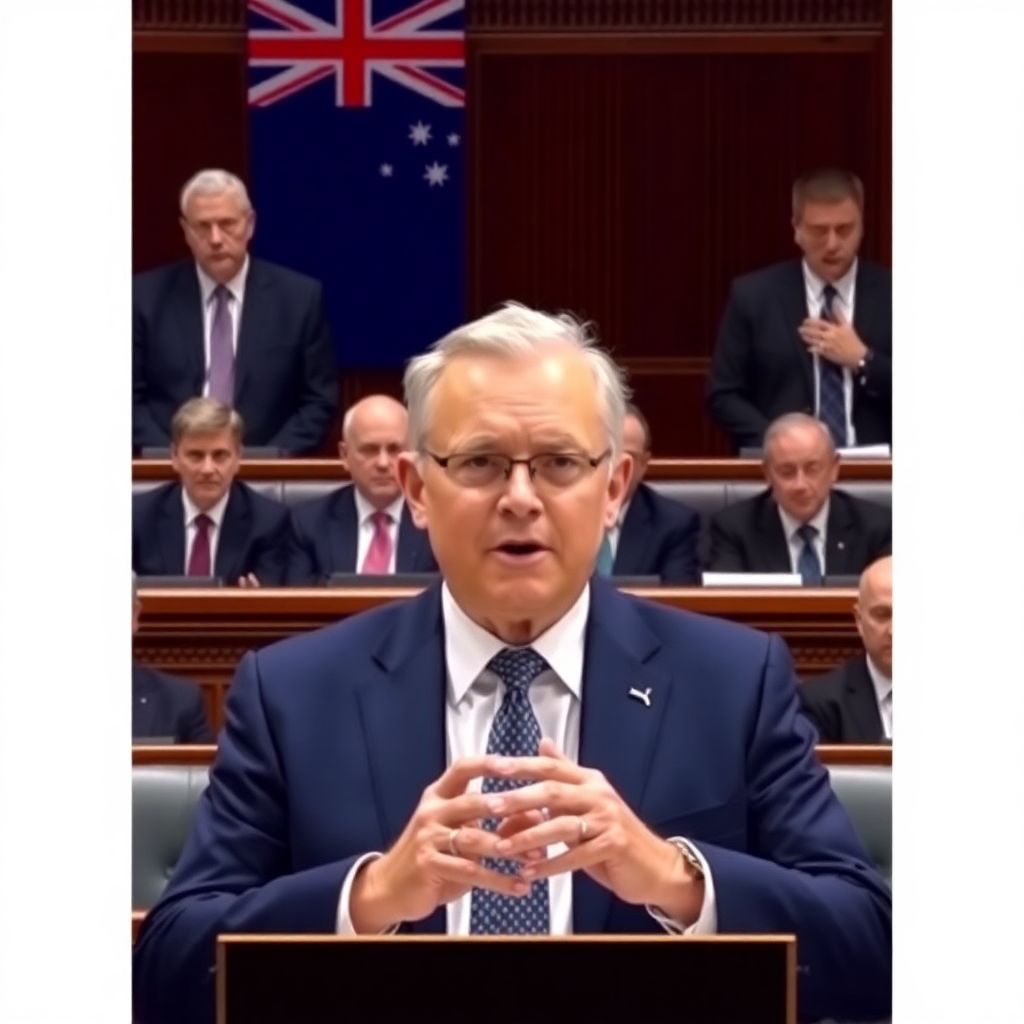
Australian Senate Committee Endorses Sweeping Licensing Rules for Crypto Platforms
Australia is edging toward one of its most comprehensive regulatory frameworks for digital assets, after a key parliamentary body recommended that a new licensing bill for crypto platforms be adopted.
The Senate Economics Legislation Committee has urged lawmakers to pass the Corporations Amendment (Digital Assets Framework) Bill 2025, a proposal that would pull crypto exchanges and tokenization platforms into the country’s existing Australian Financial Services Licence (AFSL) regime.
If enacted, the bill would create a bespoke category for “digital asset platforms” (DAPs) and “tokenised custody platforms” (TCPs), closing what regulators see as dangerous gaps in oversight for businesses that hold customer assets. The initiative is partly a response to the high‑profile collapses of large digital asset firms such as FTX, which exposed consumers globally to severe losses and highlighted weaknesses in custodial practices and governance.
Bringing crypto into the AFSL perimeter
Introduced in November 2025 by Assistant Treasurer and Minister for Financial Services Daniel Mulino, the bill would treat DAPs and TCPs as financial products under both the Corporations Act and the Australian Securities and Investments Commission (ASIC) Act.
In practice, this means that most centralized exchanges and tokenized custody providers that hold client assets would be forced to obtain and maintain an AFSL, aligning their obligations with more traditional financial service providers.
Licensed digital asset platforms would need to:
– Meet ASIC‑set standards for the custody and settlement of client assets
– Comply with tailored disclosure obligations for retail users
– Operate under platform‑specific conduct, governance and risk‑management requirements
The proposal carves out limited exemptions. Small operators with annual transaction volumes below 10 million Australian dollars (around 7 million US dollars), as well as certain forms of public blockchain infrastructure, would not fall within the full licensing perimeter. Lawmakers argue this threshold is designed to avoid stifling low‑risk experimentation while still capturing large, systemically important players.
Industry worries over broad definitions
Despite broad support for the goal of increased consumer protection, industry stakeholders have raised alarms about how the framework defines key concepts such as “digital token” and “factual control.”
Submissions from law firm Piper Alderman and other groups warn that the tests are so expansive they could unintentionally capture technology providers that were never meant to be regulated as custodians.
Of particular concern is the impact on wallet software and infrastructure providers involved in non‑unilateral control arrangements, such as multi‑party computation (MPC) setups. In these architectures, multiple parties each hold a shard of a private key and must cooperate to authorize a transaction.
Critics argue that, under a strict reading of the bill’s “factual control” test, even a provider that holds just one shard and cannot move assets on its own might be misclassified as having custodial responsibility. That, they say, would impose heavy regulatory burdens on businesses that are not actually in a position to control or misappropriate client funds.
Ripple backs ‘control’ test but wants modernization
US blockchain company Ripple Labs has supported the idea of using “control” as the main criterion for determining which entities should be brought inside the regulatory perimeter. It agrees that firms capable of unilaterally transferring customer assets should be subject to heightened obligations.
However, Ripple argues that the bill, as drafted, does not sufficiently account for modern security models such as MPC wallets. The company has urged lawmakers to clarify that an entity should not be deemed to exercise “factual control” unless it can move a client’s digital assets without the client’s cooperation or the participation of other key‑shard holders.
Without such clarification, Ripple contends, technology‑only service providers risk being swept into a full custodial regime they were never designed to comply with, which could discourage the use of safer, more resilient key‑management structures.
Committee backs Treasury’s incremental approach
The Senate Economics Committee acknowledged these concerns in its report. Nonetheless, it largely sided with the Treasury’s preference for a staged approach: keep the core legislative definitions broad, then use future regulations, guidance and delegated instruments to fine‑tune the boundary between regulated and unregulated activities.
Supporters of this strategy say it gives regulators flexibility in a fast‑evolving market, reducing the need for constant legislative amendments. Critics counter that leaving too much to later rule‑making can create uncertainty, making it harder for businesses to plan, invest and launch new products.
For now, the committee has concluded that the bill should proceed, with the expectation that Treasury and ASIC will refine the practical application of concepts like “factual control” once the framework is in place.
Coinbase: big step forward, persistent debanking risk
From the industry side, the committee’s endorsement has been welcomed as a sign that Australia is finally moving from consultation to implementation.
Coinbase Australia’s director and APAC managing director John O’Loghlen described the recommendation as an important milestone for the country’s position in the global digital asset economy. In his view, Australia has both the capital and the skilled workforce to become a regional leader, but progress has been held back by uncertain or incomplete rules.
Clear legislation, he argued, can unlock institutional participation, attract long‑term investment, and give consumers more confidence in regulated platforms.
O’Loghlen also warned, however, that formal licensing rules will not solve every structural challenge facing the sector. He highlighted the ongoing problem of “debanking” – cases where banks close or restrict accounts of crypto‑related businesses despite those firms attempting to operate compliantly.
Describing debanking as “rampant,” he urged the government to prioritize implementation of recommendations previously made by the Council of Financial Regulators to curb anti‑competitive banking practices. Without reliable access to payment rails and basic banking services, he suggested, even well‑regulated crypto platforms could struggle to serve Australian customers.
What the new regime means for exchanges and custodians
If the bill passes in its current form, most centralized crypto exchanges and tokenization platforms serving Australian users should expect:
– A formal licensing application process under the AFSL regime
– Ongoing compliance obligations similar to those of brokers and other financial intermediaries
– Stronger requirements around segregation and safeguarding of client assets
– Enhanced disclosure around risks, fees and conflicts of interest
– Governance and conduct rules tailored specifically to digital asset platforms
Firms may need to overhaul internal controls, upgrade their custody arrangements, and invest in compliance and legal staff capable of meeting ASIC’s expectations. Smaller startups operating below the transactional threshold may enjoy some flexibility, but those intending to scale will have to plan early for eventual entry into the AFSL system.
Implications for consumers and market integrity
For retail users, the framework is designed to deliver clearer protections:
– Better assurance that platforms are holding customer assets separately from their own funds
– Stronger recourse mechanisms in the event of misconduct or insolvency
– Greater transparency about how platforms earn revenue and manage conflicts
Although the new rules will not eliminate market risk or price volatility, they aim to reduce the chance that a platform’s failure or fraud wipes out customer holdings with no legal safeguards in place.
At the market level, Australia hopes to avoid the chaotic fallout seen in other jurisdictions, where poorly governed exchanges collapsed and triggered contagion across the broader ecosystem. A robust licensing regime could help screen out bad actors, level the playing field for compliant firms, and support more sustainable long‑term growth.
Balancing innovation with regulation
The debate around wallet providers, MPC setups and the scope of “factual control” underscores a broader policy tension: how to protect consumers without freezing innovation in a technology that is still rapidly evolving.
Overly rigid definitions risk capturing low‑risk infrastructure providers or experimental projects, pushing them offshore or underground. Too much flexibility, on the other hand, could create loopholes that irresponsible actors exploit.
Industry participants are likely to keep pressing for detailed regulatory guidance, sandboxes and transitional arrangements that allow innovators to test new models under supervision rather than facing immediate full‑scale compliance burdens.
Competitive positioning in the Asia‑Pacific region
Regionally, the bill could help Australia position itself alongside other Asia‑Pacific hubs that are building detailed digital asset frameworks. Jurisdictions that offer both clarity and credible protection tend to attract more serious institutional players, from asset managers tokenizing funds to banks exploring on‑chain settlement.
Without such a framework, Australia risks losing talent, capital and entrepreneurial activity to neighbors with clearer rules. Backers of the bill argue that a well‑calibrated licensing regime can turn regulatory certainty into a competitive advantage.
Next steps: Senate debate and vote
With the Senate Economics Legislation Committee now formally recommending passage, the bill advances to the full Senate for debate and a final vote at a later date.
Lawmakers may propose amendments, and industry lobbying around definitional issues and implementation timelines is likely to intensify. Should the legislation be adopted, a further period of rule‑making and consultation would follow, as Treasury and ASIC translate the high‑level framework into detailed regulatory obligations.
For now, the committee’s backing signals that Australia is serious about dragging crypto trading and tokenization platforms into the mainstream of financial regulation – and about making sure that the next wave of digital asset innovation is built on a more secure and accountable foundation.