
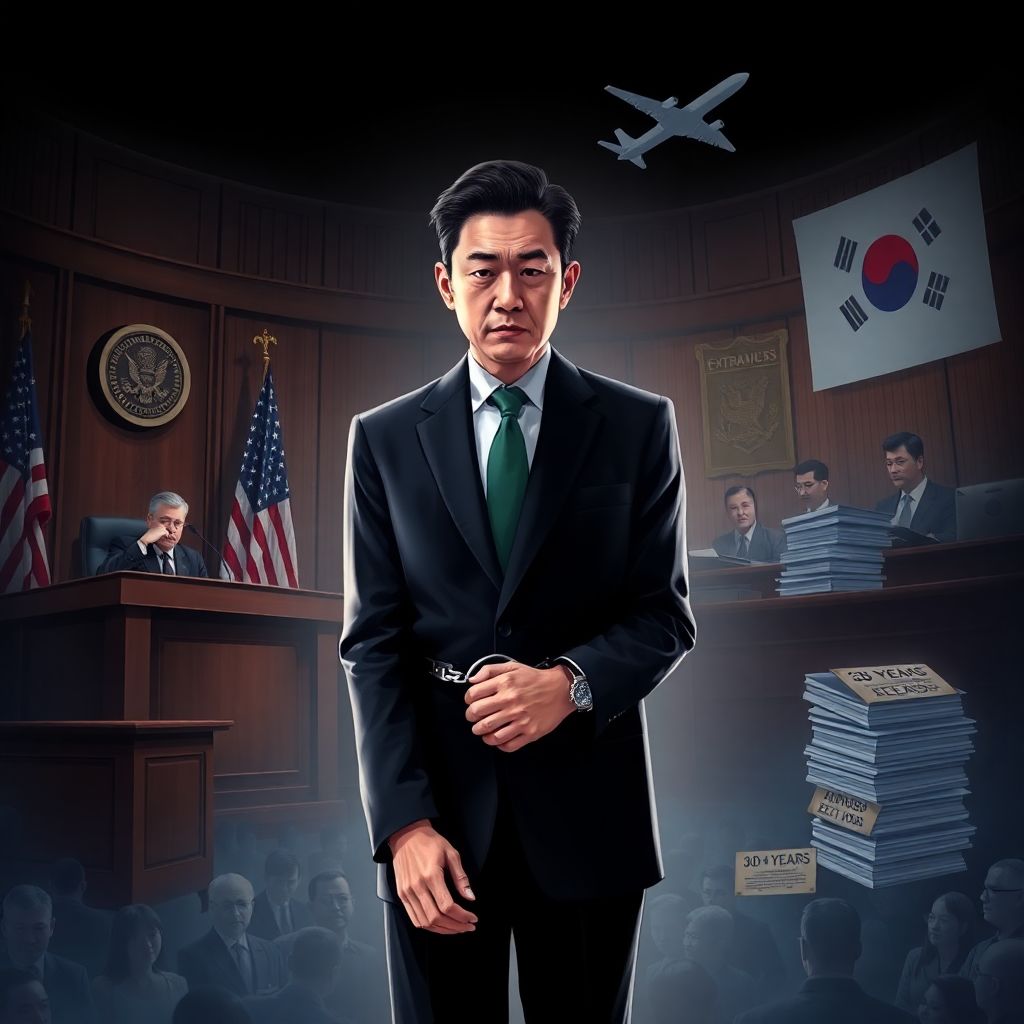
Terra Founder Do Kwon Could Face Up To 30 Years In South Korean Court Despite US Sentence
Terraform Labs co-founder and former CEO Do Kwon may be far from finishing his legal battle. Even after receiving a 15-year prison sentence in the United States, the founder of the collapsed Terra ecosystem could still be tried again in South Korea and face a significantly longer term behind bars.
According to multiple South Korean media reports, prosecutors and government officials in Seoul believe Kwon is likely to stand trial in his home country if he is eventually transferred there. They argue that a domestic prosecution would better address the massive impact of the TerraUSD (UST) collapse on Korean investors.
From Not Guilty To 15 Years In The US
On December 11, Kwon was sentenced to 15 years in a US federal prison for his role in the 2022 implosion of TerraUSD, the algorithmic stablecoin that triggered an estimated 40 billion dollars in market losses across the crypto ecosystem.
Initially, in January, Kwon pleaded not guilty to a nine-count indictment that included securities fraud, wire fraud, commodities fraud, and conspiracy to commit money laundering. This stance changed in August, when he entered a guilty plea to conspiracy to defraud and wire fraud and issued an apology for his conduct.
Before sentencing, Kwon’s legal team asked the court for a maximum of five years, asserting that he had already “suffered substantially” as a result of his actions and that a longer term would be “far greater than necessary to achieve justice.”
Prosecutors disagreed, arguing that his crimes warranted at least 12 years in prison. US District Judge Paul Engelmayer ultimately handed down a 15-year sentence, describing it as “the least” he could reasonably impose given the scale of the case and the need for deterrence.
The judge underscored that a five-year term would be so lenient it would likely be overturned on appeal. He stressed that others in the crypto and tech industries are watching the proceedings and that the outcome must send a strong message to future entrepreneurs about the consequences of large‑scale financial misconduct.
Why South Korea May Still Put Kwon On Trial
Even with the US sentence in place, Kwon’s legal exposure is not limited to one jurisdiction. South Korean prosecutors have been pursuing their own case against him, centered on violations of the country’s Capital Markets Act and other financial regulations.
South Korean authorities point out that the Terra ecosystem had deep roots in Korea, both in terms of user base and capital inflows. Local officials estimate that over 200,000 South Korean investors were affected by the collapse, suffering more than 204 million dollars in combined losses. Ten alleged accomplices are already on trial in the country.
Against this backdrop, a senior prosecutor has indicated that, if Kwon is tried and convicted in South Korea, he could face a sentence that exceeds 30 years. Prosecutors argue that domestic proceedings would better serve the goal of compensating and recognizing the harm suffered by local victims.
Prisoner Transfer Program Opens The Door
The possibility of a second trial hinges on whether Kwon is eventually transferred from US custody to South Korea. The Korea Times has reported that Kwon is widely expected to apply to the International Prisoner Transfer Program after serving half of his 15-year US term.
As part of his August plea deal, US prosecutors agreed not to oppose such a transfer request. That concession gives South Korea a potential pathway to bring Kwon into its jurisdiction, even though the US was the first to secure a conviction and sentence.
If the transfer is approved, South Korea would then be in a position to prosecute Kwon under its own laws for alleged capital markets violations and related offenses, potentially stacking additional years on top of his existing punishment.
How Kwon Ended Up In US Custody
South Korean prosecutors first moved formally against Kwon in September 2022, when the financial crime unit of the Seoul Southern District Prosecutors’ Office obtained an arrest warrant for him. At that point, he was already a fugitive, with international law enforcement agencies tracking his movements.
In March 2023, authorities in Montenegro detained Kwon along with Terraform Labs’ former chief financial officer, Han Chang-joon. The pair were arrested while attempting to travel on falsified documents, triggering a new layer of legal complications.
Kwon remained in Montenegrin custody for more than a year and a half. During that time, he received a four‑month sentence for document-related offenses, followed by an additional two‑month extension connected to extradition demands from both the US and South Korea.
Montenegro initially appeared ready to send him to South Korea, with local courts approving Seoul’s extradition request. However, after months of legal back‑and‑forth, the country’s interior ministry ultimately signed off on his transfer to the United States. He was extradited there on December 31, 2024, delaying any South Korean trial.
Legal And Political Considerations Around Extradition
The tug-of-war between the US and South Korea over Kwon’s extradition highlights how high-profile financial crime cases increasingly involve complex diplomatic and legal negotiations. Each country has its own priorities, legal frameworks, and domestic audiences to consider.
For the United States, bringing Kwon to trial quickly was a way to show that it can respond decisively to global crypto scandals that harm US investors and distort international markets. For South Korea, however, there is strong political pressure to hold a domestic trial because so many of the direct victims live there and because Terraform Labs was widely perceived as a Korean-origin project.
If Kwon is eventually transferred back to South Korea, the authorities there will have to balance the sentence he has already received in the US with any penalties imposed under Korean law. Issues such as double jeopardy, sentence harmonization, and credit for time already served are likely to be central points of legal debate.
What A 30‑Year Sentence Would Mean In Practice
Reports that Kwon could face “more than 30 years” in South Korea do not necessarily mean he would serve that time in addition to his 15-year US sentence, but they significantly increase his potential total exposure.
Under many prisoner transfer and extradition arrangements, courts and authorities sometimes need to decide whether sentences are served consecutively (one after the other) or concurrently (overlapping). The outcome of those decisions, as well as any appeals, would determine Kwon’s ultimate time behind bars.
Even if some part of a Korean sentence ends up being adjusted to account for his US incarceration, a conviction in South Korea would cement his status as a major figure in one of the most consequential financial scandals in the country’s history.
Broader Implications For The Crypto Industry
Kwon’s case has become a reference point for regulators, policymakers, and entrepreneurs worldwide. The TerraUSD collapse exposed vulnerabilities not only in a single project but also in the wider world of algorithmic stablecoins and highly leveraged digital asset ecosystems.
Regulators in multiple jurisdictions have since pointed to Terra as evidence that experimental financial structures, particularly those that claim to maintain a “stable” value without fully transparent collateral, can pose systemic risk to retail investors. The severity of Kwon’s sentence in the US, and the possibility of an even harsher outcome in South Korea, signals that authorities are ready to pursue aggressive enforcement when large numbers of investors are hurt.
For startup founders, the case underscores that operating in crypto does not shield them from traditional securities, commodities, and fraud laws. National authorities are increasingly coordinating across borders and are willing to chase down executives who attempt to escape jurisdictional reach.
Impact On Victims And Compensation Efforts
For the hundreds of thousands of investors who lost money in the Terra collapse, legal proceedings are about more than punishment. They are also a potential path toward some degree of restitution or, at a minimum, official recognition of the harm they suffered.
South Korean officials have argued that a domestic trial could strengthen legal mechanisms for asset seizure and distribution back to victims. Even if full compensation is impossible, additional rulings in Korea could help clarify responsibility among Terra’s executives, partners, and alleged accomplices, which in turn might influence civil lawsuits and claims.
However, criminal verdicts do not automatically translate into substantial financial recovery. Many collapsed crypto projects have left behind complex and sometimes opaque asset trails, including funds moved through exchanges, offshore entities, and personal wallets. Tracing and recovering those assets can take years and may only yield partial results.
How This Shapes Future Crypto Regulation
Cases like Terra and the prosecution of Do Kwon are already reshaping how lawmakers think about digital assets. Regulators are tightening rules around stablecoins, disclosures, reserve requirements, and the marketing of high-risk yield products to everyday investors.
In South Korea, the Terra collapse has contributed to calls for more comprehensive legislation governing token issuance, exchange operations, and advertising. In the United States, it has fed into broader debates about whether existing securities and commodities laws are sufficient for crypto or whether new, specialized frameworks are needed.
For developers and entrepreneurs, this environment means that compliance is no longer an afterthought. Projects that touch large numbers of retail users, especially those offering “stable” assets or guaranteed returns, are likely to face intense scrutiny from day one.
What Comes Next For Do Kwon
In the near term, Kwon begins serving his 15-year sentence in the United States, while his legal team weighs potential appeals and future strategies. At some point after he has served a portion of that term, he is expected to apply for transfer under the international prisoner program, opening the door to South Korean jurisdiction.
If South Korean authorities proceed with a full trial under the Capital Markets Act and related laws, the next major chapter of this case will unfold in Seoul’s courts. There, prosecutors will likely present a narrative focused heavily on the impact on local investors and the domestic financial system.
For now, one thing is clear: the 15-year US sentence has not closed the book on Do Kwon’s legal saga. Instead, it may represent only the first major judgment in what could become one of the most consequential cross‑border financial crime cases in modern crypto history.