

Why Whale Wallet Forensics Is Worth Your Time

If you’ve ever watched a token moon and thought “Who the hell bought this before everyone else?”, you’re already halfway into whale wallet forensics. At its core, it’s about understanding how capital moves on-chain, learning to read those flows like a language, and then using that data to make smarter, more disciplined decisions. Instead of guessing, you start following capital-efficient players — the so‑called “smart money” — and reverse‑engineering their behavior. This doesn’t magically turn you into a pro trader overnight, but it gives you a transparent, rules-based edge in a market where most people still rely on hype, screenshots, and rumors from X or Telegram.
What “Smart Money” Really Means (And What It Doesn’t)
Let’s be clear: “smart money” is not about worshipping whales or assuming every big wallet is a genius. A whale can just be an early holder, a VC fund, or even a centralized exchange address. In forensic terms, smart money is any address that shows a verifiable pattern of good risk management: consistent profit realization, disciplined entries and exits, reasonable position sizing, and survivability across cycles. You are not copying a guru; you’re treating wallets as performance datasets. You look at PnL, holding periods, reaction to volatility, and cross‑chain behavior. Over time, certain addresses emerge as “signal wallets” whose moves are worth monitoring — not to blindly replicate, but to contextualize market narratives with real capital flows.
How to Start: The Core Mindset for Whale Tracking
Before touching any dashboards or scripts, align your mindset. Whale wallet forensics is not a shortcut to instant riches; it’s an analytical framework. You’re acting as a data analyst, not a gambler hunting “inside alpha.” That means documenting your assumptions, testing ideas over historical data, and accepting that many smart wallets will still be wrong sometimes. The right mindset is curiosity plus skepticism: you want to deconstruct strategies, detect repeatable patterns, and understand when a whale move is noise versus when it’s the beginning of a structural rotation. Treat this as a multi‑month skill-building project, not a weekend hack.
Step‑by‑Step: How to Identify Whale Wallets
Identifying whales is mainly about systematic filtering and good heuristics. Here’s a practical workflow that blends the approach of on-chain researchers and professional quant desks:
- Filter by scale and activity. Start with addresses that move large sizes relative to the token’s liquidity — think transactions that materially impact pools, not random degen buys. Track wallets that consistently do this across multiple tokens rather than one‑off YOLOs.
- Check historical realized PnL. A big wallet that constantly buys tops and panic sells bottoms is not smart money. Look at entry prices versus exit prices across months. You want addresses that show a positive expectancy over many trades, not just one lucky bet.
- Analyze cross‑ecosystem presence. Strong wallets tend to be active on multiple chains, farms, and protocols. Cross‑chain bridges, L2 deployments, and recurring interactions with blue‑chip DeFi apps are signals of a sophisticated participant rather than a random retail wallet.
- Watch behavior around critical events. High signal wallets often position before major catalysts: governance votes, big unlocks, narrative rotations, or protocol upgrades. Their ability to be early more than once is what you’re trying to capture.
- Exclude obvious noise. Filter out CEX hot wallets, mixers, and clear multisig treasury addresses (unless you’re specifically analyzing protocol treasuries). Label these early so they don’t pollute your “smart money” list.
On‑Chain Analytics Tools and Software You Actually Need
You don’t have to reinvent the wheel to get started. There are already sophisticated on-chain analytics tools for tracking whale wallets that give you a strong base layer of data. Many power users combine a commercial dashboard with their own scripts and spreadsheets. A good stack can include a block explorer for raw verification, a DeFi analytics dashboard for token positions and pool flows, and specialized smart money crypto wallet tracking software that can surface abnormal behavior in real time. The tech itself is not the edge; the edge is how you ask questions, build filters, and interpret the outputs. But using the right infrastructure makes those questions faster and more precise.
How to Label Wallets Like a Pro
Learning how to label and monitor smart money wallets on-chain is where you shift from passive observer to actual on-chain analyst. Labelling is essentially building your own “mental index” of the network. You categorize wallets by role: trader, market maker, VC, protocol treasury, MEV bot, farming address, airdrop farmer, and so on. Over time, you get a nuanced view of who is really moving the market. A disciplined labelling system turns raw addresses into entities and entities into strategies. And once you understand strategies, you can test how they perform across cycles and which ones are worth following.
Practical Labelling Framework
Start with coarse tags and refine over time. For instance, a wallet that frequently interacts with early‑stage token contracts and invests across multiple sectors might get tagged as “VC‑style early investor.” Another address doing rapid in‑and‑out transactions around DEX pools with tight slippage parameters and similar size trades may be a market maker or arb bot. A wallet that consistently stakes governance tokens, votes on proposals, and rarely sells could be “governance whale.” Don’t overcomplicate things in the beginning: even a simple binary like “speculative smart money” versus “infrastructure/protocol address” cleans up your dataset dramatically.
Automation vs. Manual Review

Many people ask whether a blockchain forensics service to identify whale wallets can fully automate all this work. The honest answer: it can automate discovery and provide strong heuristics, but human review is still crucial. Automation is great for tagging known contract types, standard token patterns, and public treasury addresses. But nuanced behavior — like a sophisticated fund changing risk profile mid‑cycle — still requires human pattern recognition. The winning combo is a tool that does the repetitive heavy lifting coupled with your own manual deep dives on the most interesting wallets. Treat software as an assistant, not an oracle.
Tracking Smart Money in Real Time
Once your labels are in place, the fun part begins: following capital live. The best crypto analytics platform for whale wallet alerts will allow you to define custom conditions such as “Wallets tagged as early‑stage investors buying more than X USD of tokens with FDV under Y” or “Market-making addresses exiting a specific pool.” Real‑time alerts let you see the market as a living system instead of a sequence of candles on a chart. But don’t turn your setup into a noise machine. Too many generic alerts and you’ll start ignoring them. Be intentional: each alert should correspond to a concrete hypothesis or playbook, not vague curiosity.
Inspiring Real‑World Examples
Some of the most compelling stories in the last cycles came from small teams or solo analysts who built their edge entirely from on‑chain tracking. One researcher started by manually tracking just ten wallets that showed disciplined buying of infrastructure tokens on Ethereum and Polygon. Instead of chasing every meme, he focused only on positions where at least three of these wallets were accumulating quietly over weeks. His personal portfolio didn’t explode overnight, but over two years he outperformed the broader market by cutting most of the noise and avoiding obvious exit liquidity traps. The key wasn’t magic alpha; it was patience, consistent labeling, and sticking to a transparent rule set.
Another example: a small DeFi fund specializing in early‑stage protocols. They combined a blockchain forensics framework with narrative research. By monitoring a curated list of “builder wallets” (addresses known to belong to protocol teams, auditors, and infrastructure devs), they often saw when insiders began accumulating governance tokens of adjacent protocols. This helped them anticipate narrative rotations — like the shift toward restaking, L2 infra, or specific DeFi primitives — weeks before they showed up on mainstream social media. Their competitive advantage came not from secrets, but from obsessively mapping relationships between wallets, teams, and ecosystems.
Expert Recommendations for Building Your Skillset
Experienced on‑chain analysts typically converge on a few hard‑earned lessons. First, they emphasize that tools are commoditized; your thinking process is not. Everyone has access to similar dashboards, but very few people maintain a clean labelling system, write down hypotheses, and test them with historical data. Second, they advise you to specialize. Instead of tracking everything, pick a niche: maybe you become the person who deeply understands bridge flows, MEV‑adjacent strategies, or early L2 deployments. Depth beats breadth in forensics. Third, they strongly recommend separating your “analysis time” from “trading time.” Spend dedicated blocks purely reviewing data and labels without the temptation to hit the buy button; it keeps you from chasing every smart money move you see.
Key Habits Experts Swear By
One veteran researcher suggests creating a weekly “wallet review” ritual. You look at the top 20 wallets you follow: what did they buy, what did they sell, how did they react to volatility, and what new contracts did they interact with? You log these observations in a simple doc or note‑taking app. Another expert insists on maintaining a “graveyard” list — smart wallets that went from consistently profitable to erratic or heavily underwater. This keeps you from anchoring on old legends whose edge has decayed. Finally, most serious analysts track their own decisions versus the smart money they follow. When you diverge from them, was it due to risk constraints, different timeframe, or emotion? That meta‑analysis is where your personal edge matures.
Cases of Successful Projects Using Whale Forensics
Some DeFi protocols and data startups have quietly used whale wallet forensics as a core part of their growth strategy. For example, a DEX aggregator team targeted specific high‑value addresses that were already power users of other aggregators. By using an internal analytics stack similar to smart money crypto wallet tracking software, they identified heavy arbitrageurs and high‑frequency LPs, then built tailored incentives and direct outreach campaigns. Conversion rates were dramatically higher than broad, unfocused marketing — because they were speaking to wallets that already exhibited the right behavior profile.
Another case: a risk‑management protocol that wanted to design more accurate liquidation thresholds and insurance parameters. They integrated data from a blockchain forensics service to identify whale wallets that historically survived major drawdowns without being liquidated. Analyzing these survival patterns — collateral ratios, hedging behaviors, and use of stablecoins — helped the team calibrate safer parameters for everyone, not just whales. The end result was a protocol that weathered volatility spikes much better than competitors, and this resilience became part of its brand and narrative. Real‑world capital behavior shaped product design, not the other way around.
Resources and Learning Path for Aspiring On‑Chain Sleuths
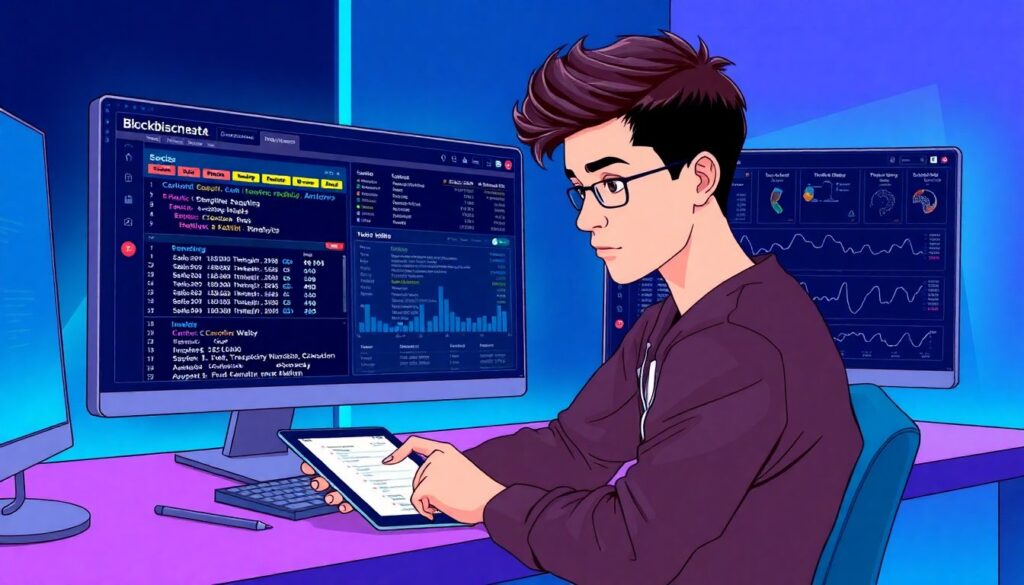
If you’re serious about this skill, structure your learning. Start with public block explorers to understand raw transaction anatomy: input data, logs, internal calls, and event signatures. Then layer in more advanced dashboards and specialized on-chain analytics tools for tracking whale wallets, focusing on how different platforms aggregate and visualize data. Complement tools with high‑signal newsletters and research threads from independent on‑chain analysts; many of them openly share methodologies, not just trade screenshots. Don’t underestimate the value of reading technical documentation of major DeFi protocols — understanding how a protocol works internally will make its on‑chain behavior much more interpretable.
Building Your Personal Toolbox
Over time, aim to assemble a modular toolkit rather than tying yourself to a single product. You might use one interface as the best crypto analytics platform for whale wallet alerts, another for portfolio‑style views, and a custom script to export data into your own spreadsheets or notebooks. Think of this like building a research lab: you want instruments that are reliable and composable. Start small — maybe just alerts for a few tagged addresses — and scale your stack only when you actually feel the bottlenecks. The goal is not to have the most complex setup, but to have one you actually understand and can iterate on.
Bringing It All Together: From Data Consumer to Strategy Builder
Whale wallet forensics is one of the rare areas in crypto where a motivated individual can compete with larger players by being more focused, more consistent, and more intellectually honest. You have public access to every move, every position, every on‑chain footprint; the limitation is not data but interpretation. By learning how to label and monitor smart money wallets on-chain, curating a high‑quality watchlist, and using targeted alerts instead of random noise, you gradually transform from someone reacting to headlines into someone reading the raw behavior of capital itself. That shift in perspective is powerful — it won’t eliminate risk, but it will replace confusion with structured uncertainty. In a market defined by cycles and narratives, that structure can become your most reliable edge.