
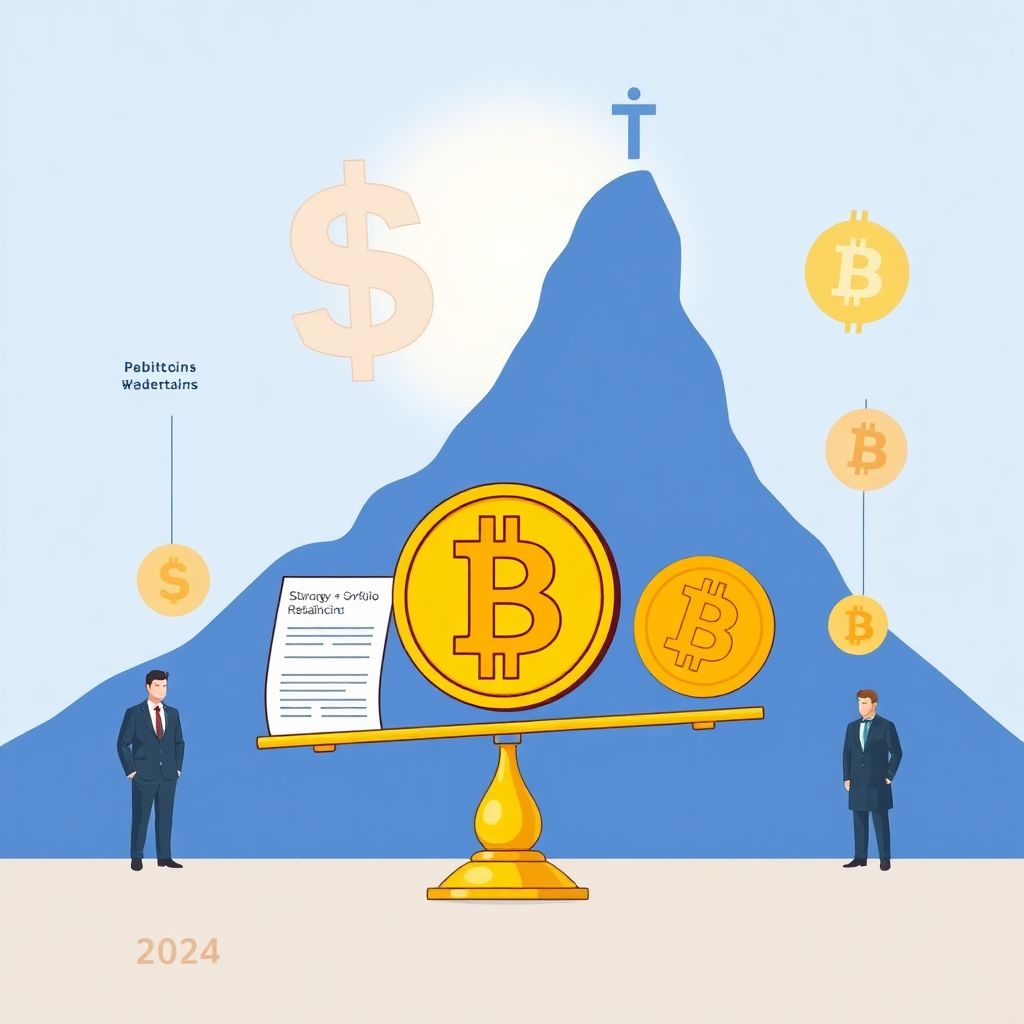
Fidelity Attributes Bitcoin’s Q4 Drop to Tax Strategies, Not Whale Activity
Bitcoin’s performance in the fourth quarter of the year fell short of expectations, disappointing investors who typically anticipate strong gains during this historically bullish period. Rather than mirroring the strength seen in traditional assets such as gold or equities, Bitcoin lagged significantly behind. Analysts at Fidelity Investments suggest that this unexpected downturn was not primarily fueled by large-scale “whale” sell-offs, but rather by year-end tax strategies and portfolio reallocations.
Gold surged nearly 60% year-to-date, while Bitcoin managed a modest 10% gain by comparison. Even major equity indices like the S&P 500 and Nasdaq outpaced the flagship cryptocurrency, breaking the usual correlation Bitcoin shares with risk assets. This divergence, especially apparent since October, has prompted varied analyses about the root cause of the slump.
A common theory points to a sell-off by early Bitcoin adopters—so-called “OG whales”—who accumulated BTC when it was worth less than $10,000. Data from on-chain analytics platforms supports the notion that long-term holders have been reducing their positions since July. Yet, some experts challenge this view. Notably, the analyst known as PlanB argues that the real selling pressure came not from early adopters, but from investors who bought in at the $60,000 to $70,000 range during the earlier part of 2024.
Another perspective compares Bitcoin’s current market behavior to a traditional IPO phase, suggesting that the market is undergoing a structural transition. In this scenario, experienced holders are redistributing their assets to institutional players like ETFs and corporate treasuries, potentially preparing the ground for a future rally once this redistribution stabilizes.
However, Fidelity’s take adds another layer to the conversation. Chris Kuiper, Vice President of Research at Fidelity’s Digital Assets division, attributes much of the selling pressure to year-end tax considerations. According to Kuiper, many long-term investors decided to realize gains before the year closed, adjusting their portfolios in search of better-performing or more stable alternatives. This strategic repositioning, he suggests, was a more significant driver of the Q4 slump than previously thought.
“Investors are making tax-efficient moves, locking in profits, and rotating into assets with stronger near-term potential,” Kuiper explained. He also noted that market indicators such as “Supply Active”—which typically declines during bull markets as whales offload into rallies—have not yet signaled an end to selling pressure.
Adding to Bitcoin’s short-term headwinds is the broader macroeconomic environment. Prominent analyst Willy Woo highlights the impact of a strengthening U.S. dollar index (DXY), which tends to signal risk-off sentiment in global markets. A strong dollar often drives investors toward safer assets, temporarily suppressing appetite for volatile instruments like cryptocurrencies. Woo pointed out that despite the dollar’s long-term inflationary nature, it still functions as a perceived safe-haven asset in times of uncertainty.
There is, however, cautious optimism among market watchers. Some analysts believe that Bitcoin could see a relief rally if liquidity conditions improve—especially if the U.S. government successfully navigates upcoming fiscal hurdles and avoids another shutdown. In such a scenario, renewed investor confidence could inject life back into the crypto market.
The broader cryptocurrency market is also undergoing structural shifts. The growing legitimacy of Bitcoin ETFs and increased interest from institutional players suggest that the market is maturing. This maturation could lead to more predictable cycles, where tax-loss harvesting, portfolio rebalancing, and macroeconomic trends play a more pronounced role than emotional or speculative trading.
Moreover, the seasonal nature of Bitcoin’s price movements may be evolving. Historically, Q4 has been a strong period for crypto assets, driven by retail enthusiasm and end-of-year optimism. However, as institutional adoption grows, market behavior is beginning to mirror that of traditional financial instruments, introducing new dynamics such as fiscal-year planning and quarterly earnings reporting into the equation.
Another factor influencing Bitcoin’s underperformance is the emergence of alternative investment vehicles in the digital asset space. With the rise of tokenized real-world assets, AI-powered trading strategies, and yield-generating DeFi protocols, investors now have a broader array of options. This diversification has led to capital rotation out of Bitcoin and into other sectors within the blockchain ecosystem, further dampening BTC’s momentum.
Additionally, regulatory uncertainty continues to weigh on investor sentiment. Ongoing debates around crypto regulation, especially in key markets like the United States and the European Union, contribute to market hesitancy. Investors are increasingly wary of potential policy shifts that could affect the liquidity or legality of their holdings.
Looking ahead, Bitcoin’s path to recovery may hinge on several variables: easing of macroeconomic pressure, a weakening dollar, improved liquidity, and a slowdown in tax-driven selling. If these elements align, the cryptocurrency market could regain traction and possibly enter a renewed bullish phase.
In summary, the narrative that whales alone triggered Bitcoin’s Q4 decline is being challenged by deeper analysis. Fidelity and other thought leaders suggest a more nuanced explanation: tax strategies, institutional redistribution, and macro trends collectively shaped the downturn. As the market continues to mature, understanding these multifaceted drivers becomes essential for investors seeking to navigate the volatile landscape of digital assets.